sKiZo
Hates received: 92644 43.20°N 85.50°W
PS ... I just edited this four year old post ... because I could! SUBSCRIBE, and you can do it too!!
IMHO ... One of the best looking receivers ever built.
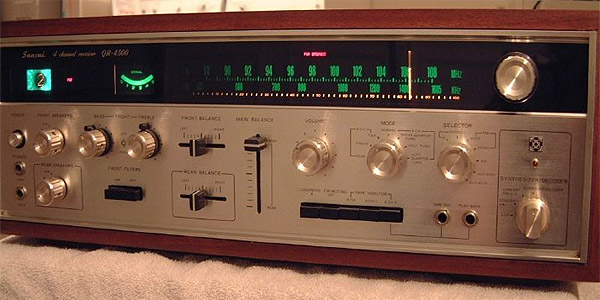
Granted, not one of the stronger amps - only rated at 27w x4 per channel - but keep in mind, these are old school watts, and better yet, old school SANSUI watts. Extremely conservative in their ratings. I've had several over the years and always liked the clean rich sound. Although the channel processing is considered primitive compared to the TOTL QRX quads (no SQ, CD04, Dolby), that can actually work FOR you when synthing from a stereo source. The I/O is just short of spectacular. There's really nothing you can't hook up to the thing, and the speaker selection is outstanding. Two sets of four, four sets of two, and you can run any two as well as reverse, twirl, and maybe even turn them upside down while you're at it. The pre out/amp in loop is indispensable for outboard processing.

But I digress.
I'll be doing a rebuild on this one while I gather information (and the courage) to tackle a QRX9001. Something tells me I'll need the practice.
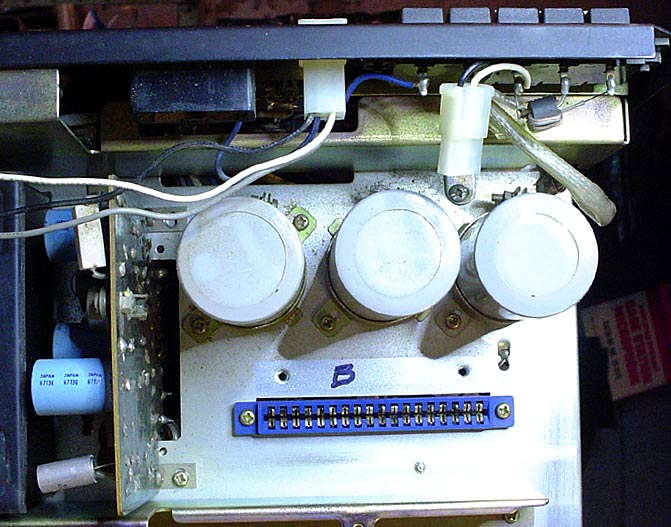
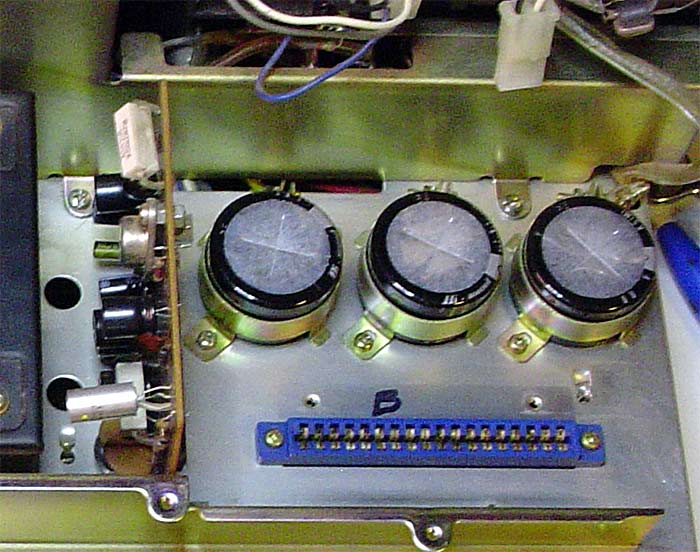
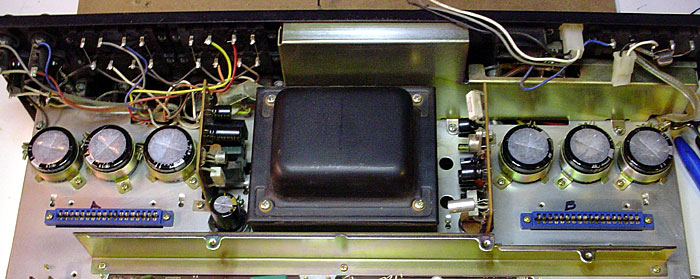
So here we are so far.
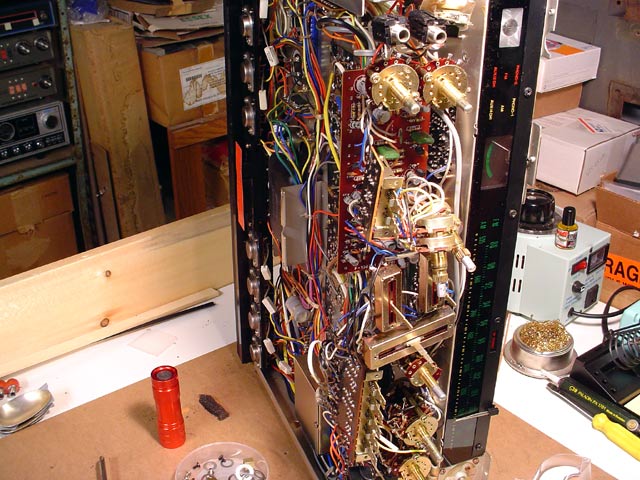
- Front panel removed.
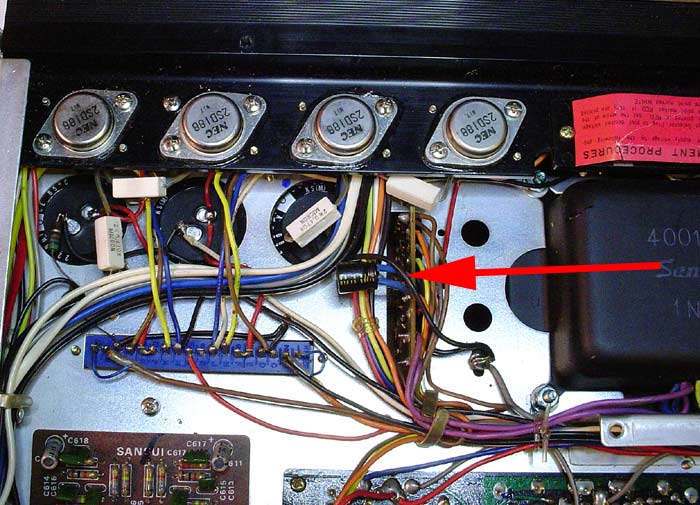
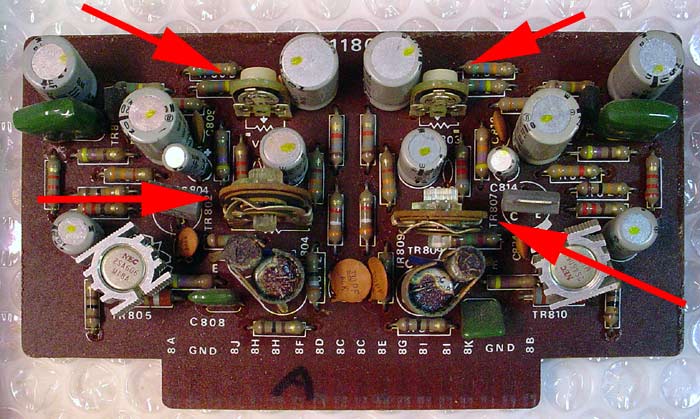
- Driver blocks (F1180E x2) removed. Those are slip in cards with edge connectors. Good just to get those out of the way and stashed in a safe place for now.
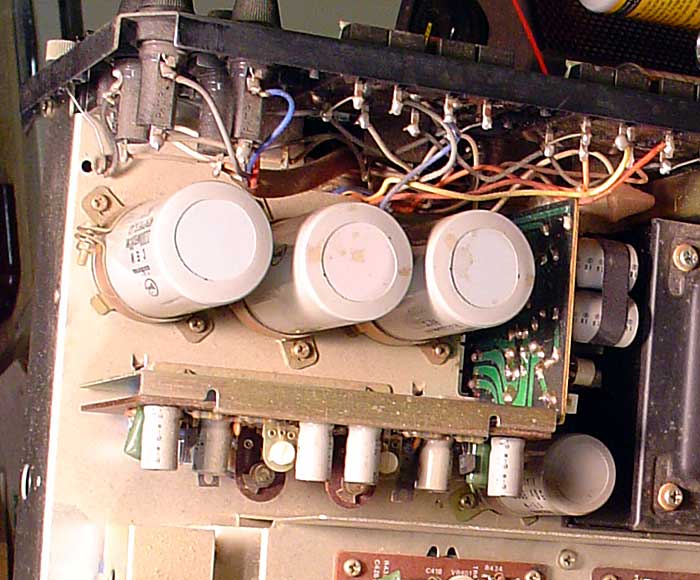
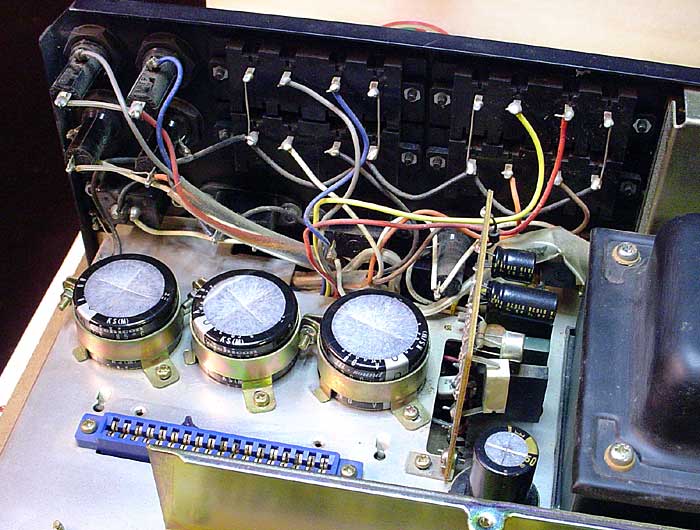
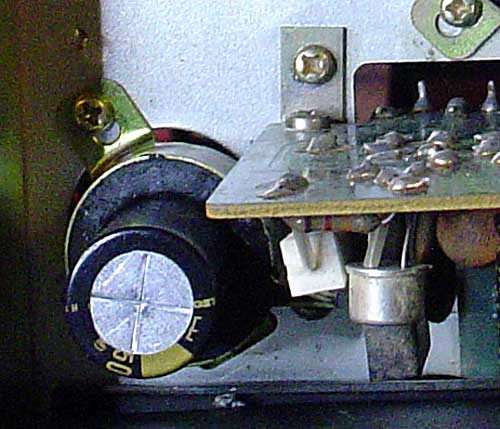
- Heat sink/power transistor assembly moved back to allow better access to power boards. Removing it entirely would require quite a bit of extra work you really don't have to do. That extra inch makes a big difference later on when you tackle the power boards. I <may> decide to remount the transistors with new insulators and heat sink compound as the old stuff wasn't all that good to begin with. Heat is the killer, so ... head it off at the pass.
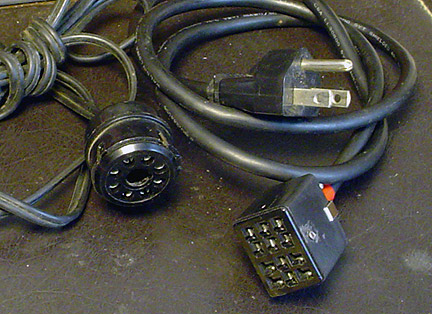
- Tuner section removed. This is a neat feature that should be mandatory on ALL receivers. Eleven screws, pop the main I/O connection, slip off the antenna leads, and the whole shebang lifts off. Don't have to mess with dial strings, and clears access to the lower tier of boards. The tuner section will remain untouched, other than general cleaning of the boards and connectors. Tuner alignment is best left to the professionals, as any change to the original components WILL require a full realignment. Unless you've got drift or other known issues, best to just leave it alone. A bit of Fader Lube to restore the original spin to the magic wheel, and some Pro Gold to restore all the contact surfaces should do it.
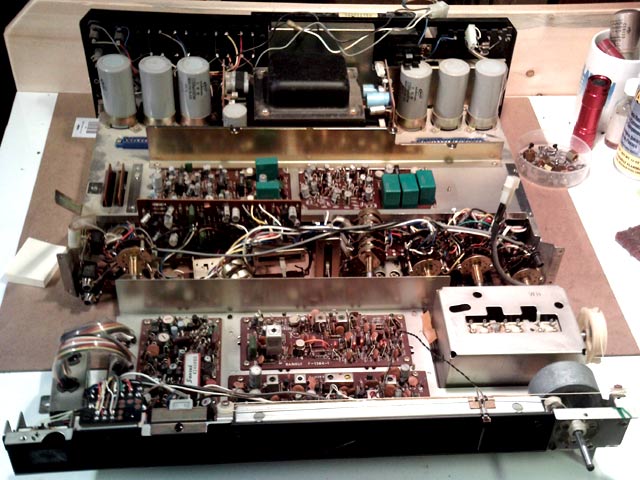
Some of the modular features on these things take a lot of the work out of it. 70s tech wasn't all bad.
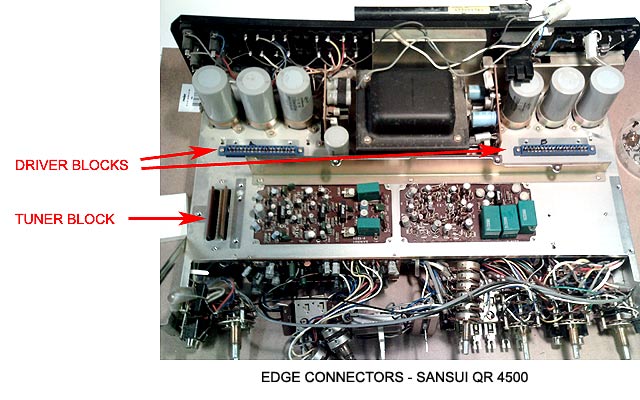
One thing I will have to do is re-point all the solder connections on the light board. Those tend to go open or intermittent over time due to all the heating cycles. I'll also replace all the fuse lights while I'm at it. The old ones work, but ... famous last words there.
Not bad for a days work.
IMHO ... One of the best looking receivers ever built.
Granted, not one of the stronger amps - only rated at 27w x4 per channel - but keep in mind, these are old school watts, and better yet, old school SANSUI watts. Extremely conservative in their ratings. I've had several over the years and always liked the clean rich sound. Although the channel processing is considered primitive compared to the TOTL QRX quads (no SQ, CD04, Dolby), that can actually work FOR you when synthing from a stereo source. The I/O is just short of spectacular. There's really nothing you can't hook up to the thing, and the speaker selection is outstanding. Two sets of four, four sets of two, and you can run any two as well as reverse, twirl, and maybe even turn them upside down while you're at it. The pre out/amp in loop is indispensable for outboard processing.
But I digress.
I'll be doing a rebuild on this one while I gather information (and the courage) to tackle a QRX9001. Something tells me I'll need the practice.
So here we are so far.
- Front panel removed.
- Driver blocks (F1180E x2) removed. Those are slip in cards with edge connectors. Good just to get those out of the way and stashed in a safe place for now.
- Heat sink/power transistor assembly moved back to allow better access to power boards. Removing it entirely would require quite a bit of extra work you really don't have to do. That extra inch makes a big difference later on when you tackle the power boards. I <may> decide to remount the transistors with new insulators and heat sink compound as the old stuff wasn't all that good to begin with. Heat is the killer, so ... head it off at the pass.
- Tuner section removed. This is a neat feature that should be mandatory on ALL receivers. Eleven screws, pop the main I/O connection, slip off the antenna leads, and the whole shebang lifts off. Don't have to mess with dial strings, and clears access to the lower tier of boards. The tuner section will remain untouched, other than general cleaning of the boards and connectors. Tuner alignment is best left to the professionals, as any change to the original components WILL require a full realignment. Unless you've got drift or other known issues, best to just leave it alone. A bit of Fader Lube to restore the original spin to the magic wheel, and some Pro Gold to restore all the contact surfaces should do it.
Some of the modular features on these things take a lot of the work out of it. 70s tech wasn't all bad.
One thing I will have to do is re-point all the solder connections on the light board. Those tend to go open or intermittent over time due to all the heating cycles. I'll also replace all the fuse lights while I'm at it. The old ones work, but ... famous last words there.
Not bad for a days work.
Last edited:

 Its nice to see the receiver taken so far apart. If I didn't have so many projects I would follow your lead, and Thanks for