• Please note that Audiokarma will be offline briefly for updates early on Monday morning, September 28th.

Can someone explain stereo lp and hi fi lp differences

SpinninTimmy

Active Member
Like I'm 12 years old?
Very simplified.
My main concern is, can the 2 types of records, one mainly 1950's (?) and the other 1960's on, be played on any unit that plays 33 rpm records without damaging the record?

Or, should hi fi records be played only on hi fi gear, and stereo records only on stereo gear?

I think I read that the grooves are shaped differently, and can be damaged by incorrect cartridge or needle.

And, what in the world is RCA''s "Orthophonic Hi Fidelity"???

I figure if anyone knows, the people here will.

Thanks!
 
Register to hide this ad
In a nutshell, as far as LPs go, HiFi is HiFi mono - Stereo is HiFi stereo. Both can be played on the same rig.

Google search "Orthophonic HIfi".
 
There are basically two types.

Mono records, and stereo records.

Mono has one signal recorded on it. Stereo has two signals on it, played back by two different speakers, to give the illusion of depth.

Mono record grooves move the stylus (needle) only in the horizontal direction. Stereo records move it in both the horizontal and vertical direction at the same time.

If you play a stereo record with a mono stylus, what happens is it tries to move the stylus vertically but cannot, because mono cartridges are not designed to move vertically, and the grooves get damaged.

It is perfectly fine to play mono records with a stereo cartridge.

Most mono record players made after the early 1960s employed a "stereo compatible mono" cartridge, which plays back stereo records in mono, but allows vertical movement of the needle, so it will not damage stereo records. Your Califone is such a player, and you can use it with all records.
 
And that is the explanation I was looking for.

Most grateful!

If I want to get a dedicated hi fi record player, is there one with a reputation for best hi fi sound reproduction?

And, would mono hi fi records sound better on a really good hi fi mono set, with the correct hi fi needle, than they would if played on a stereo unit?
 
And that is the explanation I was looking for.

Most grateful!

If I want to get a dedicated hi fi record player, is there one with a reputation for best hi fi sound reproduction?

And, would mono hi fi records sound better on a really good hi fi mono set, with the correct hi fi needle, than they would if played on a stereo unit?

Hi-fi means high fidelity. It actually was somewhat of a controversial term when it was first introduced, because some people thought it was ridiculous that fidelity could be anything other than absolute. This is just an entertaining point though, not totally relevant to the answer.

The LP record was/is considered high fidelity, because it sounds much closer to reality than its predecessor, the 78RPM record. Stereo records were a development of the original LP record, and are also considered high fidelity, but were not advertised as such, because high fidelity was no longer a new thing by the time stereo came out.

Some people feel as though a dedicated mono system is the best way to experience mono records. This is in the territory of people who own different cars for different reasons. For the average person, it is best to just get the best stereo system you can afford, and use it to play both stereo and mono records. Splitting your investment will just result in worse quality for both mono and stereo, and additionally take up a lot of domestic real estate.

Recommending a specific piece of equipment depends on your budget, and how you will use the equipment. It is not productive to simply list the best equipment available, because believe it or not, some record players actually cost as much as some houses!
 
There is some school of thought that a proper mono setup can be better for listening to mono records. Partly because your better stereo systems will pick up more noise from the mono record. Some amps/receivers have a setting that can alleviate most of that. I think certain styli might be better suited for mono than others.
 
I went through the mono cart phase. Then I returned to a sane state of mind. I realized with my best stereo carts, I am getting the best, quietest, most full sound from my mono records. The mono carts, or using the mono switch on my preamp, made for a flat, lifeless sound from my mono records.

I have played many mono records for YEARS before I even realized they weren’t stereo!
 
I went through the mono cart phase. Then I returned to a sane state of mind. I realized with my best stereo carts, I am getting the best, quietest, most full sound from my mono records. The mono carts, or using the mono switch on my preamp, made for a flat, lifeless sound from my mono records.

I have played many mono records for YEARS before I even realized they weren’t stereo!
Tha ks for the input.
 
Like I'm 12 years old?
Very simplified.
My main concern is, can the 2 types of records, one mainly 1950's (?) and the other 1960's on, be played on any unit that plays 33 rpm records without damaging the record?

Or, should hi fi records be played only on hi fi gear, and stereo records only on stereo gear?

I think I read that the grooves are shaped differently, and can be damaged by incorrect cartridge or needle.

And, what in the world is RCA''s "Orthophonic Hi Fidelity"???

I figure if anyone knows, the people here will.

Thanks!

Mono aka HiFi records can be played on good Mono and Stereo phonographs. Stereo or post 1965-1966 mono records should be played on Stereo equipment only. DO NOT play a Stereo or modern mono disc on a mono cartridge unless it has vertical compliance and tracks at 5 grams or lighter. You will damage it severely.
 
The original mono "microgroove" LP, EP and 45 rpm discs, from 1948 (45s began in 1949) thru the late mid 1960s, were made for playback with a 1 mil wide stylus tip. 1 mil = 25 microns. Stereo discs were made with playback of a .7 mil (18 microns) wide stylus tip.

Original mono 45s can sound better with a 1 mil stylus, depending on disc condition. IME, playing the wider microgroove discs with a .7 mil wide stylus tip causes more scratchy sounding playback with average condition discs. With very decent condition mono discs, a rare, mono elliptical stylus can elicit more high frequency detail. While something like the Ortofon "Special Elliptical" styli, which are 1.1 mil wide, can help the treble details for these mono discs, it can also make scratchy surface noises too prominent. This is why the conical/spherical tips are recommended often for our average condition discs...

Orthophonic High Fidelity was simply a term RCA used for their HiFi tabletop and console sets. "Orthophonic" implies a certain RCA playback curve Phono EQ type. Before the RIAA phono EQ was "standardized" circa late 1954, the USA used more than a few phono playback curves. Similarly, the Euro/UK market had a different set of playback EQ curves, as did the Asian and Aussie/New Zealand markets. The Orthophonic curve, now known as the "older" Orthophonic curve, specified a 500Hz Turnover and -12db at 10KHz Rolloff.

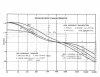
The "New Orthophonic" phono playback EQ curve, now simply known as the "RIAA" EQ curve, specifies a 500Hz Turnover, a 50Hz bass resonance/shelving, plus a -13.7db at 10KHz Rolloff. While the difference can appear slight between a -12db at 10KHz and -13.7db at 10KHz Rolloff, consider that their is a "band of frequencies" affected, along the playback curve's mids and highs. Here is a graphical representation of some Phono EQ curves...
Phono EQ Graph 50-PR.jpg
Hopefully, this will enlighten some disc spinners...ENJOY !
 
Last edited:
There are basically two types.

Mono records, and stereo records.

Mono has one signal recorded on it. Stereo has two signals on it, played back by two different speakers, to give the illusion of depth.

Mono record grooves move the stylus (needle) only in the horizontal direction. Stereo records move it in both the horizontal and vertical direction at the same time.

If you play a stereo record with a mono stylus, what happens is it tries to move the stylus vertically but cannot, because mono cartridges are not designed to move vertically, and the grooves get damaged.

It is perfectly fine to play mono records with a stereo cartridge.

Most mono record players made after the early 1960s employed a "stereo compatible mono" cartridge, which plays back stereo records in mono, but allows vertical movement of the needle, so it will not damage stereo records. Your Califone is such a player, and you can use it with all records.

1965 and later phonos got Stereo so called "Compatible" cartridges. If it tracks heavier than 5 grams, is crystal or over .5 volt output ceramic, DO NOT play Stereo or post 1966 mono records on it, unless it can be made vertically compliant and lightened to track at that weight. Califones with rare exception are made for playing kiddie and educational records. Save for the higher end models. 89T are not trustworthy on Stereo discs in terms of safety., they often are too lacking in compliance, especially vertical compliance. There is a very, very few vintage mono cartridges which can safely play Stereo discs, mainly Weathers FM systems and the Shure M1 Studio-Dynetic tonearm/cartridge systems. None of those were on changers or integrated phonos either. Many records have had permanent damage from not paying heed to these limitations. Don't play good records on unsuitable phonos, lest you ruin them.
 
The original mono "microgroove" LP, EP and 45 rpm discs, from 1948 (45s began in 1949) thru the late mid 1960s, were made for playback with a 1 mil wide stylus tip. 1 mil = 25 microns. Stereo discs were made with playback of a .7 mil (18 microns) wide stylus tip.

Original mono 45s can sound better with a 1 mil stylus, depending on disc condition. IME, playing the wider microgroove discs with a .7 mil wide stylus tip causes more scratchy sounding playback with average condition discs. With very decent condition mono discs, a rare, mono elliptical stylus can elicit more high frequency detail. While something like the Ortofon "Special Elliptical" styli, which are 1.1 mil wide, can help the treble details for these mono discs, it can also make scratchy surface noises too prominent. This is why the conical/spherical tips are recommended often for our average condition discs...

Orthophonic High Fidelity was simply a term RCA used for their HiFi tabletop and console sets. "Orthophonic" implies a certain RCA playback curve Phono EQ type. Before the RIAA phono EQ was "standardized" circa late 1954, the USA used more than a few phono playback curves. Similarly, the Euro/UK market had a different set of playback EQ curves, as did the Asian and Aussie/New Zealand markets. The Orthophonic curve, now known as the "older" Orthophonic curve, specified a 500Hz Turnover and -12db at 10KHz Rolloff.

The "New Orthophonic" phono playback EQ curve, now simply known as the "RIAA" EQ curve, specifies a 500Hz Turnover, a 50Hz bass resonance/shelving, plus a -13.7db at 10KHz Rolloff. While the difference can appear slight between a -12db at 10KHz and -13.7db at 10KHz Rolloff, consider that their is a "band of frequencies" affected, along the playback curve's mids and highs. Here is a graphical representation of some Phono EQ curves...
View attachment 1934779
Hopefully, this will enlighten some disc spinners...ENJOY !
Thank you, this is fascinating!
 
1965 and later phonos got Stereo so called "Compatible" cartridges. If it tracks heavier than 5 grams, is crystal or over .5 volt output ceramic, DO NOT play Stereo or post 1966 mono records on it, unless it can be made vertically compliant and lightened to track at that weight. Califones with rare exception are made for playing kiddie and educational records. Save for the higher end models. 89T are not trustworthy on Stereo discs in terms of safety., they often are too lacking in compliance, especially vertical compliance. There is a very, very few vintage mono cartridges which can safely play Stereo discs, mainly Weathers FM systems and the Shure M1 Studio-Dynetic tonearm/cartridge systems. None of those were on changers or integrated phonos either. Many records have had permanent damage from not paying heed to these limitations. Don't play good records on unsuitable phonos, lest you ruin them.
Thanks for the information.
 
In 1954, the record industry agreed to make the RIAA equalization compensation curve the universal standard going forward. Prior to 1954, there were about a half-dozen or more different equalization curves in use by manufacturers, so it was confusing for consumers to know how to adjust their tone controls for proper reproduction.

7apzh6-GvPO7vC9tWL2oXu8pnTleURy-S_u93qjVbQHL6A6ANA1ciFp28d9LmdoeQp6x4wn8zfgWxo9yKZ1kgb8K5T3V6P8zKQDy2Tbb1YD1Kp5M


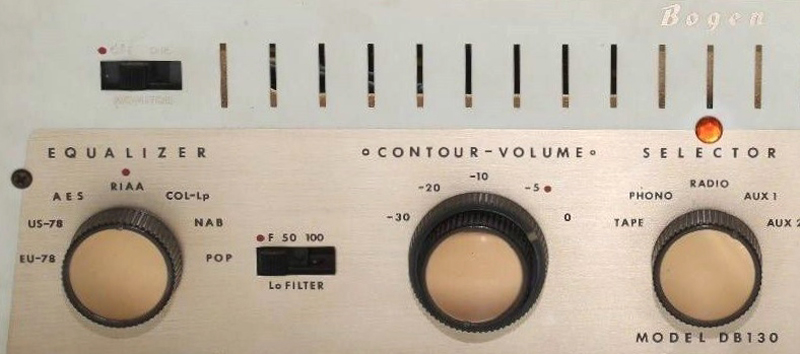
Some of the nicer hifi sets in the '50s had switchable EQ settings for the different curves:
iFiBogen.jpg


With the universal adoption of the RIAA curve, this problem was eliminated. To designate the newly universal RIAA standard in a way that consumers could comprehend, the term "high fidelity" (or "hi-fi" for short) was coined. ("Orthophonic" is the marketing term that RCA Victor came up with for their records and hi-fi products to make them seem more appealing than the competition.)

1951 original release, cut with Columbia's proprietary LP EQ curve (listed as "COL-Lp" on the preamp shown above):
R-1426672-1254884999.jpeg.jpg


1956 re-release, remastered with the RIAA curve (note the updated album title and "guaranteed high fidelity" legend):
R-1987701-1508601084-2766.jpeg.jpg


After stereo was introduced in 1958, mono was instantly regarded as "old-fashioned" and "downmarket" and so mono records needed a suitably appealing rebranding, so some record companies began designating mono releases as "high fidelity" to distinguish them from stereo.

images


So, what does this all mean in practical terms in the 21st century?

• You can play any LP or 45 with any stereo cartridge.

• Vintage mono cartridges (ie: GE VR-II, etc.) can only safely play mono records, but most current-production mono cartridges (ie: Grado MC+, Ortofon 2m Mono, Denon DL-102, etc.) are fully compatible with either stereo and mono records.
 
Last edited:
1965 and later phonos got Stereo so called "Compatible" cartridges. If it tracks heavier than 5 grams, is crystal or over .5 volt output ceramic, DO NOT play Stereo or post 1966 mono records on it, unless it can be made vertically compliant and lightened to track at that weight. Califones with rare exception are made for playing kiddie and educational records. Save for the higher end models. 89T are not trustworthy on Stereo discs in terms of safety., they often are too lacking in compliance, especially vertical compliance. There is a very, very few vintage mono cartridges which can safely play Stereo discs, mainly Weathers FM systems and the Shure M1 Studio-Dynetic tonearm/cartridge systems. None of those were on changers or integrated phonos either. Many records have had permanent damage from not paying heed to these limitations. Don't play good records on unsuitable phonos, lest you ruin them.

The Weathers FM system can play stereo records? Really? That's very cool.

How about the Califone Tetrad cartridges?
 
Tetrad OK but tracks heavier than I like to play good records on. Remember too, the Weathers FM system tracked at 1 gram, and had unusually good vertical compliance for the mono era. But the arm/cartridge was an integrated system, and very delicate.
 
Tetrad OK but tracks heavier than I like to play good records on. Remember too, the Weathers FM system tracked at 1 gram, and had unusually good vertical compliance for the mono era. But the arm/cartridge was an integrated system, and very delicate.

I have been playing a lot of records on a Califone 1925k with tetrad recently. It tracks at about 6.5g, so well over your limit. Not "good" records, though. Will probably end up selling it, I got it very cheap and I like record players too much to pass up on things like this.

Have always wanted to see a Weathers arm in action, if it can handle stereo records that's all I need to know - I'm going to buy the next one I see selling affordably and try it on my TD124.
 
Back
Top Bottom