• The move to the new server is done. There are some software and database maintenance updates in process. This has us passing the hat around to help out. We appreciate any donations. Seriously, even a dollar helps. The payment page may be found here - https://www.audiokarma.org/support.html

Math to show WHY under-hang tonearms sound superiors

Hi, Yes it was calculated early on, but then discounted as everyone using the U/H alignment agreed that any distortion produced was inaudible and did not defuse the extra S/Q produced by going U/H.
The changing the Nul between say 80mm to 110mm point is for set up and primary used to allow full tracking of any given arm/cart combination. The guys using Under-hang arms on L/H are currently changing Nul piont positions with their set up & reporting back what they consider the best position. I have one of my 8.25'' U/H arms with a Ort MC25FL set to 80mm. But on another T/T I prefer my 9.5'' U/H with Dyna 10x5 set a 110mm. There is no right or wrong answer, just what sound best to you. That's no different to over hang alignment when people try Stevenson, then Lof A, the Lof B. one of those 3 should suite. If not as you know there are a couple of others that you have to pay outrageous money for to try!!.

Cheers
 
The RS-A1 suggests 19mm, don't know what null that translates to. It seems to me the ideal would depend on the location and content of the last groove. At last with non fixed arms like the RS and Viv Labs it's easy enough to adjust underhang to suit the record in play, possibly even on the fly.
 
Hi, Yes I was aware of that, their design was unique & the U/H measurement was a long way off what V/Labs & Yamaha were spec'd at.
The problem is, where is the last groove!! I listen mostly to classic LP's, so many have no music at 60mm from the center. The main requirement is to find a setting that allows the user to play the entire LP without miss-tracking. But we have found out that depends on how good the arm is & what stylus is used. M/L seems to be the best groove hugger for my arms, but also I had no problem with a 103.

Cheers
 
Hi, We are still having a lively discussion over on Lenco Heaven around the best length for Under-Hang. I have gone with 8.5'', just a little longer that the actual V/Labs spec for their titled 7'' arm.
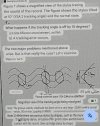
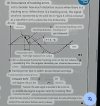
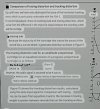
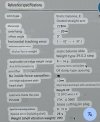
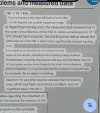
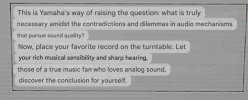
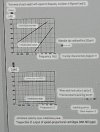
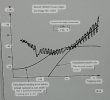
During that discussion & because the Yamaha 5000 T/T arm is under 9'', I decided to look for any info from this renowned brand & I fell across the YSA-2 installation manual in .pdf, which is Japanese, but clearly shows information about it's superior performance compared the the YSA-1 fitted to the Yammy 2000 deck. From what I can gather the YSA-2 was released as an upgrade arm for those who owe the 2000 deck. I could not translate it but one of the other guys, who obviously has superior computer skills that me did. Please find attached & chew your way through it, you may find it very interesting & it goes some way to show why U/H sound to most people superior.
1st is the original manual from V/E - https://www.vinylengine.com/library/yamaha/ysa-2.shtml

Cheers
 

Attachments

  • YSA-2 a.jpg
    YSA-2 a.jpg
    142.5 KB · Views: 16
  • YSA-2 b.jpg
    YSA-2 b.jpg
    154.9 KB · Views: 15
  • YSA-2 c.jpg
    YSA-2 c.jpg
    92.1 KB · Views: 11
  • YSA-2 e.jpg
    YSA-2 e.jpg
    114.6 KB · Views: 10
  • YSA-2 f.jpg
    YSA-2 f.jpg
    127.6 KB · Views: 9
  • YSA-2 g.jpg
    YSA-2 g.jpg
    146.4 KB · Views: 8
  • YSA-2 h.jpg
    YSA-2 h.jpg
    53.8 KB · Views: 10
  • YSA-2 j.jpg
    YSA-2 j.jpg
    114 KB · Views: 13
  • YSA-2 k.jpg
    YSA-2 k.jpg
    107.9 KB · Views: 16
Well, it looks to me more like Yamaha is saying the additional angular error is not as bad as it looks, more than they're suggesting an underhang is superior. In addition to their conclusions, Korf has measured actual playback distortions and found little correlation with theoretical numbers, suggesting that the degree of angular error is swamped out by other factors. For me, it just makes sense that the anchor point resisting friction should be directly behind the stylus-suspension line rather than off to one side.
 
Well, it looks to me more like Yamaha is saying the additional angular error is not as bad as it looks, more than they're suggesting an underhang is superior. In addition to their conclusions, Korf has measured actual playback distortions and found little correlation with theoretical numbers, suggesting that the degree of angular error is swamped out by other factors.

Exactly...

At the beginning of this thread people was with the following attitude (parahprasing): "flawed, see Loefgrens paper", "Baerwald is my god", "if you think it sounds better, it is because of higher second-order distortion", etc. I'm a bit saddened that some of the people who posted with such attitude are people I do appreciate a lot on this forum.

It is sad to see people who think mathematical calculations done using untested supositions (i.e. "tracking error directly correlates to replay distortion") as axioms can be considered as a truth that perfectly correlates to reality...

The Korf Blog completely debunks these faux-science perspectives with actual experimentation.

Some years ago Jonathan Carr of LYRA was speaking about underhung tonearms, too. And not in a negative way.

I always suspected that, if there was a sonic benefit with tangential tracking, it wasn't due to tracking error per se, but to other reason. Perhaps more experimentation with underhung tonearms can give some of the missing pieces of the puzzles.
 
Last edited:
This is an interesting thread to read through - lots of good stuff and opinions. About 10 years ago I acquired a used SOTA turntable with an Eminent Technology 2 tonearm and a Van Den Hul cartridge/stylus - which I believe was original to the table. The ET2 is a linear tracking arm that uses an “air bearing”. The table was at least 15 years old when I acquired it so I thought it would make sense to have the stylus examined for wear - the report came back that the stylus had no appreciable wear and looked new.
So this is a long winded way of asking what effect under-hang has on stylus wear which I imagine is a concern for high end cartridges.
 
Well, it looks to me more like Yamaha is saying the additional angular error is not as bad as it looks, more than they're suggesting an underhang is superior. In addition to their conclusions, Korf has measured actual playback distortions and found little correlation with theoretical numbers, suggesting that the degree of angular error is swamped out by other factors. For me, it just makes sense that the anchor point resisting friction should be directly behind the stylus-suspension line rather than off to one side.
Korfs error is that he compares the theoretical 10 cm/s signal with the Sperling test recording being recorded around 2.5 cm/s. The tracking distortion will be much lower with the test record. The test record is quite seful to check the inter channel phase error though.

Phase-1-kHz.png
 
Last edited:
Korfs error is that he compares the theoretical 10 cm/s signal with the Sperling test recording being recorded around 2.5 cm/s. (...)

Just btw, Thomas, do you have an idea, why that Sperling TLP-1 is specified with a level of "-10 dBu" on the Sperling web-site? This irritates me, as an absolute voltage level wouldn't seem to make sense in that context. I would have rather expected a specified modulation velocity or excursion or maybe a dB value relative to one of the usual 0 dB marks.

Greetings from Munich!

Manfred / lini
 
So this is a long winded way of asking what effect under-hang has on stylus wear which I imagine is a concern for high end cartridges.
Hi, good question & the answer is we do not know. However I have extensively searched for this very subject & can find no adverse reports on both the Yammy arm or the V/Labs arm on any of the various sites. You would have though that after 40 years since 1st release, if there was a problem, someone would have shouted by now!! The 15'' arms certainly would not be a problem as they are basically as near to a straight line as you can get with a pivoted arm. However it has been argued on L/H that my ceramic wand short arm at 8.4'' I am using, because it gives superior inner detail retrieval over my 12'' & 15''arms (also the 7'' is V/Labs best sounding arm) may have some stylus wear issues. I have a MC2000 mkII with Boron cantilever & M/Line stylus tracking at 2.1 grams, It has done about maybe 400 hours & 150 hours in this set up, so I have a look under my microscope when it reaches say another 250 hours.

Cheers
 
Just btw, Thomas, do you have an idea, why that Sperling TLP-1 is specified with a level of "-10 dBu" on the Sperling web-site? This irritates me, as an absolute voltage level wouldn't seem to make sense in that context. I would have rather expected a specified modulation velocity or excursion or maybe a dB value relative to one of the usual 0 dB marks.

Greetings from Munich!

Manfred / lini
No, I have no idea why that was chosen. The intention of the record is for setup and not level calibation though.
 
...what effect under-hang has on stylus wear...
If you take an arm with variable base, so that you can set over-/zero-/underhang by moving the whole arm with everything being identical, then my guess would be underhang results in less wear. My reasoning is that it has the biggest tracking angle error (or does it?) and so the contact points stylus-groove shift all the time in a wide angle.

If this holds water, then the most abusive should be a linear/tangential arm.
 
If you take an arm with variable base, so that you can set over-/zero-/underhang by moving the whole arm with everything being identical, then my guess would be underhang results in less wear. My reasoning is that it has the biggest tracking angle error (or does it?) and so the contact points stylus-groove shift all the time in a wide angle.

If this holds water, then the most abusive should be a linear/tangential arm.
I would say it's the other way around; if there is a phase error where one part of the stylus is leading and the other lagging, the groove wall that is hit first will be prone to damage when it is hit. There is a discussion on VE on the damage made by a MR/ML stylus in inner grooves, where my hypothesis is that such stylii both will read those sharp turns (as oppose to conicals that ride over these, tracing loss), and the leading edge of the stylus will cause the most stress on the groove. A misaligned stylus at iinner grooves with very highly modulated high frequency content will be hit the most.
 
Hahahaha, just the oposite...yes, I can relate to that too! :thumbsup:

Though with a pivoted arm a non-conical stylus is always misaligned, cantilever aside...except for the one or the two points. Anyway, nice food for thought.
 
Also, I think the audible limit is around 10 µs for signals below 1500 Hz when hearing image shifts within the phantom image. A 2° phase shift of 1000 Hz corresponds to ≈5.5 µs. So any alignment error of the stylus should be kept below 3.6° phase difference. Which is not the case with certain stylii...

index.php
 
Last edited:
Back
Top Bottom