

You are using an out of date browser. It may not display this or other websites correctly.
You should upgrade or use an alternative browser.
You should upgrade or use an alternative browser.
KLH Model Five - A Whole Different Bag
- Thread starter audiojones
- Start date


DanBa
Well-Known Member
I just picked a pair of these up as well, and I think I hurt my back!
You can see in my post " KLH model 5 rescue" they were pretty nasty looking, but the sound is very impressive. How do you know if you need caps or not? My speakers sound fine. Is it something that just happens suddenly, or is it a gradual degradation?
You can see in my post " KLH model 5 rescue" they were pretty nasty looking, but the sound is very impressive. How do you know if you need caps or not? My speakers sound fine. Is it something that just happens suddenly, or is it a gradual degradation?
Last edited:


dstroyr
Active Member
No matter what anyone else posts, this is what was applied to the skivers (surrounds). I talked, in person, April 2010, to the former national service manager in the 70's for KLH. It is a mix of butyl and toulene. Availible at every hardware store; white or black doesn't matter it won't show through. Mix it about as thin as milk. He showed me his smelly jar of the stuff. It's not tacky glue, or elmer's or any other junk. He showed me the bulletin from KLH (the original with his hand written notations) availible :
http://www.classicspeakerpages.net/...schematicsservice/klh_service_bulletin_60.pdf
http://www.classicspeakerpages.net/...schematicsservice/klh_service_bulletin_60.pdf

bsabel
Well-Known Member
dstroyr, you are my hero! I have been agonizing over what to do about the surrounds. I've heard so much back and forth on whether to dope or not dope. I've been paralyzed by the difference of opinion and have just left them. I think this decisively settles that discussion. Thank you!
No matter what anyone else posts, this is what was applied to the skivers (surrounds). I talked, in person, April 2010, to the former national service manager in the 70's for KLH. It is a mix of butyl and toulene. Availible at every hardware store; white or black doesn't matter it won't show through. Mix it about as thin as milk. He showed me his smelly jar of the stuff. It's not tacky glue, or elmer's or any other junk. He showed me the bulletin from KLH (the original with his hand written notations) availible :
http://www.classicspeakerpages.net/...schematicsservice/klh_service_bulletin_60.pdf
Good info!
Toluene is generally available, but not at "every" hardware store...and not every "butyl" product will mix with it. Some modern products will "cure" and stiffen in spite of thinning. Dstroyr, what did you mix it with?
I have a a non-curing butyl/toluene sealant available. It was not simple to make, but works well. PM for details.
Roy

boreas
"If it sounds good, it IS good." E.K.E.
Good info!
Toluene is generally available, but not at "every" hardware store...and not every "butyl" product will mix with it. Some modern products will "cure" and stiffen in spite of thinning. Dstroyr, what did you mix it with?
I have a a non-curing butyl/toluene sealant available. It was not simple to make, but works well. PM for details.
Roy
I find it pretty interesting that KLH instructed service personnel to recoat any woofer that came in for service as a matter of routine. That's somewhat at odds with the idea that applying too much dope will make the surrounds too stiff and adversely affect performance.
Hmmm....
John
I find it pretty interesting that KLH instructed service personnel to recoat any woofer that came in for service as a matter of routine. That's somewhat at odds with the idea that applying too much dope will make the surrounds too stiff and adversely affect performance.
Hmmm....
John
Hi John,
The speakers being serviced were not 40+ years old at the time. Also, if the sealant they were using in 1970 was as thin as the butyl sealant I have, it was probably quite thin to begin with. I doubt there were many speakers being returned multiple times for repair.
I usually caution folks who recommend slathering various concoctions on surrounds that too much of anything will affect performance. That is a measurable fact, not conjecture.
Roy
boreas
"If it sounds good, it IS good." E.K.E.
Hi John,
The speakers being serviced were not 40+ years old at the time. Also, if the sealant they were using in 1970 was as thin as the butyl sealant I have, it was probably quite thin to begin with. I doubt there were many speakers being returned multiple times for repair.
I usually caution folks who recommend slathering various concoctions on surrounds that too much of anything will affect performance. That is a measurable fact, not conjecture.
Roy
Hi, Roy -
Yes, I've seen those figures and the degradation of performance is undeniable, as is my own direct experience - "slathering" is the word - a pair of Seventeen woofers to death. I was thinking more about the wisdom of the instructions in the SB but if the stuff is watery thin I guess it would take a lot to change the character of the woofer.
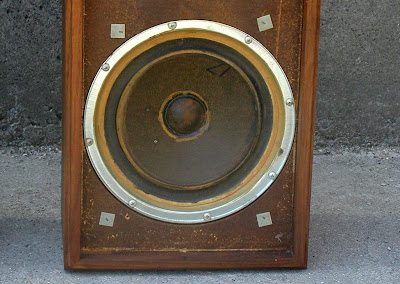
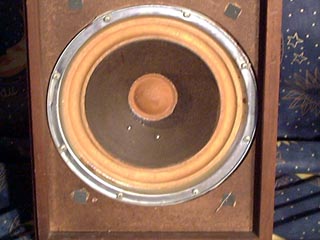
With the pair I did recently it was unquestionably necessary to reseal the woofers. Most of the dope, the honey-colored type, had granulated and fallen out, leaving the very open weave linen(?) surround bare in many spots.
I resealed the woofers with a milk-consistency mixture of clear "Alex" siliconized latex caulk, brushing it out very thoroughly to produce the thinnest coating possible. Then, as soon as they had dried enough so that the caulk wouldn't run (5 or 10 minutes) I put them back in place and played them at moderate volume until the caulk was dry.
It worked like a charm. The speakers sound terrific. I'm hoping that the latex won't stiffen up with the passage of time but so far so good.
John

ssmith3046
Super Member
The one speaker I'll never part with are my 5's. Never!
dstroyr
Active Member
A little clarification. The butyl I refer to is simply butyl. For example http://www.buyacehardware.com/caulk-butyl-rubber-sealant-ace-10204.html
they also have store brand toulene. I was told that people were complaing of a buzz or vibration sound. This was the fix, but KLH suspected the problem was not really the woofers but what the speaker was placed on. ex tile floor. very common in the 60's 70's. My 5's are one coated and one not. The coated woofer is black and the un coated is tan. My 17s are both coated and are tan with a black sheen. The thiness is only relevant to how much butyl you what and how much solvent and evaporation you need. Keep in mind that it's not gospel and they are your speakers.
they also have store brand toulene. I was told that people were complaing of a buzz or vibration sound. This was the fix, but KLH suspected the problem was not really the woofers but what the speaker was placed on. ex tile floor. very common in the 60's 70's. My 5's are one coated and one not. The coated woofer is black and the un coated is tan. My 17s are both coated and are tan with a black sheen. The thiness is only relevant to how much butyl you what and how much solvent and evaporation you need. Keep in mind that it's not gospel and they are your speakers.
boreas
"If it sounds good, it IS good." E.K.E.
A little clarification. The butyl I refer to is simply butyl. For example http://www.buyacehardware.com/caulk-butyl-rubber-sealant-ace-10204.html
they also have store brand toulene. I was told that people were complaing of a buzz or vibration sound. This was the fix, but KLH suspected the problem was not really the woofers but what the speaker was placed on. ex tile floor. very common in the 60's 70's. My 5's are one coated and one not. The coated woofer is black and the un coated is tan. My 17s are both coated and are tan with a black sheen. The thiness is only relevant to how much butyl you what and how much solvent and evaporation you need. Keep in mind that it's not gospel and they are your speakers.
A little further clarification. KLH coated all of the woofers with cloth surrounds. Some were coated with a black butyl material, some were coated with a honey colored butyl material.
This is an essential step in making a speaker with a cloth surround for use in an acoustic suspension speaker. Uncoated surrounds leak far too much air.
John

Naptown Rob
Ponographer
Most of the dope, the honey-colored type, had granulated and fallen out, leaving the very open weave linen(?) surround bare in many spots.
That's been my experience...

michaelhigh
mind's eye music
I would like to experience the east coast sound in speakers but hesitate to do all the doping and whatnot. I still would like to audition some ARs and KLHs. The KLH receivers appeal to me looks-wise, for me that generally helps 'em sound better as well. I always see them mentioned with positive reinforcement included. As popular as they were/are they can't be all that bad anywhichway.
boreas
"If it sounds good, it IS good." E.K.E.
I would like to experience the east coast sound in speakers but hesitate to do all the doping and whatnot. I still would like to audition some ARs and KLHs. The KLH receivers appeal to me looks-wise, for me that generally helps 'em sound better as well. I always see them mentioned with positive reinforcement included. As popular as they were/are they can't be all that bad anywhichway.
KLHs are well worth the minimal trouble it takes to service them. Recapping is cheap and simple to do and the only thing slightly daunting about redoping the surrounds is wading through the conflicting opinions about which preparation is best. When you compare redoping to refoaming............
John
A little clarification. The butyl I refer to is simply butyl
Have you actually tried mixing that caulk with toluene? Some of these caulks will not dry to the proper elasticity, and are not compatible with toluene....and not all "butyl" compounds are the same. Based on my measurements, all rubber based caulks (silicone, latex and butyl) and rubber cement (latex diluted with heptane) produce about the same results when diluted with the appropriate solvent. If the solution is not watery when applied it is too thick.
BTW, "doping" typically refers to the application of a substance to alter the parameters of a driver. A "sealant" for surrounds is a sealant for surrounds.

Roy
KLHs are well worth the minimal trouble it takes to service them. Recapping is cheap and simple to do and the only thing slightly daunting about redoping the surrounds is wading through the conflicting opinions about which preparation is best. When you compare redoping to refoaming............
John
Agreed! The surround sealant issue should not be the reason to avoid these old favorites. Many can be enjoyed as is, or with minimal attention.
Roy
bsabel
Well-Known Member
Then I stand corrected. I have heard people talk about "doping the surrounds" and took that to be a synonym for sealing the surrounds. But you're saying that's actually a misnomer?BTW, "doping" typically refers to the application of a substance to alter the parameters of a driver. A "sealant" for surrounds is a sealant for surrounds.
boreas
"If it sounds good, it IS good." E.K.E.
Then I stand corrected. I have heard people talk about "doping the surrounds" and took that to be a synonym for sealing the surrounds. But you're saying that's actually a misnomer?
I've always used "doping" because a: I read other people use the term and b: it put me in mind of "doping" airplane wing canvas, applying a coating to it in order to seal it. I suppose the derivation of the term re: speakers isn't related to airplanes but maybe horse racing where "doping" means something quite different.

John
I've always used "doping" because a: I read other people use the term and b: it put me in mind of "doping" airplane wing canvas, applying a coating to it in order to seal it. I suppose the derivation of the term re: speakers isn't related to airplanes but maybe horse racing where "doping" means something quite different.
John
Who knows...I've been at this for over 40 years, and there was more cone and dome "doping" going on in the old days to alter the response of drivers and systems. Maybe the term is evolving. I'm fine with it either way.

Roy