• The move to the new server is done. There are some software and database maintenance updates in process. This has us passing the hat around to help out. We appreciate any donations. Seriously, even a dollar helps. The payment page may be found here - https://www.audiokarma.org/support.html

The why of phase inversion?

bryndildaddy

Active Member
Trolling through an old Infinity Kappa owners manual I found this:

Maintaining absolute phase is an essential factor in the proper performance of your speakers. If all amplifiers (as well as the other components of the audio chain) were non-inverting (if their ouputs were always in-phase with their inputs), maintaining absolute phase would simply involve observation of the polarities of the speakers connecting wires... If your amplifier, preamplifier, and CD instruction manuals do not state if these audio components are inverting, assume that they are non-inverting since 98% of all audio components do not invert the audio signal at the output.

This has always baffled me, since I have both an Adcom CD player, and M&K sub that both have phase inversion options to accomodate such equipment. Why would an equipment manufacturer purposefully do this? How can you tell if this is randomly occuring in your system? Has anyone actually run into a component whose owners manual specifically mentions that the equipments outputs are of the inverted 2%, and why didn't this dissuade you from buying it?

Why, why, why?
 
Register to hide this ad
If you read it correctly, I think the phase inversion is for the tweeter + woofer time alignment in your particular speaker. I doubt you'll notice anything at all during listening session. Even modern speakers with all the better drivers, the phase shifting and time alignment of a speaker seems more than 2%. And then, you have the phase shift in the amp output stages compared to the input to the amp. So, 2% is not a big deal and it seems it was an old attempt to compensate the phasing issue and time alignment issues due to the drivers used in the speakers are not that time coherent as today.
 
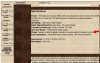
As Infinity said, some components do invert the signal at the outputs. Conrad Johnson equipment seems to do this a lot, from what I've seen in the past.

See "specifications" here:
 

Attachments

  • CJ_phase.JPG
    CJ_phase.JPG
    94.5 KB · Views: 32
Last edited:
Absolute phase is a virtually meaningless concept. How do you even know if the recording is correctly phased? Perhaps individual aspects of the mix are even phase inverted so the guitars are phased one way and the drums another. I don't perceive any difference between a phase inverted recording and the non inverted one.

Phase coherency in a speaker is a big deal. Depending on the crossover used individual drivers may be wired in reverse to deal with phase issues at the crossover point. This is completely different from absolute phase though.

YMMV though.
 
Last edited:
As Infinity said, some components do invert the signal at the outputs. Conrad Johnson equipment seems to do this a lot, from what I've seen in the past.

See "specifications" here:

Well, if CJ does it there must be a valid design philosophy behind polarity inversion. It's just that being raised on the concept that connecting your speakers out of phase is darkest taboo... Only to have that discipline blown out of the water by your other components, seems illogical.
 
Amplifier stages invert. An even number of inverting stages will give the same polarity as the input, and an odd number will invert. Speaker outputs are easy enough to handle - swap the wires if it's inverted. Unbalanced connections are a bit more difficult...
 
It's just that being raised on the concept that connecting your speakers out of phase is darkest taboo... Only to have that discipline blown out of the water by your other components, seems illogical.

Speaker phase is a completely different thing. If you wire your speakers out of phase one woofer is going in while the other is going out and you'll get phase cancellation.

Absolute phase is whether the woofers (and other speakers) go in or out initially when a note is struck.

Here's a quick description by someone who believes absolute phase can be audible.

http://www.gcaudio.com/resources/howtos/absolutephase.html
 
Last edited:
The idea of absolute phase is to preserve the phase of the original signal. There is a book titled The Wood Effect by Clark Johnson that describes. I have inserted an excerpt from a Stereophile article that should help explain what absolute phase is. I think this is what the Infinity Owners Manual was talking about.


Absolute polarity: Clark Johnsen's The Wood Effect (footnote 1) reviews evidence and opinion on the importance of this variable. Absolute polarity (sometimes called absolute phase) is best thought of as a system characteristic, and refers to whether a sound that originally started out as compression followed by rarefaction (ie, positive then negative) is reproduced that way rather than as rarefaction followed by compression (ie, negative then positive). Given components either maintain or reverse absolute polarity, with the result that the system as a whole may be in correct polarity for one source (eg, CD player) but not for another (eg, phono). Recordings themselves may be recorded in or out of absolute polarity, and, to make things even more complicated, polarity may not be the same for the whole recording, or may vary for different instruments in a multi-track mix.

The audibility of absolute polarity differences under laboratory conditions with test signals has been demonstrated by Stanley Lipshitz and others, but there is some controversy about how important (as opposed to statistically significant) the effect is under normal listening conditions with less than purist recordings, and about how sensitive different people are to reversal of polarity. As far as I'm concerned, although I can hear the difference with some recordings (the Chesky Test CD provides a good demonstration), I'm not driven to a fit of frenzy whenever a reversed-polarity recording assaults my ears. I certainly would not want to switch speaker cables (Johnsen suggests this is more effective than electronic signal reversal) whenever I suspect the recording to be of the wrong polarity.
 
On my gear I can hear what he's talking about. I don't need the Chesky Test CD although I have it. Unfortunately music producers don't follow any standard as far as absolute phase goes. It's kind of a pain getting up and reversing speaker cables every time you change an LP or CD. Someone used to make a CD player that had a switch to change the phase.

If you can't hear the difference on the Chesky Test CD maybe your gear isn't good enough! If you can and don't think it's important that's another thing. How much it bothers you is a reflection of your gear and the music you listen to. If you're primarily into acoustic music, absolute phase is something you may want to look into.
As far as "beating a dead horse", anything that can improve the sound of my system is worth looking into. Most especially if it's a free tweak.
 
I'm not saying it can't make a difference, I'm saying that with the majority of music I listen to nobody paid any attention to phase for any of the instruments. I'd prefer all my music be phase coherent just to take one more variable out of the equation but the reality is even fewer people care about this than whether power cords can make a difference.

I hope the "your system isn't resolving enough" type comment was a joke. This isn't SH.tv.

BTW: The Clark comment was more about him making phase the MOST important aspect of playback. His rants over at AA are amusing to read though.
 
Last edited:
I guess I should have put a smilie in instead of an exclamation:D

Knowing about Clark says a lot in itself. Thats also why I mentioned acoustic music. It's usually recorded without a lot of studio crap done to it. The studio crap comment is not a joke. Enough, I'm not trying to hijack the thread with my feelings about most studio recordings.
 
Well, if CJ does it there must be a valid design philosophy behind polarity inversion. It's just that being raised on the concept that connecting your speakers out of phase is darkest taboo... Only to have that discipline blown out of the water by your other components, seems illogical.

No question was raised about CJ's design philosophy. I just clearly remembered them as an example of a manufacturer whose components almost always had inverted polarity and to their credit revealed that fact in their specifications. I suspect that a minimalist design philosophy by CJ results in components that are frequently polarity inverted, and they would rather leave it that way than add an unnecessary stage, just to deliver an output signal that is in phase. That in itself could be viewed as a good thing.
 
Last edited:
Wether or not a given piece of gear inverts the signal is usually the result of how many gain stages are in it. This is so even if a given stage provides no gain.
 
Well, if CJ does it there must be a valid design philosophy behind polarity inversion.

Or, perhaps their philosophy is that it doesn't matter.

Or, because there seems to be no set standard for maintaining absolute phase from beginning to end, flip the coin and you're right 50% of the time.

As the old saying goes, if ain't broke don't fix it.
 
Back
Top Bottom