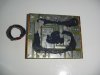
Finally came a product that should solve this problem. As you can see, ESS loved the black silicone to seal and attach componets. My first set,(3 coil) well I didn't have too much prolems removing the silicone-it may have be a different formulation as well.
With this set (4 coil), lots of the silicone is located at terminal/attachment points.
Interesting, I just picked up a set of later 3 coils, and this had zero silicone attacheng the board-just the 2 pegs-but I bet ESS resorted back to the silicone because the 2 pegs don't provide the most secure attachment-and are probably prone to vibration.
Contrary to believe, this silicone has not caused any trace of corrosion-if they were in a constant damp enviroment- this may be another story.
They are good quality circuit boards for sure, and the inductors top quality-caps another story (more of a age thing then any thing)-hence the overhaul
The stuff isn't exactly cheap, at around $75 shipped, but it will solve alot of probelms realitively quickly-and worth the money.
Hopefully this will be helpful to those persuing a ESS crossover overhaul!:thmbsp:
http://rmoreau.com/item/su100-silicone-remover/60
With this set (4 coil), lots of the silicone is located at terminal/attachment points.
Interesting, I just picked up a set of later 3 coils, and this had zero silicone attacheng the board-just the 2 pegs-but I bet ESS resorted back to the silicone because the 2 pegs don't provide the most secure attachment-and are probably prone to vibration.
Contrary to believe, this silicone has not caused any trace of corrosion-if they were in a constant damp enviroment- this may be another story.
They are good quality circuit boards for sure, and the inductors top quality-caps another story (more of a age thing then any thing)-hence the overhaul
The stuff isn't exactly cheap, at around $75 shipped, but it will solve alot of probelms realitively quickly-and worth the money.
Hopefully this will be helpful to those persuing a ESS crossover overhaul!:thmbsp:
http://rmoreau.com/item/su100-silicone-remover/60