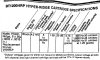
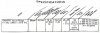
No, the V15HR-P was not a Radio Shack cartridge. Why Shure made two similar but not absolutely identical cartridges a year apart, I couldn't tell you.
Now, as to whether the V15HR-P is a kind of poor man's V15-IV in p-mount form, well, yes, kind of, since it betters the 1200HRP's trackability slightly from the lower midrange up. I suspect this was due to the use of a simplified version of the elaborate dual-band damping system developed for the V15-IV. This borrowing of V15 tech is the only reason I can think of for calling the HR-P a V15. It's not as good as the true V15-IV p-mount, the V15LT; in fact, it's only a little better than the 1200HRP, so we could call them both V15-IV second bananas. I'm just guessing, based on the tracking figures, and keeping in mind that if you get serious about damping only one end of the spectrum, the other end suffers. Getting improvement on both ends of the spectrum isn't easy, or at least, it wasn't for Shure. They describe the problem and their workaround at length in the latter half of
Shure's 1978 Technical Seminar. Side note: Empire was working on the same problem, came up with a
different solution, and presented that solution in 1979 in the EDR.9.
The top Era IV styli have telescoped cantilevers, but Shure eventually figured out a way to get the job done with a one-piece aluminum tube, because nothing made past Era IV (with the exception of the 110/111 'twins') has the telescoped feature, and trackability ratings didn't go down. The telescoped canti was probably a bear (an expensive bear at that) to assemble and get consistent [glue?] joints. Since the V15HR-P (note the hyphen) and 1200HRP are safely within Era V, they resemble the M97xE, ie, have a one-piece cantilever tube. You are correct, the M110/111 twins stayed with the earlier telescoped construction and gained some trackability over their lesser siblings thereby.
Bicycle owners are familiar with butted tubing. I suspect Shure developed a canti tube that thins out gradually (ie, it tapers internally) as it reaches the diamond end. Or maybe they found an alloy or manipulation (heat treatment, cold working) that would maintain strength with thinner walls.
Now if you want a Shure HE p-mount whose trackability specs blow the HRP's out of the water but you don't want to pay the high price of beryllium, get hold of the Era IV V15 LT. If you can.
Incidentally, it's sometimes claimed that the V15HR-P originally came with a beryllium cantilevered stylus. It didn't. Beryllium doesn't figure in any published descriptions and besides, the trackability specs above fairly shout aluminium and are easily bettered at 10kHz by the V15 LT, which is also aluminium. However, the cantilever of the VST III-P's stylus
is beryllium and this stylus will fit and work in a V15HR-P.
With some jiggering and pokering (see below), you can also use a V15VxMR stylus or one from a V15 RS even in a p-mount close'n'play-- assuming your model gives the cartridge enough room under the lid for the extra width of the brush's frame. Be careful when you first try to close the lid!
* * * * * * * *
An excellent question about the damper brush. Well, it depends on how linear trackers apply VTF, and I don't know how they do, but I can imagine two different ways. For example:
A sophisticated/expensive unit might be able to sense cartridge weight and by the use of a servomechanism compensate for any cartridge that doesn't weigh exactly 6.0g (the T4P spec). Or, more likely...
...the turntable simply
assumes the cartridge weighs 6g and applies a fixed amount of force with a spring or solenoid. If this is the case, and I believe it is, the M111HE may not work, because even though the brush supports its own weight once it's on the record, the mass of the
rest of a Shure brush-equipped stylus assembly is going to be more than 0.25g heavier than the equivalent brushless stylus, which puts you over the 1.5g VTF limit for nearly all Shure p-mounts (
the Realistic RXT5 and 6 are the exceptions) . Shure warned against the use of the N111HE stylus in tables with nonadjustable VTF in their brochures for this reason.
Some tables let you adjust the VTF a little and a few let you adjust it a lot, and many later/cheaper ones don't let you adjust it at all.
What I have found is that if you must keep the final net VTF below 1.5g, you'll probably have to
pop off the decorative plastic cap that sits on many Shure p-mounts (it's good for half a gram), plus have some minimal adjustment of VTF on your 'table. So it's doable-maybe. You really have to weigh your intended cartridge-stylus combo to be certain you won't exceed the max VTF of your stylus.
You should have a good 0--100g digital scale on hand anyway-- they're too affordable and useful not to. You weigh your Shure cartridge-plus-brush, then subtract 0.5g and see how close you are to the 6.0g spec (which gets you to 1.25g VTF) or 6.25g (which gets you to 1.5g VTF). If you're within 0.25g of your target, you can usually adjust a Technics close-n-play by that amount.
Example: if your capless cartridge plus the N111HE ends up weighing 7.0g, you subtract 0.5g brush weight to get 6.5g net. Back off the turntable VTF adjuster 0.25g and
voila, you'll be tracking at 1.5g.
If you can't get the total mass of a brush-equipped cartridge down to 7.0g (some Shure p-mounts don't have any plastic bits to remove), or if you have no VTF adjustment at all, better not do it.
Now, if your arm uses some kind of servo to detect out-of-spec cartridge weights and compensate for it, no problem. I don't know if any of them can do that.
For my own Technics tables, I'm going to assume the arms aren't servo'd for VTF. So far this has worked beautifully.
In another thread I was able to get the JICO VN45HE-SAS to work at 1.25g without any turntable adjustment because (1) the cap on the Shure V15LT weighs 0.7g and (2) JICO makes their brush-equipped styli lighter than Shure does.
Then too, some Shure p-mount bodies are underweight and Shure added mass to the stylus to get closer to 6g. In other words, you really have to weigh things to be certain.
And some programmable Technics close-n-plays have track-detector arms that sit right alongside the tonearm and prevent the use of Shures with brushes. So it all depends. [updated Shure link Nov 2022]