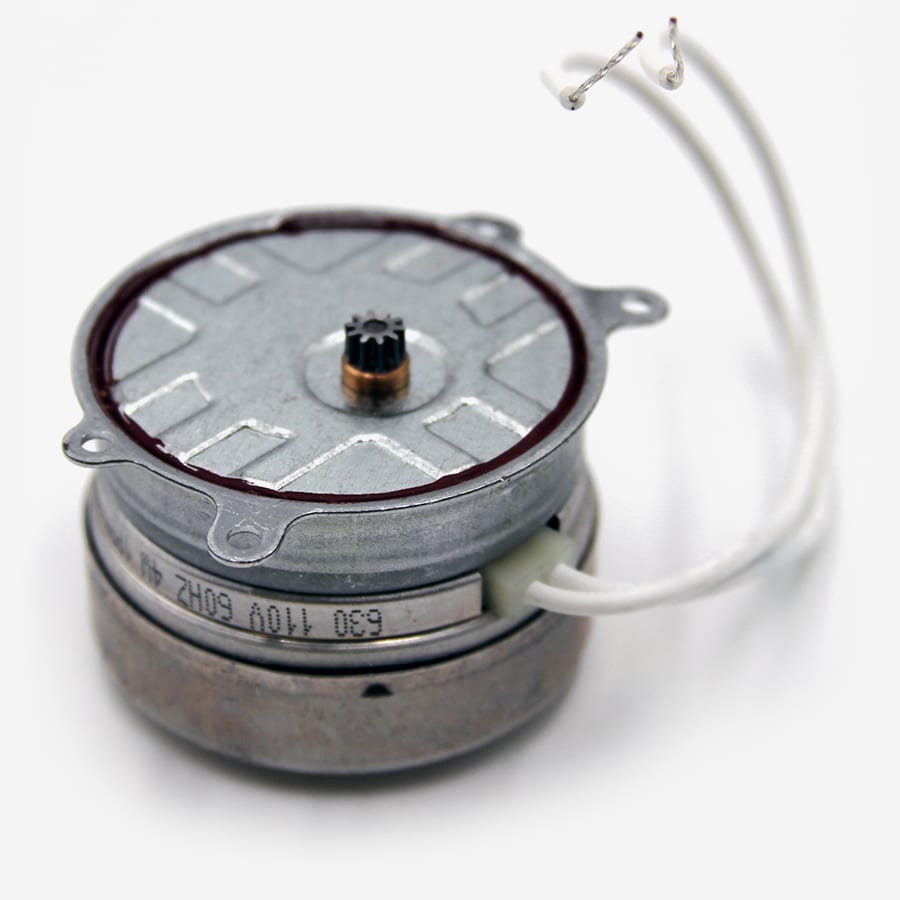
Anyone mess with old AC clock motors? Looking for repair advice.

Johnny_Law

o.O
Subscriber
A friend gave me this sweet giant clock from his exhaust shop. The old strip light was busted so I got an LED one to go inside it.

1704426852755.png

The clock motor doesn't work. The movement is seized - I can free it up and lube it pretty easily I think.

But, the motor itself, is a sealed unit. It looks like a crimped seal. I'd like to get it apart to re-lube it. Anyone know a non-destructive way to do that? (Short of just going hog wild with pliers around the outside of the crimp ...)

1704426878308.png

1704426910139.png

It's a Hansen Synchron 610, 1RPM, 3W motor, stamped "T129RB".

Really looking forward to getting the clock working again and lit and hanging in the garage!
 
Register to hide this ad
I've fixed many stuck Telechron sealed electric motors by drilling 2 small holes, one towards the top another on the bottom. On the Telechron motors it has to be 2 holes or you can't use spray cleaner(Deoxit) because with one hole it will come back in your face. The bottom hole also lets the excess drain. After the Deoxit evaporates put tape over the bottom hole then use something like sewing machine oil to lightly lube. Doesn't work every time but works about 70% of the time. Good luck. Hope you fix it.
 
I've fixed many stuck Telechron sealed electric motors by drilling 2 small holes, one towards the top another on the bottom. On the Telechron motors it has to be 2 holes or you can't use spray cleaner(Deoxit) because with one hole it will come back in your face. The bottom hole also lets the excess drain. After the Deoxit evaporates put tape over the bottom hole then use something like sewing machine oil to lightly lube. Doesn't work every time but works about 70% of the time. Good luck. Hope you fix it.
You an also use WD-40 as a wash solvent and drain before the light oil lube. Save the DeOxit for contact cleaning.
 
Zoom Spout oil rules for this sort of thing. You can pull out the oiling spout almost a foot an put the oil right where it is needed.

Screenshot 2024-01-05 at 11.45.15.png
 
Might be a good idea to heat it up with a hair dryer, get it hot to the touch, and try to work the movement manually.
 
That’s right, but a good first step. If it has been run stuck it may well be toast.
If motion is seen in the rotor window but the output side isn't turning, it could be a stripped, detached, or broken gear.
 
  • Like
Reactions: Sq1
If all else fails, I’ve replaced the clock workings (in like versions of these clocks) with battery operated clock replacement parts. Like you, I am sure, I prefer to keep the internals as originally designed, but when repairs and replacement parts aren’t available/don’t fit, the battery replacement parts are readily available (and inexpensive) with a ton of clock hand replacements available to closely match the originals. Amazon, eBay, etc. have a whole host of replacement parts. A very quick fix, to a nagging issue - and you don’t have to worry about possible impacts to clock accuracy from your repairs. One and DONE!

I used a kit to fix my old Coke clock. Kept the 110 lighting, just replaced the clock mechanism to a single AA battery unit.

IMG_2924.jpeg

Good luck on your project - cool clock!
 
Last edited:
I've never had a repaired Telechron not keep perfect time, it might not work after the repair but if it does run they've always been the most accurate clock's I have. There's several around the house keeping perfect time right now. They use the 60 Hz to regulate the speed of the clock. Plus the stuttering second hand just bugs the heck out of me on a vintage clock
 
Thanks all! Haven't attempted to free up the movement yet but will be attempting with solvents first then lubrication and hope for the best. Hoping I can get it moving again without having to drill out the rivets and take it apart.

@transmaster Awesome, thanks for the link to the new motors! And not that expensive.

@usedto I spent a long time searching YouTube before posting this thread, lots of videos on taking apart other housings. The only video I could find with this specific style of housing is this one, where the guy hacks away for 15 minutes only to give up on it. Did you have any other videos in mind?
 
The GE Telechron motor sealed capsules are the most common of the self-starting types, the Haydens somewhat less. IME.
Other types, including the original AC Hammond electric clocks were open gear and required a manual spin start. Hammond designed their tone wheel organs in a reversing of the operating principle of their popular and inexpensive accurate electric clocks when a saturated market and the great depression made their original cash cow insufficiently profitable. Tho solidly built, heavy, and somewhat costly, they thought a less expensive and more compact low maintainance stable alternative to custom hand-built site installed acoustic air powered pipe organs for churches and other public venues could be a viable venture, but not without ultimately unsuccessful litigious objections from the wind organ mfgrs over whether or not the Hammond instrument could marketed as a true "organ".
 
Last edited:
Well Koni clocks would last much longer and if they fail are serviceable. Toss this out and get a better shock clock! :)

Kidding aside that’s a cool gift. After you get it sorted just add a 71 Nova with highjackers in the rear.
 
So I ended up freeing up the movement with deoxit & wd40. Then I realized the motor actually works (amazing as it spent years plugged into the wall but stuck because of the movement). I ordered a new one anyway to have on hand.

Put in an LED light strip, set the time yesterday and it seems to be good!

1000019952.jpg
 
Back
Top Bottom