Anyone using a Nottingham Analogue Space Arm?

fiddlefye

AK Subscriber
Subscriber
So.... I have a Rek-O-Kut B-12H that I'm going to get up to speed and build a plinth for in the near future. It came fitted with a Micropoise 220 arm and I gather they can be pretty good, but in truth what I really want is a more modern-type arm. The original arm has a mounting distance of 209.5 mm so in order to use the mounting point built into the top deck whatever arm I choose needs to be somewhere in that ballpark.

My first thought would be an Eminent Technology ET2, mostly because I've heard one a couple of times and thought it was marvelous and partly due to Mr. Pig's experiences with one on his TD-124. New is vastly out of my price league and several months of hunting have failed to turn up a used one for a reasonable cost.

Another arm series that would fit the location would be Linn. In past I had a Basik LVX. No chance I'd want to go back down that path, but perhaps an Ittok would work well?

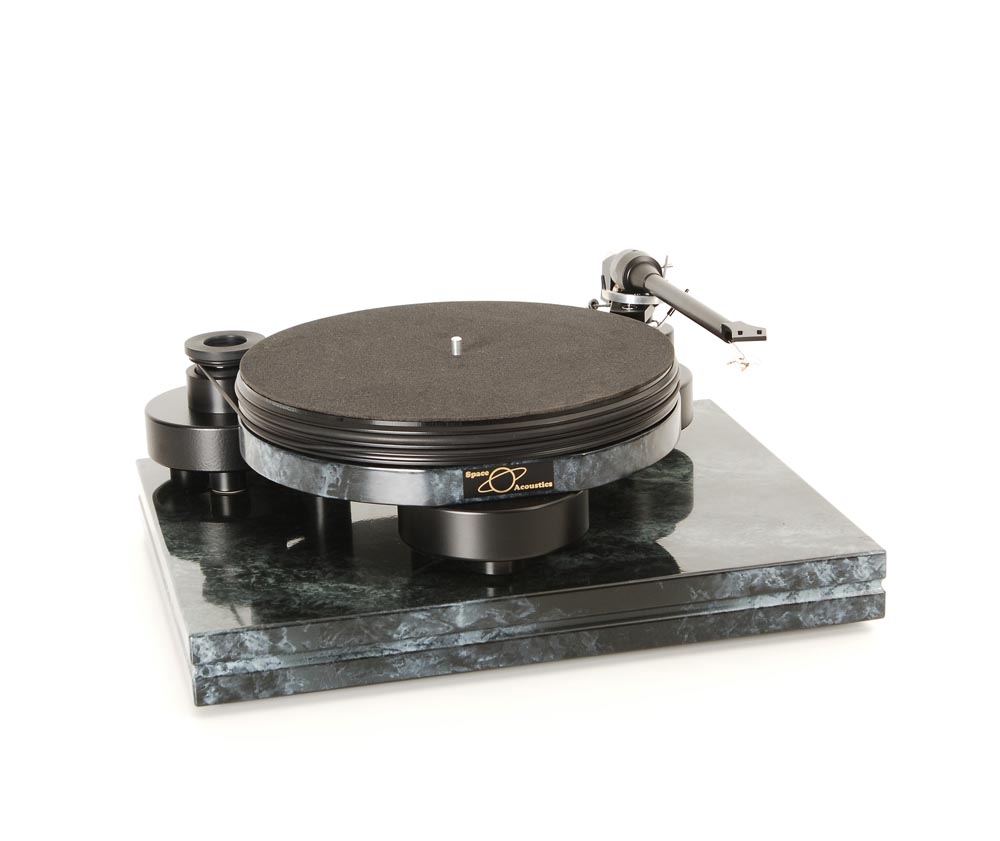
Then today I threw the question at the proprietor of my local audio emporium. It happens that he has a Nottingham Space Arm of the right length hanging around, brand new. Mounting distance is 210mm. How he came to have an extra when he only has the one table is a long story, but the upshot is that the price is a great deal.

So, does anyone have experience of the Space Arm, especially in situations outside on a NA table? It certainly is a nicely made arm and would carry the sort of carts I have in mind. Thoughts, anyone?
 
Register to hide this ad
I don't have the Space Arm, but my Nottingham Interspace has both the Anna and Analogue(Rega RB250) arms on it.
The Space arm is very similar to my Anna but a bit shorter.
It is a very nicely made arm, and extremely adjustable.
I've got my Koetsu Rosewood Signature Platinum cartridge mounted on it and it sounds devine.
Again, this is one of the most adjustable arms I've ever had.

Al. Wise
 
I don't have the Space Arm, but my Nottingham Interspace has both the Anna and Analogue(Rega RB250) arms on it.
The Space arm is very similar to my Anna but a bit shorter.
It is a very nicely made arm, and extremely adjustable.
I've got my Koetsu Rosewood Signature Platinum cartridge mounted on it and it sounds devine.
Again, this is one of the most adjustable arms I've ever had.

Al. Wise
Thanks for the review. I'm getting the impression that it is a pretty worthy arm and not outrageously expensive, all things considered.
 
Hi, and sorry for not getting back to you sooner....

I have the Nottingham Ace Spacedeck with the 10" Ace Space Arm you are considering. There are a few things that I'm not so crazy about:

1) You cannot adjust VTA on-the-fly. While there are adjustments to raise and lower the tonearm in its base, you must stop the play of the record in order to turn the screw that will "push" the arm up in the base or, conversely, lower it. You must also loosen two screws that hold the arm in place in the base, although with some finesse you can actually leave these two screws loosened whilst adjusting the up-and-down positioning of the arm. Careful here, as any slight force can and will send the whole arm moving in the opposite direction from whence the force comes and a collision of your cantilever with the platter is imminently possible.....from my research, however, it is also likely that Tom Fletcher would have applauded only very, very slight tightening of these screws once the adjustments are completed. My own preference is to be able to adjust VTA whilst listening as I have found that to be the most effective way.....once I stop the record, adjust height, restart play.....well, you get the idea.

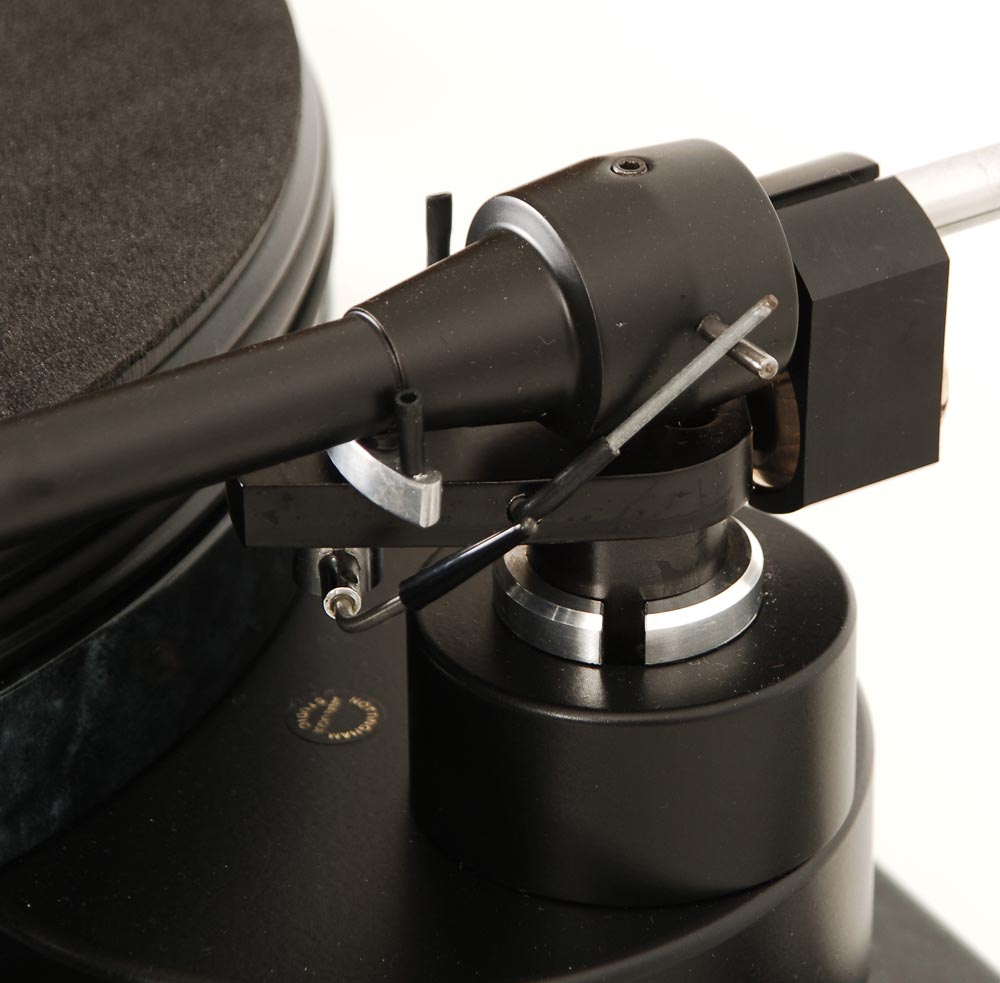
2) The pivot point leaves something to be desired as it is quite primitive, however effective. There is a screw that adjusts the play of the bearing that no one is supposed to touch other than a qualified service technician. Well, in my case, I got the deck used and the previous owner(s) had definitely "touched" it and I had to "re-touch" it to tune it in properly. There is VERY little information available regarding this adjustment and since I live in a very rural area, about 20 hours by car to the nearest Nottingham service facility, information regarding such procedures would really be helpful. You will not get it, at least I didn't, and the alternative of sending it in just was not practical as this is my every day player.....

3) Did I mention that if you need service, it is pitifully difficult to get unless you live near one of those service facilities? Ask the dealer where you intend to buy this arm "what happens if there is a problem?" If they say they are qualified to service it, fine.....if not, well then you're in my boat.

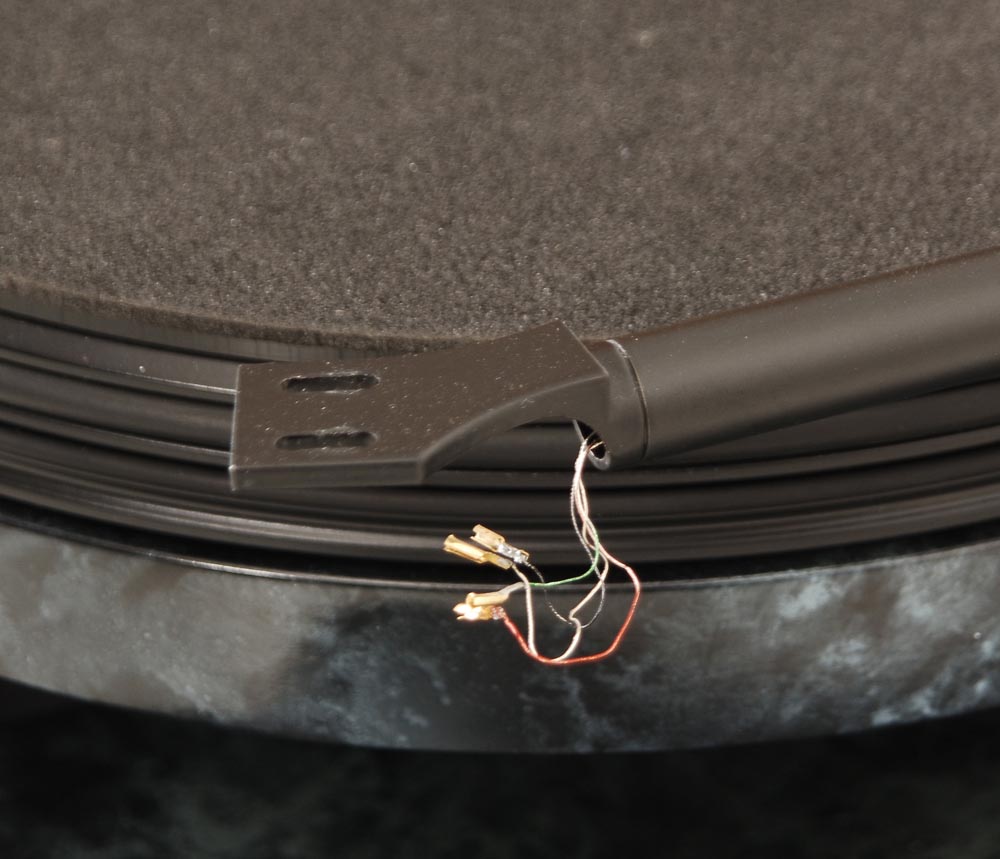
4) The four headshell wires are extremely thin....almost like hairs....that come stock with this arm. You will be required to solder the pins on the ends fairly routinely if you plan on changing your cartridge occasionally as I have. Just the manipulation of the wires as you pull the pins off of the cartridge can/will cause them to break. This surprised me at first, but after some practice I just consider it the "price of doing business" with this arm and just have my soldering station up and running before I go to replace carts....I suppose one could invest in a new wiring harness, but something tells me that those things are that thin for a reason and maybe someone who knows more about it can verify this for us? Perhaps to impart as little force on the movement of the arm in the arc as possible? Not sure, but that would be my guess.

5) The VTF is not exactly easy to set up either....you will need to push a brass weight back and forth in the rear of the arm and then take measurements. If you have large hands, you will be challenged. If you have trouble with feeling at the ends of your fingers (e.g. playing the guitar for many years in my case) the process will be further complicated as you need to be able to "feel" the movement of the weight and it doesn't take much to really change the setting....there are no easy-to-turn knobs or dials on this arm.

6) Oh, and let's not forget azimuth adjustment....at first I believed that there was no way to do that. Wrong. However, the process is a bit daunting to say the least!!! I discovered that by taking the headshell in my right hand (careful if you are using a "nude" cartridge like the Blackbird I'm running not to touch the sides of the cartridge in the process which WILL result in damage) and holding the arm just behind the headshell with my left hand, I was able to rotate the headshell in the arm tube but it is very, very delicate and certainly not very precise. I kept worrying that the graphite would break (done that with one of my graphite fly rods at the ferrule) whilst turning that headshell with enough force to get it to move.....caution again.

Once you have it all set up correctly, however, you will likely really enjoy the sound. Myself, I am going to keep my eyes on the horizon for a compatible, high-quality arm with VTA on-the-fly adjustment. Anyone that has this deck with such an arm might provide some information?

Hope that helps you.
 
Last edited:
Nice to have some direct hands-on info. There are a few arms that would fit in terms of dimensions, but the SQ in the end is the most important aspect and that reduces the selection considerably. It doesn't sound like the easiest arm to work with, maybe. I did see some other comments somewhere about the delicate wiring. That would really be something to be aware of going in for sure.
 
2) The pivot point leaves something to be desired as it is quite primitive, however effective. There is a screw that adjusts the play of the bearing that no one is supposed to touch other than a qualified service technician. Well, in my case, I got the deck used and the previous owner(s) had definitely "touched" it and I had to "re-touch" it to tune it in properly. There is VERY little information available regarding this adjustment and since I live in a very rural area, about 20 hours by car to the nearest Nottingham service facility, information regarding such procedures would really be helpful. You will not get it, at least I didn't, and the alternative of sending it in just was not practical as this is my every day player.....

Hi Fishead

Did you have any luck with getting the pivot screw in place? I have the older spacearm (non graphite) on my spacedeck, and like you I got it used. I don’t seem to be able to get work correctly. What is the distance between the pivot to spindle?

cheers
 
Hi eastward, and welcome to AK!

To answer your question, yes, I was able through trial and error to get the pivot screw adjusted just right. If it's too loose, you will hear muddy and smeared sound. Too tight, you will hear strident, harsh sound. So, it's just a matter of listening and playing records that you are very familiar with until the sound is just right.

What is not working correctly?

To know the pivot to spindle distance, we must first know the identity of your arm. Do you have a model and length identified?

Where are you located? I ask because you may have access to some resources that I do not have living where I am.
 
Hi eastward, and welcome to AK!

To answer your question, yes, I was able through trial and error to get the pivot screw adjusted just right. If it's too loose, you will hear muddy and smeared sound. Too tight, you will hear strident, harsh sound. So, it's just a matter of listening and playing records that you are very familiar with until the sound is just right.

What is not working correctly?

To know the pivot to spindle distance, we must first know the identity of your arm. Do you have a model and length identified?

Where are you located? I ask because you may have access to some resources that I do not have living where I am.

Hi Fishead,

Thank you very much for the warm welcome!

Congrats on getting the pivot screw set.
I've still yet to have the arm optimise with my deck. I got the unit used and I thought it would be an easy ride in getting this baby running, unfortunately that hasn't been the case. I am located in Singapore, there's no representative of the brand here, the nearest would be Hong Kong for me. I'd written an email to Nottingham Analogue for help and was told to contact the Hong Kong distributor.
The arm is a 9" spacearm version 1, the specified pivot to spindle says 210mm. I've used 2 different protractor and had no luck getting it optimised to sound anywhere decent. The inner 3/4 of most vinyl are almost unplayable due to distortion, I've tried different cartridges and the results are similar.
I am somewhat at a loss as to what I can do to get this working.

Thank you so much for taking your time out to help with my question and query. Cheers

Here are some pictures I found on the internet of the same deck and arm.
66007.jpg

66007e.jpg
66007b.jpg
 
Hey Eastward, it's late so I am going to address this further with you tomorrow. If you have the pivot to spindle distance set to 210mm, that sounds right. There are other aspects of getting the tonearm properly set that we'll look at tomorrow. In the meantime, this is a fine deck and I believe with some time, learning, and experimentation, you will be successful. I'll try to help you all I can. Manyana
 
First a couple questions:
1) You said the "inner 3/4" of most records are unplayable due to distortion. Right?
2) How does the "outer 1/4" of most records sound? Good? Fair? Or also not so good?
3) Have you tried to adjust the screw on top of the pivot point of the arm at all? If so, did you turn it clockwise or counter clockwise?
4) If you turned the screw clockwise, did you get to a point where the tonearm was essentially "frozen," that is, it was so tight that it would not move on the pivot point at all?
5) Did you turn the screw counter clockwise? If so, did you get to a point where it was so loose that it seemed to be disengaged? If so, did you then turn it until it became engaged again and did it then lock up again?
6) When you get to the beginning of the inner 3/4 of a record, where it starts to sound really bad, will the tonearm still move in the direction of the spindle unimpeded?
7) If you lift the tonearm at rest with the lift mechanism and then push it gently towards the spindle with your finger, does it glide across the top of the lift mechanism bar smoothly, or do you feel any resistance at all when you start getting to what would be the inner 3/4 of a record?
8) With the tonearm in the rest position, gently take the weight in your hand and lift the tonearm until it is parallel with the platter. Now try to rotate the tonearm clockwise and then counter clockwise. Does it move and if so, does it seem to have a lot of play or just a tiny bit? See here:


That was the amount of movement on my arm. I snugged it up a bit, but with this much movement it certainly played fine, just fine-tuning from there.


Let's start here and when I have your answers, we will go from there.

Whoops, just realized it is almost 10pm in Singapore.....carry on when you arise.
 
Last edited:
First a couple questions:
1) You said the "inner 3/4" of most records are unplayable due to distortion. Right?
2) How does the "outer 1/4" of most records sound? Good? Fair? Or also not so good?
3) Have you tried to adjust the screw on top of the pivot point of the arm at all? If so, did you turn it clockwise or counter clockwise?
4) If you turned the screw clockwise, did you get to a point where the tonearm was essentially "frozen," that is, it was so tight that it would not move on the pivot point at all?
5) Did you turn the screw counter clockwise? If so, did you get to a point where it was so loose that it seemed to be disengaged? If so, did you then turn it until it became engaged again and did it then lock up again?
6) When you get to the beginning of the inner 3/4 of a record, where it starts to sound really bad, will the tonearm still move in the direction of the spindle unimpeded?
7) If you lift the tonearm at rest with the lift mechanism and then push it gently towards the spindle with your finger, does it glide across the top of the lift mechanism bar smoothly, or do you feel any resistance at all when you start getting to what would be the inner 3/4 of a record?
8) With the tonearm in the rest position, gently take the weight in your hand and lift the tonearm until it is parallel with the platter. Now try to rotate the tonearm clockwise and then counter clockwise. Does it move and if so, does it seem to have a lot of play or just a tiny bit? See here:


That was the amount of movement on my arm. I snugged it up a bit, but with this much movement it certainly played fine, just fine-tuning from there.


Let's start here and when I have your answers, we will go from there.

Whoops, just realized it is almost 10pm in Singapore.....carry on when you arise.

Hi Fishead

Wow. You are a star! Thanks for the instructions. I will give them a go this weekend. Speak soon. Cheers!
 
You are welcome, but I need answers to those questions in order to more fully understand what is going on with your tone arm. When you get a chance, please let me know.....

Also, FYI, if you have played with the pivot screw and moved it to the position where the tonearm is essentially "locked," or frozen to where it has no play, then you should know that even the very smallest loosening of that screw immediately relaxes the arm and returns it to a movable state. The idea is to have the screw backed off just enough for the arm to begin moving again and stop there so it has just enough play to be able to move in relation to the grooves of the record but not so much as to create too much movement and introduce noise by wobbling as it moves. That may sound a little confusing, but if you play with it enough you will see what I mean.
 
Last edited:
You are welcome, but I need answers to those questions in order to more fully understand what is going on with your tone arm. When you get a chance, please let me know.....

Also, FYI, if you have played with the pivot screw and moved it to the position where the tonearm is essentially "locked," or frozen to where it has no play, then you should know that even the very smallest loosening of that screw immediately relaxes the arm and returns it to a movable state. The idea is to have the screw backed off just enough for the arm to begin moving again and stop there so it has just enough play to be able to move in relation to the grooves of the record but not so much as to create too much movement and introduce noise by wobbling as it moves. That may sound a little confusing, but if you play with it enough you will see what I mean.

Hi Fishead
So sorry with getting back so late. life finally allowed me some time to get back with this. Your tip and instructions are most clear and I am very near to getting rid of the distortion that I had be plagued with. I’ve tooled myself up with a digital stylus force gauge which help me along with your steps. I did what you had instructed, turned the pivot screw to the point where the arm start to lock up and reverse the direction after. On my trial in doing this, I noticed that they weight distribution of the arm was somewhat different across the arc. The weight would gradually get closer to the weight of the tracking force of the front as I back off the pivot screw. I have now the tracking force differences of about 0.02g between the beginning to the end of the arc, and the inner groove distortion is almost eradicated.
You are a star, Fishead!! I’ve been trying to solve this issue from the day I got this deck 2 years ago, I’ve read closed to possibly everything on the web on anything related to the spacedeck and space arm combo, and had almost given up. You are a saviour. Thank you for being so generous with helping me and the people on this forum. Cheers!
 
Glad to help and thank you for the kind words. There is very sparse information about these arms (or tables) available and I'm glad that the explorations and findings I've made have helped someone else. I know I was very, very frustrated for quite some time and nearly sold the table. Glad I didn't because I happen to like how it sounds a lot, as I trust you will from this point forward. Enjoy your accomplishments and above all.....the music and the sound!
 
Back
Top Bottom