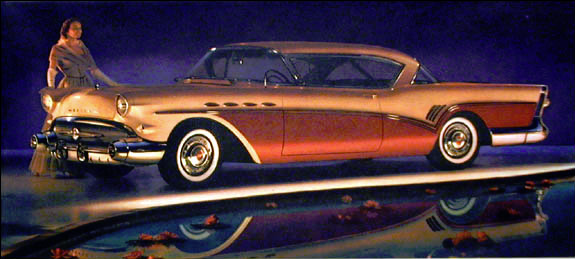
A friend sent sent me this today. Interesting story.
HISTORY OF THE CAR RADIO
Seems like cars have always had radios, but they didn't. Here's the true story:
One evening, in 1929, two young men named William Lear and Elmer Wavering drove their girlfriends to a lookout point high above the Mississippi River town of Quincy, Illinois, to watch the sunset. It was a romantic night to be sure, but one of the women observed that it would be even nicer if they could listen to music in the car.
Lear and Wavering liked the idea. Both men had tinkered with radios (Lear had served as a radio operator in the U.S. Navy during World War I) and it wasn't long before they were taking apart a home radio and trying to get it to work in a car. But it wasn't as easy as it sounds:
Automobiles have ignition switches, generators, spark plugs, and other electrical equipment that generate noisy static interference, making it nearly impossible to listen to the radio when the engine was running.
One by one, Lear and Wavering identified and eliminated each source of electrical interference. When they finally got their radio to work, they took it to a radio convention in Chicago. There they met Paul Galvin, owner of Galvin Manufacturing Corporation. He made a product called a "battery eliminator" a device that allowed battery-powered radios to run on household AC current. But as more homes were wired for electricity, more radio manufacturers made AC-powered radios.
Galvin needed a new product to manufacture. When he met Lear and Wavering at the radio convention, he found it. He believed that mass-produced, affordable car radios had the potential to become a huge business.
Lear and Wavering set up shop in Galvin's factory, and when they perfected their first radio, they installed it in his Studebaker. Then Galvin went to a local banker to apply for a loan. Thinking it might sweeten the deal, he had his men install a radio in the banker's Packard. Good idea, but it didn't work - Half an hour after the installation, the banker's Packard caught on fire. (They didn't get the loan.)
Galvin didn't give up. He drove his Studebaker nearly 800 miles to Atlantic City to show off the radio at the 1930 Radio Manufacturers Association convention. Too broke to afford a booth, he parked the car outside the convention hall and cranked up the radio so that passing conventioneers could hear it. That idea worked -- He got enough orders to put the radio into production.
WHAT'S IN A NAME
That first production model was called the 5T71. Galvin decided he needed to come up with something a little catchier. In those days many companies in the phonograph and radio businesses used the suffix "ola" for their names - Radiola, Columbiola, and Victrola were three of the biggest. Galvin decided to do the same thing, and since his radio was intended for use in a motor vehicle, he decided to call it the Motorola.
But even with the name change, the radio still had problems:
When Motorola went on sale in 1930, it cost about $110 uninstalled, at a time when you could buy a brand-new car for $650, and the country was sliding into the Great Depression. (By that measure, a radio for a new car would cost about $3,000 today.) In 1930, it took two men several days to put in a car radio. The dashboard had to be taken apart so that the receiver and a single speaker could be installed, and the ceiling had to be cut open to install the antenna. These early radios ran on their own batteries, not on the car battery, so holes had to be cut into the floorboard to accommodate them. The installation manual had eight complete diagrams and 28 pages of instructions.
HIT THE ROAD
Selling complicated car radios that cost 20 percent of the price of a brand-new car wouldn't have been easy in the best of times, let alone during the Great Depression. Galvin lost money in 1930 and struggled for a couple of years after that. But things picked up in 1933 when Ford began offering Motorola's pre-installed at the factory. In 1934 they got another boost when Galvin struck a deal with B.F. Goodrich tire company to sell and install them in its chain of tire stores. By then the price of the radio, installation included, had dropped to $55. The Motorola car radio was off and running. (The name of the company would be officially changed from Galvin Manufacturing to "Motorola" in 1947.)
In the meantime, Galvin continued to develop new uses for car radios.
In 1936, the same year that it introduced push-button tuning, it also introduced the Motorola Police Cruiser, a standard car radio that was factory preset to a single frequency to pick up police broadcasts.
In 1940 he developed the first handheld two-way radio, the "Handie-Talkie" for the U. S. Army.
A lot of the communications technologies that we take for granted today were born in Motorola labs in the years that followed World War II.
In 1947 they came out with the first television to sell under $200.
In 1956 the company introduced the world's first pager;
in 1969 it supplied the radio and television equipment that was used to televise Neil Armstrong's first steps on the Moon.
In 1973 it invented the world's first handheld cellular phone. Today Motorola is one of the largest cell phone manufacturers in the world.
And it all started with the car radio.
WHATEVER HAPPENED TO The two men who installed the first radio in Paul Galvin's car, Elmer Wavering and William Lear, ended up taking very different paths in life.
Wavering stayed with Motorola. In the 1950's he helped change the automobile experience again when he developed the first automotive alternator, replacing inefficient and unreliable generators. The invention lead to such luxuries as power windows, power seats, and,eventually, air-conditioning.
Lear also continued inventing. He holds more than 150 patents. Remember eight-track tape players? Lear invented that. But what he's really famous for are his contributions to the field of aviation. He invented radio direction finders for planes, aided in the invention of the autopilot, designed the first fully automatic aircraft landing system, and in 1963 introduced his most famous invention of all, the Lear Jet, the world's first mass-produced, affordable business jet. (Not bad for a guy who dropped out of school after the eighth grade.) Sometimes it is fun to find out how some of the many things that we take for granted actually came into being!
And It all started with a woman's suggestion!
HISTORY OF THE CAR RADIO
Seems like cars have always had radios, but they didn't. Here's the true story:
One evening, in 1929, two young men named William Lear and Elmer Wavering drove their girlfriends to a lookout point high above the Mississippi River town of Quincy, Illinois, to watch the sunset. It was a romantic night to be sure, but one of the women observed that it would be even nicer if they could listen to music in the car.
Lear and Wavering liked the idea. Both men had tinkered with radios (Lear had served as a radio operator in the U.S. Navy during World War I) and it wasn't long before they were taking apart a home radio and trying to get it to work in a car. But it wasn't as easy as it sounds:
Automobiles have ignition switches, generators, spark plugs, and other electrical equipment that generate noisy static interference, making it nearly impossible to listen to the radio when the engine was running.
One by one, Lear and Wavering identified and eliminated each source of electrical interference. When they finally got their radio to work, they took it to a radio convention in Chicago. There they met Paul Galvin, owner of Galvin Manufacturing Corporation. He made a product called a "battery eliminator" a device that allowed battery-powered radios to run on household AC current. But as more homes were wired for electricity, more radio manufacturers made AC-powered radios.
Galvin needed a new product to manufacture. When he met Lear and Wavering at the radio convention, he found it. He believed that mass-produced, affordable car radios had the potential to become a huge business.
Lear and Wavering set up shop in Galvin's factory, and when they perfected their first radio, they installed it in his Studebaker. Then Galvin went to a local banker to apply for a loan. Thinking it might sweeten the deal, he had his men install a radio in the banker's Packard. Good idea, but it didn't work - Half an hour after the installation, the banker's Packard caught on fire. (They didn't get the loan.)
Galvin didn't give up. He drove his Studebaker nearly 800 miles to Atlantic City to show off the radio at the 1930 Radio Manufacturers Association convention. Too broke to afford a booth, he parked the car outside the convention hall and cranked up the radio so that passing conventioneers could hear it. That idea worked -- He got enough orders to put the radio into production.
WHAT'S IN A NAME
That first production model was called the 5T71. Galvin decided he needed to come up with something a little catchier. In those days many companies in the phonograph and radio businesses used the suffix "ola" for their names - Radiola, Columbiola, and Victrola were three of the biggest. Galvin decided to do the same thing, and since his radio was intended for use in a motor vehicle, he decided to call it the Motorola.
But even with the name change, the radio still had problems:
When Motorola went on sale in 1930, it cost about $110 uninstalled, at a time when you could buy a brand-new car for $650, and the country was sliding into the Great Depression. (By that measure, a radio for a new car would cost about $3,000 today.) In 1930, it took two men several days to put in a car radio. The dashboard had to be taken apart so that the receiver and a single speaker could be installed, and the ceiling had to be cut open to install the antenna. These early radios ran on their own batteries, not on the car battery, so holes had to be cut into the floorboard to accommodate them. The installation manual had eight complete diagrams and 28 pages of instructions.
HIT THE ROAD
Selling complicated car radios that cost 20 percent of the price of a brand-new car wouldn't have been easy in the best of times, let alone during the Great Depression. Galvin lost money in 1930 and struggled for a couple of years after that. But things picked up in 1933 when Ford began offering Motorola's pre-installed at the factory. In 1934 they got another boost when Galvin struck a deal with B.F. Goodrich tire company to sell and install them in its chain of tire stores. By then the price of the radio, installation included, had dropped to $55. The Motorola car radio was off and running. (The name of the company would be officially changed from Galvin Manufacturing to "Motorola" in 1947.)
In the meantime, Galvin continued to develop new uses for car radios.
In 1936, the same year that it introduced push-button tuning, it also introduced the Motorola Police Cruiser, a standard car radio that was factory preset to a single frequency to pick up police broadcasts.
In 1940 he developed the first handheld two-way radio, the "Handie-Talkie" for the U. S. Army.
A lot of the communications technologies that we take for granted today were born in Motorola labs in the years that followed World War II.
In 1947 they came out with the first television to sell under $200.
In 1956 the company introduced the world's first pager;
in 1969 it supplied the radio and television equipment that was used to televise Neil Armstrong's first steps on the Moon.
In 1973 it invented the world's first handheld cellular phone. Today Motorola is one of the largest cell phone manufacturers in the world.
And it all started with the car radio.
WHATEVER HAPPENED TO The two men who installed the first radio in Paul Galvin's car, Elmer Wavering and William Lear, ended up taking very different paths in life.
Wavering stayed with Motorola. In the 1950's he helped change the automobile experience again when he developed the first automotive alternator, replacing inefficient and unreliable generators. The invention lead to such luxuries as power windows, power seats, and,eventually, air-conditioning.
Lear also continued inventing. He holds more than 150 patents. Remember eight-track tape players? Lear invented that. But what he's really famous for are his contributions to the field of aviation. He invented radio direction finders for planes, aided in the invention of the autopilot, designed the first fully automatic aircraft landing system, and in 1963 introduced his most famous invention of all, the Lear Jet, the world's first mass-produced, affordable business jet. (Not bad for a guy who dropped out of school after the eighth grade.) Sometimes it is fun to find out how some of the many things that we take for granted actually came into being!
And It all started with a woman's suggestion!