• The move to the new server is done. There are some software and database maintenance updates in process. This has us passing the hat around to help out. We appreciate any donations. Seriously, even a dollar helps. The payment page may be found here - https://www.audiokarma.org/support.html

Is the Akai GX-4000D a good basic machine?

weegee

Active Member
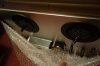
Non knowing anything about reel to reel I had just bought one to get my feet wet. I speculated that a rebuilt Akai GX-4000D would be good. Sadly it arrived from eBay with bent spindle.


DSC06216.jpg
I was going to look for the same model to rebuy once I get a refund on the damaged unit.

Is the Akai GX-4000D a good basic, reliable machine? If not, what do your recommend in the sub $300 range for reliability? I am just playing dialogue audio, no hifi stuff.

Thanks
 
Register to hide this ad
i wanted to buy one as my first reel to reel , i find them here with 200-250 euros, but when i saw one , i was dissapointed , so , i put another 200 and buy GX 260 D which is from another class , ancestor of gx 635 d...........anyway , if it is in good shape , clean right aligned heads , it can provide good quality sound.
 
Thanks Tech---Nics

Is head alignment something you can do at home or is it a job for a pro? How do you know when the heads are not aligned?
 
there are many theoryes about head alignment .......by the book , u need test tapes and an osciloscope to do it right but since few have that , many , including me, proceed like this,,,,,,take a tape recorded on a good reel especially if u know that reel has factory alignment and little heads fatigue , u play it on your reel and by turning alignment screws beside head , until u hear most clear sound, u have aligned your heads.......but, before that , u need a new tape , i strongly recommend MAXELL for akai,and make a few recordings, maybe u have luck and your reel is in good shape and u dont need alignment, dont forget to clean heads first before recording

DO NOT TRY ALIGNMENT BEFORE RECORDING SOMETHING OR PLAYING A GOOD RECORDED TAPE ,cuz if your heads are aligned already u will make a disaster.
 
If there is nothing wrong with the heads and they have not been moved, DON'T MOVE THEM! You'll never get them back to where the tape rides in the worn area. The heads will need to be lapped and reinstalled if you move them. Only thing you can do is tweak the azimuth on the record and play head,, something best done using a MRL test tape and an Oscilloscope. You load the tape, take the left and right output and connect them to the X and Y inputs on the O'Scope. Set the time to X-Y and follow the scope procedure to display the Lissajous pattern. When out of alignment the pattern will look like a O on the Scope display. Tweak the azimuth screw only until you have approximately 45 degree line with the top at the 1 o'clock position and the bottom at the 7 o'clock position. This indicates the playback head is in phase and aligned. You will use the 10khz test tape signal first, then switch to the 16khz tone to tweak the adjustment.

After the play head azimuth is set, proceed to the record head. Using a quality blank tape, the procedure is the same, however you set the machine to record, set the input levels, the monitor to the 'TAPE' position so you can see what the play head sees downstream. With a 10khz signal recording to tape, set the record head azimuth the same way as the playback head azimuth. Then switch the function generator to 16khz and tweak the record head azimuth, same as you do on playback head. The attenuator for 10k and 16k input signal levels are adjusted before beginning .The manual specifies the level you use coming from the function generator.

I would buy a new multi tone (4 tone) test tape from MRL. You will want to buy the 4 tone 200 nWb/m test tape used for consumer machines. With it, you can perform a complete playback electronics calibration, following the service manual (which is available free from HiFi Engine, once you sign up, also free) instructions. This needs to done before touching the play or record head azimuth. The manual will tell you which equipment you need to calibrate both the play and record circuits, as well as how to adjust the azimuth on both heads. It will also show how to check the frequency response on both record and playback electronics-heads.

GX Glass heads don't show wear the way metal heads do. You need a very bright light and quality magnifier. You are looking for cracks and a rough, dull, pitted surface within the width of the tape path, on the record and play heads. Worn GX heads don't display wear the way types of heads do. When the heads are badly worn, the overall frequency response (measured in db's or dbm's-dbu's) will drop off sharply beyond 3khz. If they are not cracked around to pole pieces, they can typically be lapped by someone such as JRF Magnetics. Then they will perform like they did new once again. You send the the entire head block assembly with the 3 heads mounted. JRF will assess them, and if not damaged lap the heads and laser align them. When you get them back, you remount the entire head block assembly and are ready to go. A check-tweak of the azimuth is all that MIGHT be needed, if that.

Regarding your damaged reel table spindle lock, you can likely get a replacement reel table from Ebay in used Akai 4000d parts and mount it yourself. Cost should be under 40$, as they are not that rare. You will want to check, and if needed, adjust the reel table height. Since the unit had some contact to the face in shipping , enough to bend the take-up reel table lock, the tables may be now misaligned. This is done with the covers removed, either JIS (phillips) or allen screws keep the reel tables tightly locked the the reel motor shafts. You set each reel table height position so that on straight true reels, the tape packs straight on the center of the hub, between the reel flanges. The same applies to both the take-up and supply reels. This is also detailed in the service manual.

Hope this info is helpful in some way!
 
Last edited:
You might be able to get a partial refund and replace the bent part too if you're mechanically inclined. That's a very good little starter deck there, and that one looks to be in great shape other than the bent spindle. Whatever you do end up getting I would agree with the above suggestion not to touch the head alignment screws without knowing what you are doing. If you get it out of whack then every tape you make on it will only sound right on that deck and you'll soon have a library of tapes that sound wrong on any other machine.

Believe it or not I've been able to straighten out some pretty badly bent Akai spindles before without snapping them off, however if the seller said to send it back then that may not be an option (plus that one might be too far gone to bring back).
 
Whatever you do end up getting I would agree with the above suggestion not to touch the head alignment screws without knowing what you are doing. If you get it out of whack then every tape you make on it will only sound right on that deck and you'll soon have a library of tapes that sound wrong on any other machine.

I second audiojones on his post, and wanted to add that not only will moving the heads be a mistake, you will damage every tape that passes the heads-as the head wear slot will no longer align with the tape travel, which will tear up the edges of every tape! With the glass GX heads, the wear will be minimal, but I would not risk it.
 
Agreed that a used reel table should not be hard to find. Akau made manuy thousand of those decks over a nuber of years.

Google Search "Bad Akai Transistor" - 2SC458.

The GX4000 I owned briefly did not play on one channel. I learned then of the problematic transistor. I Physically counted 14 of them in the deck and during the process noticed they all had blackend legs.

Once replaced, the deck worked splendidly.

All 2SC458's were replaced even though it was likely only one that caused the problem. My thought was if they all had black legs, they were all on the brink of failure.
 
Last edited:
In support of macman007, audiojones and oldvinyldude, just so there is complete clarity and no ambiguity whatsoever, never, ever, ever, ever, EVER mess around with the head alignment screws on any deck. Whilst the factories occasionally did setup a deck incorrectly, these instances were few and far between. What TECH--NICS suggests will just result in the deck being sort-of aligned in one direction to that the particular pre-recorded tape, which is not the correct way to set alignment and generally, this never needs to be done.
As for your unit, personally, if you can return the Akai, I would and I’d look for a mid to late ‘70’s TEAC deck. My experience with a very nicely maintained, likely used 4000DB in the ‘70’s wasn’t great. Comparing it to our family TEAC A3300-10, that blew the Akai away in terms of build and performance so it was sold. I didn’t bother getting another R2R at that time and the A3300 had disappeared too - I didn’t buy another R2R ‘til 2012 and I now have four!
 
Last edited:
Tis true,...the Teac A2300S, SX and SD (SD adds Dolby B) are tough to beat rosumer performers, featuring strong AC hysteresis motors, and lots of bang for the buck. AC motor machines will outlast their DC motor counterparts. The Teacs listed here use all 3 AC motors. any A series will still need some work, belts, proper lubrication, calibration, and possibly heads, but only if their wear gaps approach 6mm in width. If you are going the Teac route, I would STRONGLY SUGGEST buying one of the Teac A3300S variants, such as the SX. The A3300 series brings along 10" reel capability to the party as well as improved specs. These are the best bang-for-the buck of all the Teac A-series machines If you are dead set against buying any deck which is capable of running 10" reels as well, remember this. For the price these 10" reel capable decks sell for, adds greater value down the line, should you decide to resell and upgrade to another deck. The A3300S variants offer flexibility, capability, room to grow, and long lasting trouble free performance.

I own a dozen A series machines, as well as 30 series and X series Teacs. I've bought and sold at least 6 more including an A4300S and A3300SX 2 track Multitrack Series. I've worked on a lot of Teac A-series decks, but never for failures, mostly worn out heads, tape path, calibrations and aluminum electrolytic capacitor replacement. The keep company with my Otari, Revox-Studer, Crown, Pioneer and Akai reel to reels. None of these I'd need to trade for anything else, since each one is a top notch performer. The Akai is the least performance oriented of the bunch, having better specs that when I got it, but not as good as the others. BUT, the GX280-D performs better than it's advertised specs, essentially flat frequency response from 30hz-23khz @ 7.5 ips. It has 2 AC motors, but only 7" reel capable. Still its a better deck than many other Akai's using motors and capstan motor speed control near identical to that used in Revox-Studer machines with the pabst AC motors.

The Teac A4300S would be the deck I endorse for anyone getting into the open reel hobby but ONLY IF they are dead set on owning a 7" reel machine,and not 7" or 10". The A4300S features 2 level-capable VU meter controls, which provides 2 different meter/scales levels, allowing for +3db and +6db operation, should you want to run hotter modern tape or record hotter and not pin the meters constantly. I would advise any deck that you purchase be capable of calibrating internally to use modern tape formulas as well. Modern tape is easier on the heads and tape path wear. It will also be capable of significantly improved audio recording quality, as well as take hotter record levels without distorting.Higher record levels allow you to enjoy a better S/N ratio, less tape hiss overall (at 7.5 ips) without using any noise reduction.

New tape is plentiful, long playing in traditional 1800' (7.5" reels) or 3600' which fits on 10" reels. At 7.5 ips, 3600' equals 90 minutes of recording time per tape side, or 3 hours total both directions. Double these times if you run the deck at 3.75 ips, which I never recommend if you seek the best sound quality. New tape is also guaranteed to work, and comes with a warranty, being not that expensive when compared to say a reel of used or NOS Maxell, which is the only used-NOS tape I'd trust long term.


A 10" reel of used or NOS Maxell tape costs at least as much and considerably more in many cases that brand new ATR MDS-3600, Capture 930 or Recording the Masters LPR-35/180. The 7" reels are expensive for what you get, the least expensive of the bunch being Maxell UD, which isn't in the same universe sound quality-wise as any of the 3 tape brands/models I listed above. The larger 10" reels tend to be more expensive than 7". That said, you can buy cheaper 10" plastic NAB reels for 1/3 or 1/4 the cost of the metal NAB reels. If you look and are ready to pull the trigger there are often great deals on the 10" reels.

As far as the Teac decks, I would concentrate on the models I listed above, but with the later tapered black plastic control knobs, and rounded Monitor, Bias, and EQ switches. These are the latest and last of the A series decks, with the newest electronics and best specs of the entire run. 1978-79 are the best years IMO, the newest caps you'll find. Unless the machine has been opened, it should be plug and play after some deep cleaning, and preventative maintenance, which is likely overdue. Down the road if you really like the medium and the deck,, at minimum, provided the head wear is under 3mm and everything works, , I'd get the power supply electrolytic caps replaced as well as select electrolytic caps on the audio boards. Better performance, will result, and the deck gets calibrated once new caps are in, setting the deck up to work with modern tapes.

The Akai GX4000D will need transistors replaced if they have not been done yet, 2SC458 and 23SC945 transistors are known troublemakers in these decks. Mouser Electronics sells KSC1845FTA transistors, which are the modern low noise substitutes to replace the 2SC458 and 2SSC945 transistors in the akai decks, Again, power supply caps and select audio path caps should be considered overage and replaced at this point, being well over 40 years old. They were only supposed to last 20-25 years, and are severely degraded at their age.

Of the 2 brands, honestly the Teac models will be better overall, but the GX4000D can be made solid and capable of decent performance. Just know there are no new heads available for the Akai decks and standard metal heads cannot be made to work on them. The Teac units using metal heads can be readily replaced with available new heads is need be and don't suffer from the transistor issues the Akai units do. Also, if the Akai deck you buy used the Sanyo LD3141, a primitive Op-Amp, this is it's Achilles Heel. There is no new modern substitution for the LD3141, the work around modification is a circuit with multiple components mounted to a Eisenhower Silver Dollar sized circuit board piggybacked typically to the play and record audio boards. This will need to be built and installed in place of the LD3141's as they all fail sooner or later. The sound they make when failed is like the waves crashing on the beach,overcoming the audio being recorded or played back by the machine. I've changed the LD3141's on many units, sometimes going thru 3 or 4 before getting on NOS without issue.

AS Sanyo discontinued production by the mid 80's, even the NOS replacements are nearing 40 years old, failure being only a matter of time, not chance.

 
Have two of these Akai's. Never any issues (knock on wood) and they sound great to me. Tough little decks !! Well except for the one you got. Must have took a heavy hit.
 
Thanks Tech---Nics

Is head alignment something you can do at home or is it a job for a pro? How do you know when the heads are not aligned?

It's a job which requires some special test tapes, and some test equipment and knowledge of how to use it. Said tools are not cheap either. Better left to a technician unless you know what you're doing. I recommend you get this if needed done by a professional technician who is experienced on analog tape machine maintenance and repairs.
 
Back
Top Bottom