Trekkie4
Retired Member
I did a quick search of AK, trying to find more feedback on this PreAmp, but can't seem to find anything (not to be confused with Little Bear T8-1.
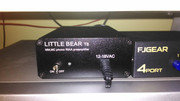
I bought this thing a while ago, and I really enjoy the sound. One of the very few models (at least the cheaper ones) where you can actually tell the difference in sound quality. I suppose in the end it all comes down to personal choice & sound "flavor", but if you want to hear a demo/comparison of T8, check out this guy on YouTube, who compared T8 against Pyle PP555, Behringer PP400 & integrated PreAmp inside LP120.
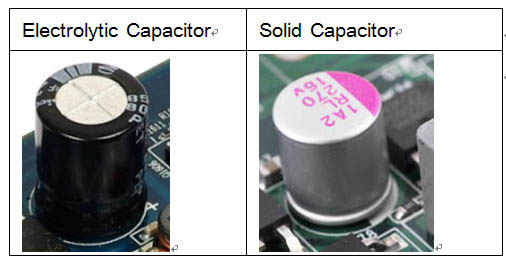
There has been several different versions (revisions?) of T8, with each generation offering a step-up in terms of technical specs & power supply. Mine is the latest gen, with solid-state capacitors & external 18VAC power supply (rather than internal one which plugs directly into the mains, which was the case on older models)
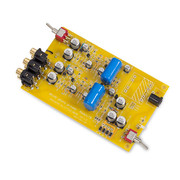
Here are some of the technical specs, straight from the document which came with the unit itself:
Supports MM & MC carts (20-100ohm)
RIAA Frequency response is 20Hz-25kHz +/- 0.5dB, with Signal to noise ratio >95dB
THD <0.05%, input sensitivity 3.0mV, gain 50dB
Nominal/Max output 300mV/1.8V
Output impedance 200 Ohms, Input impedance 47k Ohm/220 pF (MM) & 100 Ohms (MC)
Power consumption is less than 3W
I bought this thing a while ago, and I really enjoy the sound. One of the very few models (at least the cheaper ones) where you can actually tell the difference in sound quality. I suppose in the end it all comes down to personal choice & sound "flavor", but if you want to hear a demo/comparison of T8, check out this guy on YouTube, who compared T8 against Pyle PP555, Behringer PP400 & integrated PreAmp inside LP120.
There has been several different versions (revisions?) of T8, with each generation offering a step-up in terms of technical specs & power supply. Mine is the latest gen, with solid-state capacitors & external 18VAC power supply (rather than internal one which plugs directly into the mains, which was the case on older models)
Here are some of the technical specs, straight from the document which came with the unit itself:
Supports MM & MC carts (20-100ohm)
RIAA Frequency response is 20Hz-25kHz +/- 0.5dB, with Signal to noise ratio >95dB
THD <0.05%, input sensitivity 3.0mV, gain 50dB
Nominal/Max output 300mV/1.8V
Output impedance 200 Ohms, Input impedance 47k Ohm/220 pF (MM) & 100 Ohms (MC)
Power consumption is less than 3W