malden
Addicted Member
I have three levels of cleaning records prior to playing them.
Level 1 is simply using a anti-static brush on records that are clean.
Level 2 is using a disc-washer with filtered distilled water for use when the record is clean but there is visible dust on the surface.
Level 3 is to scrub them with soap, vinegar or whatever else I have lying around mixed with distilled water and then rinsed with filtered distilled water. I repeat the process if the record is really dirty.
When a record is really dirty, I never play it before applying the Level 3 treatment so I don't really know if there is any improvement in how it sounds.
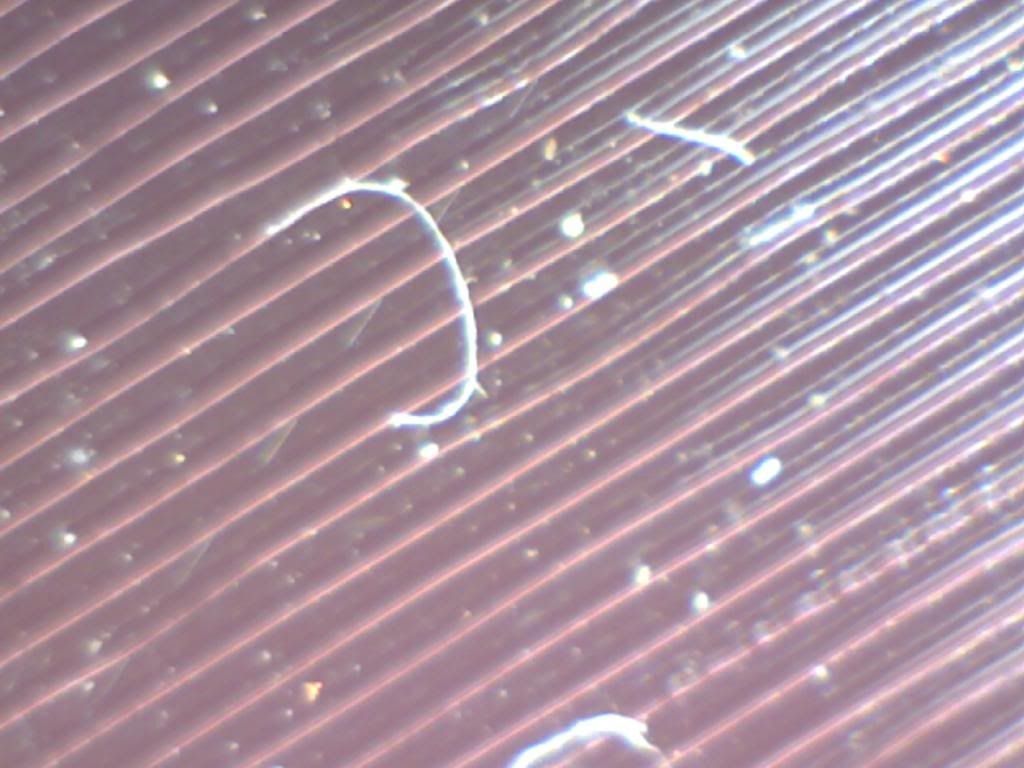
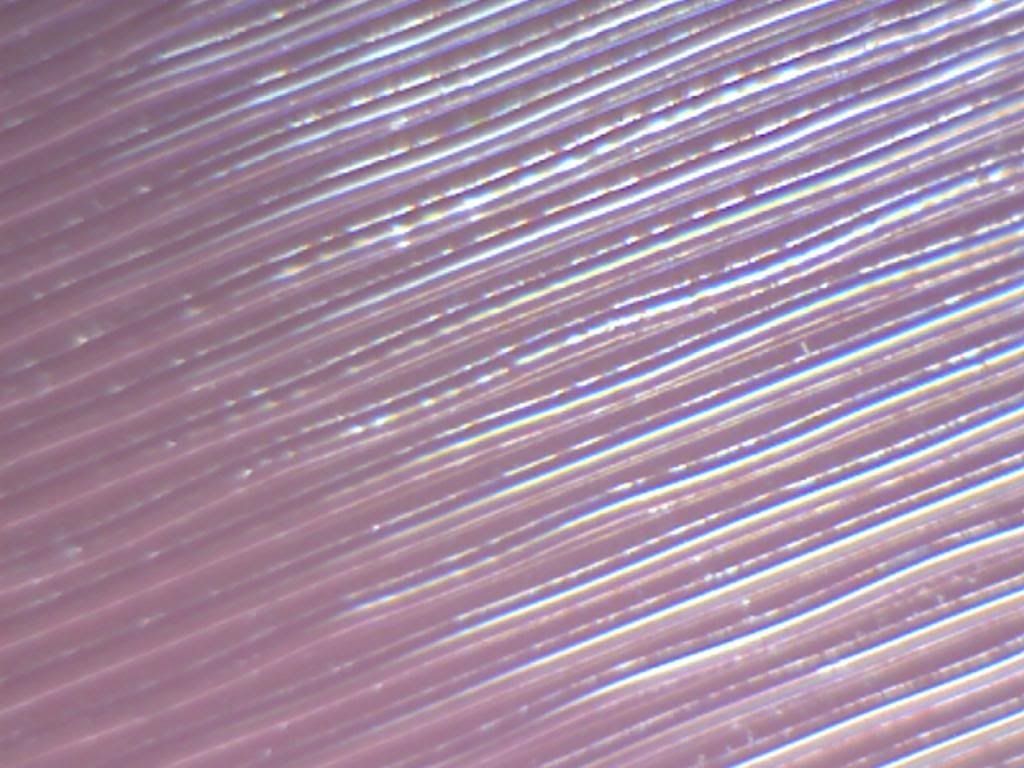
I recently found a collection of recordings from the 1950's and 60's. Some in great shape, others in terrible shape. After giving one of them the Level 3 treatment twice, the noise was just too overpowering so I took a look at the grooves with a 80x microscope and I could actually see the embedded dust particles. So before cleaning the next record, I took a look at the grooves under magnification and then cleaned half of the record side several times. Looking at it again, I could see no difference between the "cleaned" half and the uncleaned half.
This got me to thinking. If there is a way to remove those embedded dust particles, won't there be a "dimple" in the groove where the dust particle once was? And won't the "dimple" be just as noisy as the particle?
Level 1 is simply using a anti-static brush on records that are clean.
Level 2 is using a disc-washer with filtered distilled water for use when the record is clean but there is visible dust on the surface.
Level 3 is to scrub them with soap, vinegar or whatever else I have lying around mixed with distilled water and then rinsed with filtered distilled water. I repeat the process if the record is really dirty.
When a record is really dirty, I never play it before applying the Level 3 treatment so I don't really know if there is any improvement in how it sounds.
I recently found a collection of recordings from the 1950's and 60's. Some in great shape, others in terrible shape. After giving one of them the Level 3 treatment twice, the noise was just too overpowering so I took a look at the grooves with a 80x microscope and I could actually see the embedded dust particles. So before cleaning the next record, I took a look at the grooves under magnification and then cleaned half of the record side several times. Looking at it again, I could see no difference between the "cleaned" half and the uncleaned half.
This got me to thinking. If there is a way to remove those embedded dust particles, won't there be a "dimple" in the groove where the dust particle once was? And won't the "dimple" be just as noisy as the particle?