Loudness & tone controls: Pro/Anti?

Pixel Eater

AudioWat
I've noticed some members don't like loudness and tone settings on vintage (and modern, I'm sure) receivers. Stuff like "and I bet you listen to it with the loudness button jammed down too" and so on. The only thing I know is maybe the signal isn't as pure? Perhaps it's a poor way to alter the signal?

I've done the most listening with loudness on and medium tone settings that lean towards midrange and treble. I'm hearing some Boards of Canada which "is reminiscent of the warm, scratchy, artificial sounds of 1970s media" without tone or loudness, and it does sound really nice. I feel like what I'm hearing is more natural. There's also a sub, so it's not like I'm struggling for bass. There are some flavors of music that sound strange to me when I flip tone off.

What's the verdict on these settings? I'm mostly curious about real world reasons why they're a good or bad idea.
 
Register to hide this ad
I don't have either. Tone controls were the last to drop from my system. It's been 30 years since I had a loudness button. But I did use it back then at low volumes. Then I cut it off once cranked up.
 
I still like to use both, even with tubes, too many differences in recordings to just play them flat, a "GOOD" recording can be set to flat and be enjoyed!! I sometimes just bypass my pre-amp and go straight into my electronic crossover. The loudness control is bypassed automatically as the volume control is turned up, although I still turn mine off after about 9 O'clock on the volume control.

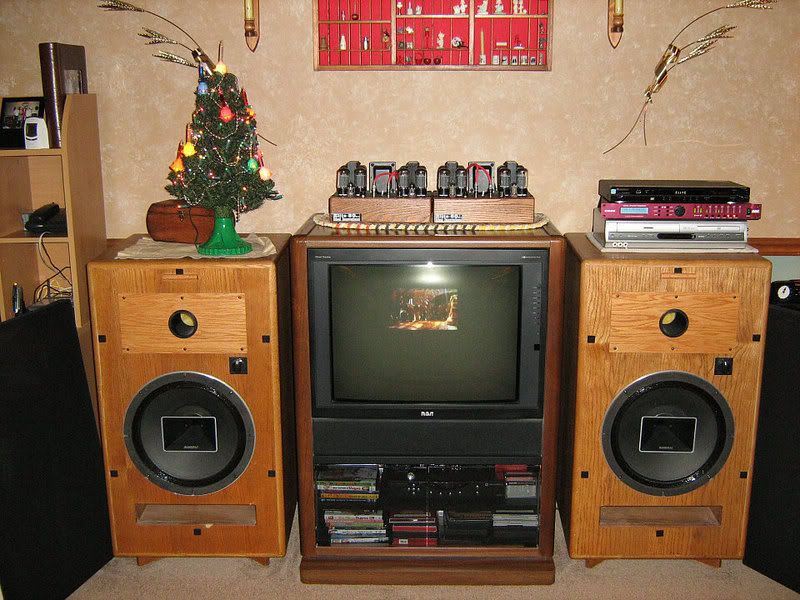
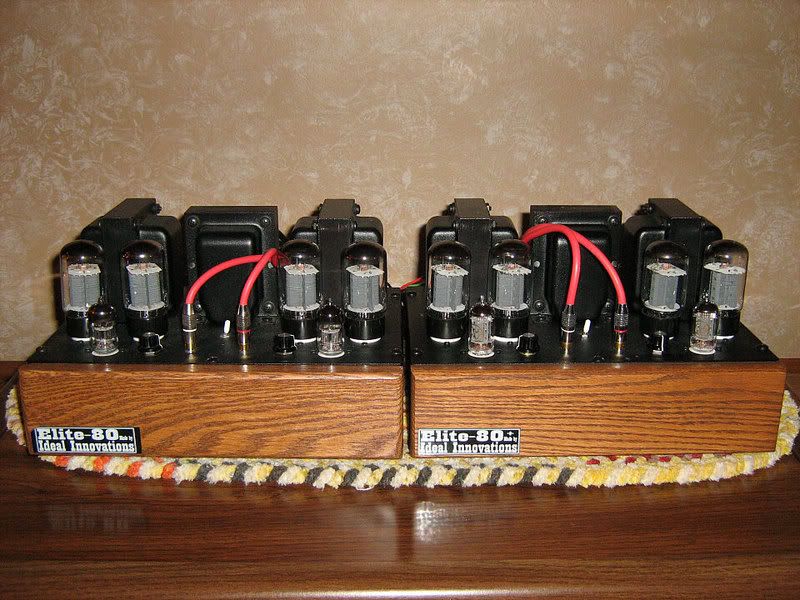
Bi-amping with tubes;
Altec_604_8H_Biamp_Elite80_01.jpg


Elite-80_Amps_Pair_01.jpg
 
This thread has a related discussion:

http://www.audiokarma.org/forums/showthread.php?t=201476

My personal opinion is that I don't like to rely on the choices made by people who produced the recording and mastering according to their own rules, faith, moral or principles, because I may not agree with them. For example, Walter Legge didn't like the bass in orchestral sound and therefore tamed it in all the recordings he produced. I totally disagree with this fundamentalist position and like to undo its effects, and therefore very much enjoy doing it with my tone controls and eaualizers!

All the best
 
I rember some LP labels sounded better than others to me, (not wanting to start a debate on this I'll not mention names) and I plied the tone controls and later equalizers to tailor the sound to my own enjoyment. The use of a loudness control by me was mostly dependent on the hour; if I wanted to do some listening while other members of the household were asleep then the volume would be kept low, and the loudness control applied as desired.

Later preamps I had built were "dry"--i.e. no loudness or tone controls. But such were applied to audio setups I had that were best not operated when others were in bed. Such were operated at higher levels, where good recordings and proper setup obviated loudness and tone controls.

My attitude about this is do what you feel, and let the remarks of others about your own equipment and how you operate it fall on deaf ears.
 
I think the more controls a listener has, the better with such a vast difference in audio quality and mixing. Some stereo LP's are perfect, others sound pretty bad. And it is even more so with mono recordings -45's & 78's.

My amp has hi & lo filters, loudness & a stereo/mono option, and I use a 10 band per channel equalizer. One can virtually erase audable scratches in a record by adjusting frequency bands. Another reason for controls is that FM stations who use frequency contouring to enhance bass - resulting in a muddy sound on many radios and receivers.

All that being said, among my best sounding pieces is my KLH model Eight FM radio with only a treble control........sometimes 'less is more' in terms of sound quality !
 
My personal opinion is that I don't like to rely on the choices made by people who produced the recording and mastering according to their own rules, faith, moral or principles, because I may not agree with them. For example, Walter Legge didn't like the bass in orchestral sound and therefore tamed it in all the recordings he produced. I totally disagree with this fundamentalist position and like to undo its effects, and therefore very much enjoy doing it with my tone controls and eaualizers!

All the best

I completely agree.

Everyone hears differently to some extent in the first place.

Throw varied listening tastes, different playback devices (pres, amps, speakers), and other multifarious room characteristics into the mix (pun intended); and you'll find its imperative to have some type of control over the raw audio being pumped into the listening space.

. . Falcon
 
Depends a lot on the unit as well. I have a mcintosh mx110 that has an overbearing loudness contour and doesn't ever get used. On the other hand I have a marantz pre-amp with a very subtle loudness switch which makes for a useful loudness circuit. Tone controls I usually leave flat or very close or bypass them altogether. Nice to have the options though
 
is it necessary to debate this again for the umpteenth time?

No...... but IMHO it mainly depends on the response of the speakers and the room. Assuming the electronics are capable of good quality sound.

I can tell you that my speakers in the main system, sound like crap with anything but very very close to flat tone controls and no loudness....flat tone controls and it all comes together in perfection.

My other systems, the loudness is on all the time....


jk
 
IF............

1.: You put together well matching gear
2.: You choose to listen to whatever music is your favourite.......
3.: At a level of volume in between what is "respect for your sleeping wife" and "a realistic attempt to reproduce how the event actualy was when it took place".

Then you will find that tone controls and/or loudness is not for the good.

"dolph"
 
These threads will never quit popping up. I've started one or two since joining the forum.

I try and avoid tone controls, and I don't have loudness at the moment, only got it in my second system.

If it wasn't for room acoustics, I bet less people would have to rely on their tone circuits.

With cans, for instance, I never have the urge to adjust anything. Even with a bad recording, what can really be done to 'fix' it? Most times, the elementary tone controls on consumer amps end up making things worse IMO.
 
If you have gear with a flat response and good speakers to reproduce that evenly, well recorded/engineered recordings should not be a problem at any volume level.

For more standard recordings, which accounts for most pop/rock stuff, some smoothing of the mids is often welcome and loudness normally does that just fine for low volume levels.

Personally, I like having tone controls and loudness. I often completely bypass them, but if they are required, they are there. Variable loudness on McIntosh and Yamaha pre-amps is really wonderful.

az
 
IF............

1.: You put together well matching gear
2.: You choose to listen to whatever music is your favourite.......
3.: At a level of volume in between what is "respect for your sleeping wife" and "a realistic attempt to reproduce how the event actualy was when it took place".

Then you will find that tone controls and/or loudness is not for the good.

"dolph"


I disagree. A recording is not done by machines, but by people other than us, that take decisions with which one or may not agree. It's the human factor that I like to emphasize over any other technical consideration.

All the best
 
I like them I use them simple huh? it's all hoever you like to listen to your music. There is no right or wrong
 
A wise man, or record company, once said:
"For best results, observe the RIAA curve..."

Seriously though, if you like the tone/loudness controls, use 'em. If you don't. bypass 'em.
I see them like the manual controls on my wife's new car's automatic transmission: I am an un-reformed stick-shifter, and I will 'downshift' the automatic gearbox from time to time to keep it from upshifting and getting too fast down a hill or something. My wife has no idea why you'd ever need to take it out of "D" and thinks I am nuts for making it so complicated.
Tone controls are much the same way: you can live a happy and complete life without ever adjusting the bass or treble on your receiver (or pre-amp, or integrated, or what ever) if you want, or you can futz with the machinery and twiddle the knobs and push the buttons until you can't take your wife's complaining anymore.... up to you.
 
I disagree. A recording is not done by machines, but by people other than us, that take decisions with which one or may not agree. It's the human factor that I like to emphasize over any other technical consideration.

All the best

I made plenty master recordings myself through 3 decades.

Maybe you are the kind of person that wants to add up stuff to the sound, stored on the media, to please the favourite choise of sound character of yours.

I'm not.
I want the sound as close to the Analog Reference as possible.
I can't change the choises the tape operator did when mastering.

Neither can you.
Your tone controls and loudness is not changing the tape operators/engineers choises but adding to the sound your choise of altering.

I can only hope the tape operator was aiming at keeping as close to the Analog Reference as possible as well.

And it happens to be those publications I like the moste, where this turns out to be the case.

Some publications are just bad from day one. Nothing will change that.

Other publications are so close to the Analog Reference that you can sit in your living room fooling your perceptive imagination to believe the music plays at present in front of you.

This will have less chance to succeed the more tone control and loudness you add up with.

"dolph"
 
IF............

1.: You put together well matching gear
2.: You choose to listen to whatever music is your favourite.......
3.: At a level of volume in between what is "respect for your sleeping wife" and "a realistic attempt to reproduce how the event actualy was when it took place".

Then you will find that tone controls and/or loudness is not for the good.

"dolph"

So you're stating that "well matched gear, playing your favorite music, at volume [that's appropriate]", will sound exactly the same as the original analog source when played in a room with the speakers along the short wall, tile floors, lots of glass windows, and the listening chair not in the sweet spot, and it also will sound exactly the same as the original analog source if it's played in a room with the speakers halfway down the long wall, thick wall-to-wall carpeting, heavy drapes, soft cushioned chairs and couch, and the listening chair not in the sweet spot?

As I always say there is no flat room so you need to compensate with tone controls...

Slow_jazz is correct. The tone controls allow you to, at least partially, compensate for hard, bright rooms, and soft, dead rooms. The balance control allows you to, at least partially, compensate for asymmetrical listening areas with speakers and listening chair not in a perfect position. The loudness control allows you to, at least partially, compensate for the human ear's well-documented characteristic of hearing low frequency and high frequency sounds at different perceived volume levels at different listening levels.

I made plenty master recordings myself through 3 decades.

Maybe you are the kind of person that wants to add up stuff to the sound, stored on the media, to please the favourite choise of sound character of yours.

I'm not.
I want the sound as close to the Analog Reference as possible.
I can't change the choises the tape operator did when mastering.

Neither can you....

"dolph"

You've missed the point entirely. The primary purpose of these controls is precisely to attempt to make the sound as close as possible to the original analog source in the listener's own listening room, not in your recording studio.

There's a reason why the posters in this thread are pretty unanimous that the choice to use or not use these controls is up to the listener, and that it's not appropriate to tell other people that everyone should listen to music the way you do.

Which is why these threads always end up the same way.

Use them if you want to.
Don't use them if you don't want to.
Don't tell other people how they should like their music to sound in their own home.
 
Last edited:
Use them if you want to.
Don't use them if you don't want to.
Don't tell other people how they should like their music to sound in their own home.

This is always the appropriate response, and one that some on both sides of the issue are rarely willing to accept.
 
Back
Top Bottom