Marantz PM-94 Project

zaskarx

Active Member
Thought I'd show off my new PM-94, I have always wanted one and couldn't resist when one popped up on eBay for a reasonable price. One of the wood side panels is missing a chunk and one of the speaker terminals has snapped off, but otherwise it is in good condition.

I was able to dial in the offset and bias with no issues, it is putting out a healthy 156 watts per channel. I listened to it for about an hour and it sounds amazingly sweet.

I'm planning to perform some preventative maintenance given the heat problems these amps are known for and will update the thread once I've formulated a plan. I would appreciate advice from anyone who has worked on or owned one of these amazing amps as information is pretty scarce compared to many Marantz models out there.

20201119_214822.jpg
 
Last edited:
Register to hide this ad
I'm coming up with a list of parts to inspect/replace. The amp is loaded with red and gold Elna Cerafine audio caps, many of which look like they've seen better days. What is the consensus for replacing these? Elna Cerafines are still available, but apparently the formulation changed some years back due to ROHS compliance. Are Cerafines still the way to go or should I consider the newer Silmic II or something else? I know it is debatable how much of an impact cap choices can have, I just don't want to lose the magic that this amp has.

Also, is there anyone on AK that does woodwork? I'd like to find someone to repair and refinish the side panels.
 
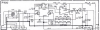
Spent some more time going through the schematic, in looking at the phono stage (one half of which is shown below) there are two 22uf output coupling caps in series, I'm thinking that I could replace these with a single 10uf film cap to remove ecaps from the signal path. Any thoughts on this approach?

Incidentally, the PM-94's phono stage is similar in design to that of the Kenwood C1 preamp, with JFET input and opamp output stages. The Marantz does have built in LOMC step up transformers, which is pretty cool, I've never seen that feature in any other integrated amp. I was surprised to see the use of opamps, this must have been pre-HDAM for Marantz. I'm not going to attempt any "opamp rolling" as the 5534D opamps are pretty decent even by modern standards and I really don't have the tools needed to adequately test and evaluate possible replacements. Besides, I don't know of many modern opamps that are happy operating at 21.3V.

upload_2020-11-29_11-55-25.png
 
A word of warning to anyone who owns a PM-94, I started disassembling the amp and after examining the circuit boards noticed that there were differences between the version I have and the one depicted in the commonly available service manual for the PM94.

I'm not sure if it is a regional difference or a mid-production change, but the easiest way to tell is to flip the amp over and check if there is a power supply board (P800) with additional rectifier diodes situated in front of the power amp bridge rectifiers and main filter caps. Most versions that I've seen online do not have this board. Luckily, Norman at Analog Alley had the correct service manual available for purchase for the version of PM-94 that I have.

One of the other major differences is that the class A bias on this version is supposed to be set to 130mv, not the 180mv mentioned in the other manual. I'm not sure if this is due to the updates in the amp's design, or if Marantz did this in response to the heat related issues that the PM-94 is known to suffer from; either way I'm glad that I found it.

20201202_112257.jpg
 
Hoping someone can help me understand Marantz's capacitor selection for the PM-94. As it turns out, none of the Cerafine capacitors are used for signal path coupling; all of the signal path e-caps are the more pedestrian Elna RE type. The Cerafines are used for power supply duties and decoupling where one would typically want a low ESR capacitor.

Did the Cerafines have a lower ESR than other available caps at the time or was this simply a marketing ploy so that the pretty crimson and gold Cerfines would stand out in magazine photos and showrooms? Why didn't Marantz choose to put the Cerafines in the signal path? I can't imagine it would have cost much given this was a no expense spared integrated in its day.

My original thinking was to replace the old Cerafines with new Cerafines and everything else with Panasonic FC...but I'm now re-thinking this approach. Does anyone know what the logic was here or is this a mystery lost to time?
 
looking at the phono stage (one half of which is shown below) there are two 22uf output coupling caps in series, I'm thinking that I could replace these with a single 10uf film cap to remove ecaps from the signal path.

i'd probably replace the c419/c421 pair with either a 10uF WIMA or a MUSE.

here is the WIMA https://www.digikey.com/short/zv0h25 or MUSE https://www.digikey.com/short/zv0hdt

lead spacing (5mm vs 2mm) and cost might be the deciding factor ($3 vs 50 cents). And what I have in my spare parts box.
 
Starting to make progress on the PM-94, finished overhauling the left channel power amp circuit board, this is the board famous for failed solder joints on the connector pins. The joints weren't in terrible shape on my amp but I re-soldered all of the connectors, mosfets and other joints as needed There were 6 fusible resistors on this board, which protect the output mosfets, these were replaced with Vishay NFR fusible metal film resistors. This board is subject to an extreme amount of heat, so I replaced the remaining handful of resistors and two rectifier diodes as well. All transistors were cleaned and the factory silpads replaced with Bergquist K10 kapton silpads. I used a gentle metal polish to clean the copper-plated parts and cleaned off the caked-on flux residue on both sides of the board.

Resized_20210101_163847.jpg
 
Here's a picture of the right power amp circuit board, it is hard to see from this picture, but the driver/front end amplifier board sits on top of the output board and is connected by the previously mentioned connector pins. It's a unique two-story design that I haven't see in any other amp. This board is going to require a lot of cleanup; the glue holding down the larger caps has corroded some of the surrounding parts pretty badly. I've decided to replace the Elna Cerafine caps on this board with Panasonic FC and EPCOS snap in capacitors for the two large 560uf Cerafine caps. I know that this amp is over 30 years old, but the Cerafines have not held up well to the heat, they are badly bulged, so replacing them with more robust, heat-tolerant capacitors seems to be right move. I'm also convinced that these caps were chosen for low ESR (the replacement parts are also very low ESR) and not any perceived audiophile sound qualities as they are all used for power rail decoupling and are not in the audio signal path.

Resized_20210104_155753.jpg
 
Ok, ran into a bit of a snag. I removed the driver transistors (visible in the picture above) from their heatsinks to clean and re-apply thermal grease. These transistors are not insulated from their heatsinks and unfortunately, the green NEC 2SA1142 transistor seems to have been arcing to the heatsink as there is a visible pit on the heatsink and mark on the back of the transistor. Normally I'd replace this pair of transistors, but replacements are nearly impossible to find. The 2SA1142 still tests OK, so I am thinking about simply adding an insulator and hoping for the best in the future. If anyone knows of a suitable replacement please let me know. Mouser still has KSA1142 transistors available, but its PNP partner the KSC2682 is not. I'm a little leery of mixing the pair; I'm definitely open to suggestions.

Resized_20210105_233252.jpg
Resized_20210105_233154.jpg
 
I really don't like hot heat sinks but I've found this on many amps. I'd add a bit of thermal grease and insulator and move on.

Thanks rickl, it's especially risky since the live heatsinks sit so close to the bias adjustment pots!
 
Hoping someone can help me understand Marantz's capacitor selection for the PM-94. As it turns out, none of the Cerafine capacitors are used for signal path coupling; all of the signal path e-caps are the more pedestrian Elna RE type. The Cerafines are used for power supply duties and decoupling where one would typically want a low ESR capacitor.

Did the Cerafines have a lower ESR than other available caps at the time or was this simply a marketing ploy so that the pretty crimson and gold Cerfines would stand out in magazine photos and showrooms? Why didn't Marantz choose to put the Cerafines in the signal path? I can't imagine it would have cost much given this was a no expense spared integrated in its day.

My original thinking was to replace the old Cerafines with new Cerafines and everything else with Panasonic FC...but I'm now re-thinking this approach. Does anyone know what the logic was here or is this a mystery lost to time?

All Cerafines as far as I'm aware are NOS as there no longer made.

Reasons why Cerafines will have been used in psu and decoupling is that the ceramic electrolytic used in these speeds up the response of power supply's etc, iirc.

When I recapped the last one I used Panasonic fc/fm for low esr/impedance for most out of the signal path and elna rfs (silmic) for signal, be aware of any caps on the output of voltage regs as low esr caps here may cause it to oscillate. Also check locations for excessive heat and think about the temp rating of any replacement caps there.
 
All Cerafines as far as I'm aware are NOS as there no longer made.

Reasons why Cerafines will have been used in psu and decoupling is that the ceramic electrolytic used in these speeds up the response of power supply's etc, iirc.

When I recapped the last one I used Panasonic fc/fm for low esr/impedance for most out of the signal path and elna rfs (silmic) for signal, be aware of any caps on the output of voltage regs as low esr caps here may cause it to oscillate. Also check locations for excessive heat and think about the temp rating of any replacement caps there.

Thank you for the advice, that's interesting info about the Cerafines. Do you remember specifically which areas of the amp have the caps following voltage regulators? I'm assuming these must be discrete circuits as I don't recall seeing any packaged voltage regulators. I've ordered a combination of Panasonic FCs and Elna Silmic IIs as well as a handful of Cerafines that I was able to find at PartsConnexion.
 
I'd put General purpose high temp caps at positions cn87/88, using low esr types here MIGHT not upset the amp but the first time this happened to me was the last.
 
Seems a good selection of caps, just glancing at the service manual theres not a lot of caps in the signal path, and there lowish values maybe replace with something like wima mks2 where you can.

Are you replacing the main psu caps? As it will probably live 90% of its life in class A.
 
I'd put General purpose high temp caps at positions cn87/88, using low esr types here MIGHT not upset the amp but the first time this happened to me was the last.

Thanks for the heads up, that's very helpful and will likely save me a headache!

I am planning to replace the main filter caps, I found some Kemet ALS screw terminal caps that will fit the existing brackets that have excellent specs.

I've been waffling on which caps to use in the signal path for the flat amp and phono preamp. Here's where I am so far, open to suggestions/improvements:

Tone Control:

Input coupling (CE01-CE04) - 2 x 4.7uf 35v Elna RE caps in series (2.35uf total) - Replaced with 4.7uf 50v Wima MKS2 film
Output coupling (CE17-CE20) - 2 x 22uf 16v Elna "For Audio" caps in series (11uf total) - Replaced with 22uf 16v Elna Silmic II, considered a single 10uf MKS2, but it wouldn't fit

Flat Amp:

Output coupling (CG17-CG20) - 2 x 47uf 16v Elna Cerafine caps in series (23.5uf total) - Replaced with same for now

Phono:

Output coupling (C419-C422) - 2 x 22uf 16v Elna "For Audio" caps in series (11uf total) - Haven't chosen a replacement yet but leaning towards the Silmic II, a 10uf Wima MKS2 will fit (as suggested by rickl) but wondering if it'll change the frequency response or tone?

I have some .22uf film caps and gave some though to bypassing the ecaps, but I've heard mixed things about doing that.
 
Finished up the phono preamp, ended up using Elna Silmic IIs for the output coupling caps. I also replaced most of the carbon film feedback and signal path resistors with matched Vishay Dale CMF/RN55 metal film resistors. You can see the step-up transformers on the left.

20210111_233030.jpg
 
Both power amp boards are finished up including new caps to replace the old e-caps, Panasonic FC, Wima MKS, and Epcos snap-ins. They are not very visible in the picture, but the two zener diodes on either side of the blue FC cap on the back right of the board had been totally wrecked by corrosive glue and needed to be replaced. I replaced the bias and offset adjustment pots and added custom mica insulators to the driver heatsinks, and also replaced a few fusible resistors. These boards needed a few solder joints touched up, but nothing major.

20210113_205031.jpg
 
Polished a little more copper, I'm not sure how much of a difference the copper makes sound-wise but it sure is nice to look at.

20210111_233938.jpg
 
Last edited:
Here's a picture of the PM-94 from the 1990 catalog...the owner must have blown all of his cash on the PM-94 and fancy tile, he definitely didn't have anything left over for room treatment!

PM94.PNG
 
Back
Top Bottom