• Please note that there are a few updates and clarifications made in the Audiokarma Rules, mostly relating to advertising and the addition of the new "Paying it Forward" & "Giving back" forums in the AudioKarma Audio Marketplace section.

McIntosh amplifiers at Woodstock 1969

I live in New England, no need to turn on the gas fireplace, 16-6LQ6's do the job well, McIntosh even provided a fan to circulate the heat around the room!
 
I live in New England, no need to turn on the gas fireplace, 16-6LQ6's do the job well, McIntosh even provided a fan to circulate the heat around the room!


Finally I am with the program, running McIntosh for long periods of time is ecologically sound......:banana:
 
I live in New England, no need to turn on the gas fireplace, 16-6LQ6's do the job well, McIntosh even provided a fan to circulate the heat around the room!

Thats awesome, well I guess it would have been pretty dry under the stage at Woodstock too with all those tubes providing the heat.....:thmbsp:
 
For now, they are dormant until I the rest of my system is built. They will be doing subwoofer duty with a pair of Decware Imperial SO subs. Late spring/summer project this year. The only time I can dedicate to build em.
 
For now, they are dormant until I the rest of my system is built. They will be doing subwoofer duty with a pair of Decware Imperial SO subs. Late spring/summer project this year. The only time I can dedicate to build em.

Sounds like a good project, do keep us informed......:thmbsp:
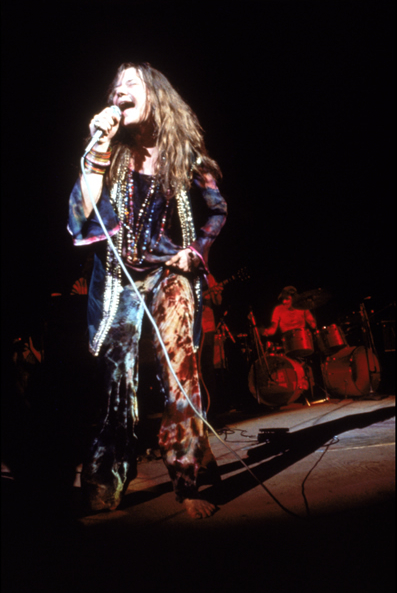
 
There is probably an obvious answer to this question, but I can't think of it....

How on earth does the microphone not create problems by picking up all of the other sounds and instruments coming out of the stage monitors and the concert in general??

When a singer steps back, is the mic muted from the control board?

Given all of the ambient noise, why don't the mics start clipping?

I'm pretty sure they didn't have convolution processors, DSPs and echo cancelling technology at Woodstock.

Woodstock Wiki page
http://woodstock.wikia.com/wiki/Main_Page

Janis_Joplin01.jpg


jimi-hendrix-woodstock.jpg
 
There is probably an obvious answer to this question, but I can't think of it....

How on earth does the microphone not create problems by picking up all of the other sounds and instruments coming out of the stage monitors and the concert in general??

When a singer steps back, is the mic muted from the control board?

Given all of the ambient noise, why don't the mics start clipping?

I'm pretty sure they didn't have convolution processors, DSPs and echo cancelling technology at Woodstock.

That is a good question, and there are many different environmental situations which affect the answer.....

In a moderate standard electric band onstage, with singers who have nice powerful voices none of this is a problem....

1, The Microphones, and lets take Woodstock for example, are Low Impedance dynamic microphones with a cardioid pattern. (Shure 565)
Being dynamic mics they only really pick up sound which is close to them, and in the said cardioid polar pattern.
So they pretty much reject sound outside their pattern, mostly. Basically you have to sing right into them....Or put them very close to the instrument you are miking up....they suffer from a proximity effect, where the further you move away, the less full range the sound is, the top end and the bass disappear quickly as well as the level...

2, When this is a problem is when you have a singer with a quiet voice, a loud band, or you may have a loud singer, say with the vocal mics set up along the front of the stage and guitar amplifier stacks (usually Marshalls) pointing directly at the mics from about 12ft away on the same upstage position as the drumkit.
This can be a problem, even though the guitar amplifiers are miked up, they will bleed into the vocal mics if they are loud enough, and because of the proximity effect and the distance the vocal mics are from the guitar amps, you get phasing issues....
If you have a quiet singer and you are running a lot of gain on the vocal mic, then often you are picking up the drums, and whatever else is loud on stage, there are things you can do, like use perspex screens around the drum kit.
You can try a microphone which has a tighter polar pattern like a Hyper-cardioid microphone which has great rejection....
Often even then you are "riding" the level of the vocal mic. I have worked with a few quiet singers, the secret if there is one is to get the band to play as quiet as they can on stage, sensible microphone choice, but most importantly? Know the songs and ride the **** out of that vocal mic.
Its always the vocal mics which are a problem because they generally have the most gain, because an acoustic voice is generally quieter than drums, electric guitars, brass instruments etc etc ....

Given all the ambient noise why dont the mics start clipping?
Because the gain is set for the loudest noise it will be picking up, and in a vocal mic, the voice right up against the diaphragm is going to be a lot louder than the background noise....

No DSP at Woodstock, little early for computers in the live audio field....
Not sure what you mean by convolution.
The Grateful Dead system was the only system I am aware of which used differential microphones for cancellation of background noise. This was at best a compromise. They used Omni-directional micophones (B&K) spaced an exact distance apart, and out of phase to each other so when both mics picked up the same sound, the sound would completely cancel out, but a sound which was only picked up by one microphone would not be cancelled out, IE; person singing into the "in phase" mic of the pair.
Problem was, those microphones had the vocal quality of a telephone, check out the Grateful Dead movie.....lots of popping and shhhhhing but they served their purpose well.

The other PIA for a front of house sound engineer is the volume of the stage monitoring....
Some bands can be so loud on stage that the mics will pick up the monitors as well.....
All this does is make it even more difficult for them to hear themselves.
Its to do with signal to noise. Signal (what they want to hear) and noise (the noise floor or sound they hear before what they want to hear).
Its a catch 22 situation......

Hope that answers some of the questions.....
 
Kev - you have a dream job.

As for the Charger in the Fast and the Furious, look closely - the top photo is a different vehicle altogether with a 10-71 blown Chrysler Hemi. The car they wrecked had part of a 6-71 case mounted to the hood. Even still, that was painful to watch. What was funny is how inaccurate the move was in regards to speed parts, especially nitrous oxide.
 
Kev - you have a dream job.

As for the Charger in the Fast and the Furious, look closely - the top photo is a different vehicle altogether with a 10-71 blown Chrysler Hemi. The car they wrecked had part of a 6-71 case mounted to the hood. Even still, that was painful to watch. What was funny is how inaccurate the move was in regards to speed parts, especially nitrous oxide.

Yes, well I am about to get on a flight today to travel and start a small tourette` with the Ringo Star All Stars band.
Features Steve Lukather, Todd Rundgren, Greg Bissonette, and others, should be a good show....
Got Pat Benatar next week followed by Linkin Park, and then Deep Purple and Journey (no Steve Perry though) soon after....

Yeah, the Fast and Furious was hilarious for continuity and fact.....
I like the line "you'll blow the welds on the intake" referring to overuse of NOS.....
That movie is pretty funny, I became interested in the series again when the brought back the original cast...the last couple have been entertaining, pretty far fetched in terms of what the cars can do, but hey, itys hollywoood right?
 
Kevin,

Thanks for the explanation of microphone management, its out of my telecom specialty, but as I understand it convolution processing using a DSP is used for echo cancellation, such as the mic picking up the voice of the singer coming off of monitors located behind her. The stronger signal is recognized and the inverse of the weaker signal is mixed in.
 
Kevin,

Thanks for the explanation of microphone management, its out of my telecom specialty, but as I understand it convolution processing using a DSP is used for echo cancellation, such as the mic picking up the voice of the singer coming off of monitors located behind her. The stronger signal is recognized and the inverse of the weaker signal is mixed in.

Yes right, not something commonly used in live sound reinforcement......

Sounds like a "band aid" solution to other problems which these days are no longer even an issue.....
 
Just in case you haven't seen a picture of the FOH at Woodstock:

woodstockFOHBillHanley_zpsb6d4dbb6.jpg

Ah yes, well at least they had a front of house mix, often in those days it was done side of stage......
I wonder what the mixing console was? The choices would have been fairly limited in those days.....
Great Picture..........:thmbsp:
 
I don't think there was an actual board, but all separate pieces. Small line mixers for the mics, a compressor/limiter, stereo preamp for the return.

I bookmarked a thread from a few years back: http://forums.prosoundweb.com/index.php?topic=118214.30

Had this info on some of the setup:
FOH was 75' from stage left.
2 towers per side.
Upper platform of each tower had 4 bass bins
Each bass bin was front loaded with JBL D140 or D130 drivers - 100W handling each I seem to understand
The bins had a flare to them, and a port along the sides
Their size was 7' wide, 6' tall, 4' deep.
There were 2 horns with Altec A290 drivers - heavy bastards, 120W, for each platform ( 1 horn/bass bin )
The lower platform the same, except with D140 drivers.
 
I don't think there was an actual board, but all separate pieces. Small line mixers for the mics, a compressor/limiter, stereo preamp for the return.

I bookmarked a thread from a few years back: http://forums.prosoundweb.com/index.php?topic=118214.30

Had this info on some of the setup:
FOH was 75' from stage left.
2 towers per side.
Upper platform of each tower had 4 bass bins
Each bass bin was front loaded with JBL D140 or D130 drivers - 100W handling each I seem to understand
The bins had a flare to them, and a port along the sides
Their size was 7' wide, 6' tall, 4' deep.
There were 2 horns with Altec A290 drivers - heavy bastards, 120W, for each platform ( 1 horn/bass bin )
The lower platform the same, except with D140 drivers.


Off of a link from the site you reference.

All of the equipment info...

Bill Hanley was working the mixing and apparently everything else sound at Woodstock, Greatful Dead, Beatles, Beach Boys.....
http://www.billhanley.org/projects/1969_08_15-woodstock/

gratefuldeadwallofsound.jpg


http://www.492cafe.org/guests/hanley.bill/

"Hanley was a McIntosh authorized dealer, and influenced The Grateful Dead in adopting high-end McIntosh amplifiers in their legendary "Wall Of Sound" touring sound system."

Landy was the photographer at Woodstock
http://www.landyvision.com/

Altec1978multicell.jpg
 
Last edited:
I don't think there was an actual board, but all separate pieces. Small line mixers for the mics, a compressor/limiter, stereo preamp for the return.

I bookmarked a thread from a few years back: http://forums.prosoundweb.com/index.php?topic=118214.30

Had this info on some of the setup:
FOH was 75' from stage left.
2 towers per side.
Upper platform of each tower had 4 bass bins
Each bass bin was front loaded with JBL D140 or D130 drivers - 100W handling each I seem to understand
The bins had a flare to them, and a port along the sides
Their size was 7' wide, 6' tall, 4' deep.
There were 2 horns with Altec A290 drivers - heavy bastards, 120W, for each platform ( 1 horn/bass bin )
The lower platform the same, except with D140 drivers.

They must have had some way to buss all the mic channels into a "stereo" or "mono" mix to send to the FOH PA amplifiers, and some way of also being able to buss the mic channels to the onstage monitoring via an Auxiliary type send, or pre-fade buss of some sort.......
I can see there looks like there may have been one smallish mixer there and they may extended its capabilities with some external mic pre-amps .....

Interesting times for live sound reinforcement, and certainly I like to look back at some of the guys who pioneered they way we do things now....
 
And there it is in plain view right on the top there, one LA2A Mono compressor limiter......
They may have bussed vocals through that perhaps, or it could even have been over the entire system......
Pretty cool, you only ever see those in high end studios now, hard to imagine one was gaffer taped to the top of some gear at Woodstock in the elements in 1969.....
woodstock69partconsolem.jpg
 
Back
Top Bottom
