

-
Feeling lucky? Check out the AK 24th Anniversary Giveaway thread and join in the fun!
You are using an out of date browser. It may not display this or other websites correctly.
You should upgrade or use an alternative browser.
You should upgrade or use an alternative browser.
New Build--Gillespie W4AM Triode
- Thread starter Dave451
- Start date


Thanks to all for your further comments. kward: Yes, EL34's in Class A triode PP mode, vs. the original 5881's (6L6 types) in UL pentode. Both cathode biased.
Vis-a-vis further operation/listening:
1. I bought a dedicated "variac" and am running the amps at reduced line voltage--114/115VAC net to the PT primaries, including the CL-80 drop, all this for the comfort of the 54-29 power transformers. During extended operation, I'm only seeing around 130 degrees F on the PTs.
2. I continue using the new production Tung-Sol re-issue 6SN7's and EL34B's I started with, along with TAD 5AR4/GZ34 rectifiers. I have a set of Mullard xf2 and xf3 EL34's that I will ultimately try once I get more of a listening base, as well as some vintage Sylvania 6SN7's. I am very happy with the new production tubes so far, though.
As for sound, the amps are both dead quiet into my Cornwalls (100dB sensitivity) with the inputs shorted--can't hear any noise at all with my ear to the speakers.
Sonically, the amps are smooth and non-fatiguing, but with excellent detail on highs and mids with no hint of harshness. There is good, tight low end and I'm impressed with the imaging possible with dual mono amplifiers, compared with other combined stereo power amplifiers I have (my first experience with monoblocks other that some limited experience with McIntosh MC-30's, but that's another story).
I think that Dave has designed a real winner with this excellent set of upgrades for Heath's "middling" W4 amplifier and am well pleased with the results. It's still a Williamson amp, but the upgraded version is a significant departure (in very good ways all around) from the original set up--excellent use of the EL34 and the Stancor output transformers.
Dave
Vis-a-vis further operation/listening:
1. I bought a dedicated "variac" and am running the amps at reduced line voltage--114/115VAC net to the PT primaries, including the CL-80 drop, all this for the comfort of the 54-29 power transformers. During extended operation, I'm only seeing around 130 degrees F on the PTs.
2. I continue using the new production Tung-Sol re-issue 6SN7's and EL34B's I started with, along with TAD 5AR4/GZ34 rectifiers. I have a set of Mullard xf2 and xf3 EL34's that I will ultimately try once I get more of a listening base, as well as some vintage Sylvania 6SN7's. I am very happy with the new production tubes so far, though.
As for sound, the amps are both dead quiet into my Cornwalls (100dB sensitivity) with the inputs shorted--can't hear any noise at all with my ear to the speakers.
Sonically, the amps are smooth and non-fatiguing, but with excellent detail on highs and mids with no hint of harshness. There is good, tight low end and I'm impressed with the imaging possible with dual mono amplifiers, compared with other combined stereo power amplifiers I have (my first experience with monoblocks other that some limited experience with McIntosh MC-30's, but that's another story).
I think that Dave has designed a real winner with this excellent set of upgrades for Heath's "middling" W4 amplifier and am well pleased with the results. It's still a Williamson amp, but the upgraded version is a significant departure (in very good ways all around) from the original set up--excellent use of the EL34 and the Stancor output transformers.
Dave

Hi Dave,
Hope you are enjoying the W4's. I like mine very well. Thought I might mention something is case it happens to you. One of mine had a power transformer failure not too many hours after the rebuild. It was the correct original Heathkit p/n for a W4. At that point I noticed that the other W4 had a different but correct looking power transformer. It is a 54-13 which turned out to from the W3 and A9 amplifiers. I got the correct voltages but it has a higher current rating for the HV winding. To keep my pair functioning I installed a Stancor PC-8412 which has a proper voltage rating but an even higher HV current rating and I had to change to a 5U4GB to get the voltage down. It worked fine until I found another 54-13 and now my amps look properly matched and I'm back to SS rectifiers with a damper diode downstream for a little voltage drop and a very soft start. The B+ perfectly matches DaveG's schematic with this arrangement. Oh, and I also use an SL12 12102 which I believe matches a CL-90. The higher cold resistance I prefer and but it only drops the AC 3-4V when warmed. The CL-80 doesn't give quite as much AC drop.
Here's a picture with the Stancor 8412 power transformer. I was able to fit it into the space of the original transformer such that the new holes are completely hidden by the 54-13 replacement. I'm posting all this in case you have a transformer failure as I did, and apparently many before us. There are solutions.
Enjoy,
John

Hope you are enjoying the W4's. I like mine very well. Thought I might mention something is case it happens to you. One of mine had a power transformer failure not too many hours after the rebuild. It was the correct original Heathkit p/n for a W4. At that point I noticed that the other W4 had a different but correct looking power transformer. It is a 54-13 which turned out to from the W3 and A9 amplifiers. I got the correct voltages but it has a higher current rating for the HV winding. To keep my pair functioning I installed a Stancor PC-8412 which has a proper voltage rating but an even higher HV current rating and I had to change to a 5U4GB to get the voltage down. It worked fine until I found another 54-13 and now my amps look properly matched and I'm back to SS rectifiers with a damper diode downstream for a little voltage drop and a very soft start. The B+ perfectly matches DaveG's schematic with this arrangement. Oh, and I also use an SL12 12102 which I believe matches a CL-90. The higher cold resistance I prefer and but it only drops the AC 3-4V when warmed. The CL-80 doesn't give quite as much AC drop.
Here's a picture with the Stancor 8412 power transformer. I was able to fit it into the space of the original transformer such that the new holes are completely hidden by the 54-13 replacement. I'm posting all this in case you have a transformer failure as I did, and apparently many before us. There are solutions.
Enjoy,
John

I'm interested in building a Class A push-pull amp, but I don't think any of my OPTs are suitable for triodes. Do I understand correctly that the OPTs in this project are 10KΩ plate-to-plate?
Jack
Jack

A higher then usual impedance like this is probably essential for good linearity. The highest I have that would be suitable for the current draw of EL34s is 6.6K. Thanks for the info!Correct. I’m not sure how much the 10k primary contributes to the secret sauce of Dave’s Triode EL34 mod, but that is what the W4-AM featured.
Jack


A higher then usual impedance like this is probably essential for good linearity. The highest I have that would be suitable for the current draw of EL34s is 6.6K. Thanks for the info!
Jack
You can build very nice PP triode EL34 amps with 5K p-p trannies.
I built monoblock versions of this amp using a Heathkit Williamson circuit and UTC LS-57s. They turned out nicely:
I basically used Dave G.'s EL34 triode W4-AM Williamson circuit, adjusted the low-pass filter at the input to 1200pF + 680R, and for 8 ohms I used 6.3K + 47pF for 20dB feedback. 16wpc before clipping.

My preference for Class A push-pull triodes would be an amplifier with little or no feedback. For that, I believe a higher load impedance will improve performance. Did anyone happen to measure THD in the modified W4AM triode amps without feedback?
Jack
Jack
My preference for Class A push-pull triodes would be an amplifier with little or no feedback. For that, I believe a higher load impedance will improve performance. Did anyone happen to measure THD in the modified W4AM triode amps without feedback?
Jack
No I didn't. For no feedback, you'd want a higher load for sure.

Curious if 10.5k late-model Fisher 400 (7868/7591) OTs and lower PS voltages would work in this design?
Don't see why they wouldn't. Likely need to re-tune the HF compensation stuff but the basic design should be fine.
John, thanks very much for the feedback. It's nice to have a good Plan B. As I mentioned, I'm trying to baby the PT's a bit with variac supplied low AC line voltage. Fingers crossed!Here's a picture with the Stancor 8412 power transformer. I was able to fit it into the space of the original transformer such that the new holes are completely hidden by the 54-13 replacement. I'm posting all this in case you have a transformer failure as I did, and apparently many before us. There are solutions.
Enjoy,
John
Interesting option! I did the mods on a late-model 400 with excellent results--no doubt these would be a good option for the DCG W4AM circuit if you have a couple around.Curious if 10.5k late-model Fisher 400 (7868/7591) OTs and lower PS voltages would work in this design?
I did not measure THD+N in open loop configuration for these amps. I did measure feedback levels of just over 18 dB on both amps.My preference for Class A push-pull triodes would be an amplifier with little or no feedback. For that, I believe a higher load impedance will improve performance. Did anyone happen to measure THD in the modified W4AM triode amps without feedback?
Jack
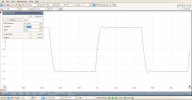
Zack, that looks like a very nice build--square waves look great. I'll check out the video.
Dave
I haven't read the original thread on this modification. Was there an explanation as to why it was deemed desirable to use so much feedback? Pentodes do need it in order to tame IMD and to provide a reasonably low output impedance. Triodes (and triode-mode pentodes) are different though. In fact, the ability to use certain native triodes with no feedback at all is one of their advantages. But even a "not-so-good" triode, such as might be created with a triode-mode tetrode or pentode, should only need a little improvement to produce reasonable linearity and dampening. Please understand, I'm not criticizing your work here. It just isn't clear to me why so much feedback was designed into these, particularly given the issues of tuning and stability that typically accompany this.I did not measure THD+N in open loop configuration for these amps. I did measure feedback levels of just over 18 dB on both amps.
Jack
No worries, Jack. You'd probably have to ask Dave Gillespie, as this is his design that I was just faithfully trying to reproduce. The excellent (low) distortion and frequency response characteristics of the modified amp would seem to justify relatively high feedback levels given the characteristics/limitations of the Chicago/Stancor output transformers, as well as the need to improve stability of the original design. He was evidently building on the original W4AM design, which of course is a UL Pentode (5881) with feedback being used, as it is in a Williamson design. His re-design goes well beyond just tweaking, though. For example, the switch from 5881 to EL34 output tubes. His W4AM project proceeded in two phases: what he calls the "Brickhouse" mods and then the triode strapped EL34, non-UL, Class A final version build here.
Below is his post from the Derekva thread that I followed (linked at the beginning of this thread) that explained his re-design thinking for the W4AM:
Below is his post from the Derekva thread that I followed (linked at the beginning of this thread) that explained his re-design thinking for the W4AM:
I'll be glad to snap a pic of mine when I get a chance. They are much like yours were -- a gold chassis and a gray chassis. In addition, the gray chassis has a Chicago OPT, while the gold chassis has a Stancor OPT and a replaced power transformer (by a previous owner) which is massive and could likely run both amplifiers by itself. Strangely, its 6.3 volt winding is only good for about 1.5A, but does have a high current 12.6 volt CT filament winding. For balanced operation of the heater circuit then, I had to effectively wire the output tube heaters in series and the 6SN7 heaters in series, and connect these series strings across the 12.6 volt winding. They still have their original (good) can caps, and a hodge-podge of tubes installed.
I mention all of this because many of my pieces do not have the refined, finished look that the product of a "build" has. The closest I've ever come to that was the Fisher SA-100 Clone I did some years ago. Rather, many of my pieces are truly developmental pieces, and have remained as such. Not a chassis used to house some completely different kind of electronic design mind you, but an existing piece modified to a demonstrably worthwhile level of improvement over its stock existence. With my Eico pieces, I've pushed that envelope in some cases with HF-60s sporting a Williamson front end, triode connected 6550 tubes, and HF-20/22/35 OPTs, or HF-35s also converted to a Williamson front end, but using 5881 output tubes and higher drop 5V4GA rectifier tube. Both of these efforts make for an outstanding use of the Eico HF-20/22/35 OPT, and produce superb results. All were the product of an evolving effort in trying to achieve the best possible performance from a given OPT offered in Eico products. By comparison, the stock HF-20, HF-22, and HF-35 designs -- certainly nice amplifiers -- all have significant design compromises, that are avoided with the mix and match efforts described. The stock HF-50/60 went through a similar modification development effort as well.
With the Heath W4-AM amplifiers, the original design - like other Heath amplifiers I've chronicled -- went through its own evolution process with Heath, starting with a very unstable version of the amplifier, and ending up with one that was stable enough alright, but (imo) sucked all the life out of the music, and had notably deteriorated specifications (confirmed by measurement). My first modification was aimed at resolving those issues, by creating an amplifier that was very stable, but didn't achieve that end by clamping the response so much that it affected performance. This is the modification that includes the more complex dual 4/8Ω feedback network. The modified amplifier both sounds audibly better, and measures extremely well. But through that process, it became apparent that the output transformers -- while excellent -- were not really up to the full power capability of the amplifier, being taxed on the high end of the audio spectrum due to the high primary impedance (and therefore higher shunt capacitance) of the transformers (10K). The result was that the power curve rolled off somewhat on the high end. But within the flat power bandwidth the transformers could handle, they were superb. That fact ultimately morphed my W4-AMs into the amps that Derek built here.
I always felt that the original Williamson amplifier was never really developed to the full potential of which it was capable. Early versions that were actually stable were few and far between, and even those that were/are stable, are/were only marginally so at best. Ultra Linear came along which instantly made the old triode output stage obsolete. By the time that OPTs caught up to the wide frequency response needed for stable NFB to be applied, designers had moved on from the Williamson design, with the new darling of design being Laurent of Dynaco fame. With better OPTs, fewer stages, and high performance miniature tubes, by the end of the 50s, the Williamson was a relic of the past, with even Heath moving on from its absolute dedication to the basic concept. The original Williamson amplifier then never got fully developed because it never got a chance before technology replaced it.
But, with the OPTs of the W-4 amplifiers being ideally suited for the original Williamson design, and the triode connection of the output stage able to make the most of those transformers, the modified W4-AM amplifiers then evolved into their final configuration of being a really well executed version of the original Williamson design. There are differences of course, but those differences are what make the version I designed here so superb. They include:
1. The use of EL34 output tubes: These tubes allow the amplifier to develop the full power output of the original KT66 version from Williamson (definitely more than the 807 Americanized version), but because of their high Gm, produce an input sensitivity that is over twice that of the original design -- now requiring just 1.0 vac to develop full power output. Williamson's use of KT66 tubes produced an input sensitivity requiring 2.25 vac to produce full power output. The EL34s operate with a standing current of 60 mA, which produces extremely low distortion levels, while keeping plate dissipation levels safely below the rated dissipation of the tube. True to the original Williamson concept, the output stage operates in pure Class A throughout the entire power output range of the amplifier. Distortion at full power output (about 12 watts rms) anywhere from 20 Hz to 20 kHz is well down in guaranteed McIntosh performance territory (no greater than 0.5%).
2. Proper bias applied to the 6SN7 driver stage: Williamson's original version used a tube that was only similar to the 6SN7, but not a direct copy. When Sarser and Sprinkle introduced the Williamson amplifier to America, they made the good choice to use a 6SN7 in the Americanized version, but failed to adjust the cathode resistor appropriately for the characteristics of the 6SN7. By using the value Williamson used, it left the driver stage underbiased, and also needlessly cooked the tube. The proper cathode resistor allows the driver stage to develop even more undistorted drive capability, with less distortion in the process.
3. Altered coupling cap values: Even Williamson's version was famous for the woofer element "breathing" in and out slowly due to poor LF stability caused in large part by the poor choice of coupling cap values used. The values used in this version allow for full power output at 20 Hz with very low distortion, but eliminate all traces of LF instability.
4. Inclusion of a step network at the plate of the First AF Amplifier stage: This was something Williamson only reluctantly added to his design, admitting in his updated version that it does in fact provide improved HF stability. And it does. But he didn't not take it near far enough, because at the time, extended HF response well up into the supersonic range was championed far more than stability was. History has shown that this was a major mistake. As long as response is flat out to 20 kHz, a tapered response above that point is very important to achieve -- not only to achieving high levels of HF stability, but also in eliminating RFI and other nuisances that and extended response causes.
5. Inclusion of a phase advance cap across the NFB resistor: Williamson stated that such a cap would not help stabilize his design. While this is generally true, such a cap does aid in achieving a very flat response out to 20 kHz, and so it is included. True to Williamson's specifications, the loop operates with 20 db of NFB.
6. Inclusion of an input grid stopper resistor: Williamson did not include this, but such a resistor aids in achieving a smooth reduction in HF response in the supersonic region, and contributes to the excellent HF stability achieved.
So there are differences from Williamson's published schematic. But the point is, all the modification efforts of this amplifier were aimed at achieving all of the intended goals of his design, using the true topology of his design, while using more modern tubes, an improved OPT, and all the wisdom that history affords. IMO, the results produce an amplifier that is extremely hard to turn off.
Dave

Is this a question about the Williamson amplifier in general?I haven't read the original thread on this modification. Was there an explanation as to why it was deemed desirable to use so much feedback? Pentodes do need it in order to tame IMD and to provide a reasonably low output impedance. Triodes (and triode-mode pentodes) are different though. In fact, the ability to use certain native triodes with no feedback at all is one of their advantages. But even a "not-so-good" triode, such as might be created with a triode-mode tetrode or pentode, should only need a little improvement to produce reasonable linearity and dampening. Please understand, I'm not criticizing your work here. It just isn't clear to me why so much feedback was designed into these, particularly given the issues of tuning and stability that typically accompany this.
Jack
There is a Dave-modified W4 schematic for 5881 / UL config out there somewhere. I have a copy and applied it to my homebrew clone with the Chicago-branded transformer. It works well. I know I've been talking about it for too long, but at some point I will make a second since i've got most of the iron for it but I still have yet to decide if I want to go 5881/UL or EL34/triode. I have 5881 equivalents with no better use, and I've also got spare EL34 tubes so I have no strong reason to go with one over the other.
Probably asked this before but has anyone ever listened to Dave's W4 with 5881 revisions vs the EL34 triode version?
Probably asked this before but has anyone ever listened to Dave's W4 with 5881 revisions vs the EL34 triode version?
I haven't read the original thread on this modification. Was there an explanation as to why it was deemed desirable to use so much feedback? Pentodes do need it in order to tame IMD and to provide a reasonably low output impedance. Triodes (and triode-mode pentodes) are different though. In fact, the ability to use certain native triodes with no feedback at all is one of their advantages. But even a "not-so-good" triode, such as might be created with a triode-mode tetrode or pentode, should only need a little improvement to produce reasonable linearity and dampening. Please understand, I'm not criticizing your work here. It just isn't clear to me why so much feedback was designed into these, particularly given the issues of tuning and stability that typically accompany this.
Jack
Dave's goal was to create something more along the lines of the original Williamson.
There is a Dave-modified W4 schematic for 5881 / UL config out there somewhere. I have a copy and applied it to my homebrew clone with the Chicago-branded transformer. It works well. I know I've been talking about it for too long, but at some point I will make a second since i've got most of the iron for it but I still have yet to decide if I want to go 5881/UL or EL34/triode. I have 5881 equivalents with no better use, and I've also got spare EL34 tubes so I have no strong reason to go with one over the other.
Probably asked this before but has anyone ever listened to Dave's W4 with 5881 revisions vs the EL34 triode version?
Yes, I have built that. It's certainly a big improvement over the original W4-AM. A very nice amp. IMO the Stancors are the least interesting of the Heathkit OPTs, the others being Peerless. ;-) But W4s are pretty plentiful and cheap, it's an excellent mod and makes for a very enjoyable amp.
I suppose it could be directed at the Williamson generally, but I was more interested in knowing specifics of how this modified design came about. Heathkit's amp differs from the original Williamson, and the EL34 outputs used here are another wrinkle on the design. I also seem to remember reading that the original OPTs had a lower resonant frequency than is now considered optimum. All of this has me curious as to how the final version of this amplifier evolved, and whether steps were taken to characterize it from scratch.Is this a question about the Williamson amplifier in general?
Jack