• The move to the new server is done. There are some software and database maintenance updates in process. This has us passing the hat around to help out. We appreciate any donations. Seriously, even a dollar helps. The payment page may be found here - https://www.audiokarma.org/support.html

New KLH 20 Crossover with WIMA Film Capacitors

Leestereo

Super Member
The crossovers in a pair of KLH 20 speakers were restored/upgraded with WIMA MKS2 capacitors. The KLH 20 speaker is essentially a KLH 17 speaker with a 4 ohm woofer and share the same crossover. Whereas the KLH 17 was sold separately, the KLH 20 speakers were part of the KLH Model 20 Music System.
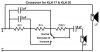
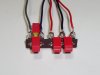
KLH 17 & KLH 20 x-over.jpg

KLH 20 Wima crossover.jpg
KLH 20 new crossover.jpg

The original dual 2µF bipolar electrolytic capacitor was the infamous black PVC cylinder with red ends, branded "Tennessee Electronics"; they are common to late 60s & 70s US-made speakers and are often marked "TEMPLE", or "CALLINS". The 8µF electrolytic capacitor was branded "Richey". The original capacitors were measured and compared to the WIMA film replacements; a Nichicon VP electrolytic bipolar capacitor was also tested for comparison.

KLH crossover table lrg.jpg
 
Register to hide this ad
I suppose one should add some resistors if you're going to use low ESR caps for correct voicing.
On the other hand, there aren't any "new" KLH's to compare to so who knows?
 
In comparison of the speaker with the WIMA capacitors to the other with the stock electrolytic capacitors, the treble range was a bit louder and smoother in the speaker with the WIMAs (toggle switch set to "Normal"). With the toggle switch set to "Increase", the speaker with the WIMAs would at times sound too bright, depending on source material; the speaker with the stock electroylitics tended to sound "harsh" with the toggle switch set to "Increase".

Regarding capacitor ESR, when KLH first introduced this high-pass crossover in the KLH Six speaker, low ESR paper-in-oil capacitors were used; the later production KLH Sixes substituted electrolytic capacitors for the PIO (possibly as a cost-saving savings measure).
 
Perhaps a 0.5ohm or so resistor in series with each of the 2uF caps?

I used some polypropylene caps on some KLH 32's without series resistors and with those cone tweeters I thought it was a distinct improvement.
 
I suppose one should add some resistors if you're going to use low ESR caps for correct voicing.
On the other hand, there aren't any "new" KLH's to compare to so who knows?

I don't know anyone on AK or the classic speakers pages site that are adding resistors to compensate for differences from original/higher ESR. I regularly restore speakers (KLH, Polk, AR, etc.) and never had an urge to do that.
 
I think if it sounds good in the “normal” position, you have the HF level just right. Why add a resistor so then you might have to run it in the “increase” position? Kinda defeats the purpose of having a level adjustment when you have to run it at one extreme.
It would be different if they were so bright that you had to run them in the “decrease” position. Then I would think a resistor would be a good thing.

I’ve used Wima caps, and some other film caps that aren’t usually used in crossovers too. I like the way they sound.
 
...I used some polypropylene caps on some KLH 32's without series resistors and with those cone tweeters I thought it was a distinct improvement.

Agreed, I generally prefer the sound with WIMA polyester films over that with the electrolytic capacitors, especially with the toggle switch at "Normal' and the speakers toed-in such that they face the listening position. The soundstage is wider with less toe-in, but the treble seems lacking some; that is the reason for trying the "Increase" setting.

Spent a couple of hours last night further experimenting with the toe-in angle and also tried a foam anti-diffraction ring on the tweeter; the best balance between stereo spread and treble response was with slight toe-in, treble switch on "Increase" and with the foam ring.

KLH anti-diffraction foam.jpg
 
I don't know anyone on AK or the classic speakers pages site that are adding resistors to compensate for differences from original/higher ESR.

It's a fact that PP and electrolytic are different. It may well not make too much of a difference on simple crossovers like most KLHs and ARs. It does "brighten them up" a bit which may be a good thing. What's correct?

Like many other arguments about restoration, this is a "So what did it sound like when it was new?" problem.
I don't know about the other posters here or on CSP but I heard a lot of these back when and I honestly can't recall the sound of them well enough to say whether the differences of using PP vs electrolytic on ageing drivers is "as I heard them."
We don't even know what the original T/S parameters were much less a driver frequency response plot. Sometimes a driver's Fs was mentioned in old literature but that's about it.

I am also willing to admit like many other posters that as I age my hearing has not improved.
 
No way for me to determine what they sounded like when new and I really don't want to try. Too many factors that are not under my control including my aging ears. What I care about is making them right and whether I like the way they sound right now. I have never thought - gee I wish I hadn't replaced those 50+ year old caps.

To put things into perspective, KLH, AR and some of the other classic manufacturers rarely used high-end caps. In most cases they went to lowest cost that would "do the job" which was almost always a cheap non-polar electrolytic. They had no qualms about changing the caps in mid-production run to save a buck (or less). In no uncertain terms almost any non-polar cap you put into them today will be an improvement over what was installed in the factory. Caps are just better today in general. Does it change the sound? Gosh, I hope so. Does it make it too bright? I've never had that problem with replacing caps of same capacitance. They might be "brighter" than before, but again I have no way to know how they sounded when they came out of the factory. I have simple mitigation strategies though if they sound brighter then I want or need and I don't think twice about using them.
 
I agree with everything you said.

Much of this is different when you get into precision higher order crossovers such as in the classic British speakers.
When I got my KEF Calindas I mulled this point over and decided to order the replacement set of caps from England.
The caps are made by the same people who worked at the original company and the caps have identical specs.
Outside of a little surround ageing, my Calindas now sound like 1978.
 
Back
Top Bottom