Ok, count me in on hearing a difference in interconnects.

I am convinced as well. It is the quality of the connectors more then anything else that makes the difference. where I see the voodoo BS is in the cable. As long as you use a quality cable brand, I like Belden, you are good to go. I remember a number of years ago there was an interconnect in Europe that had rave reviews. These cables cost hundreds of dollars. Somebody was looking around the internet and found the exact same cable, not a copy the same cable, which was made in China. The difference The source of these cables where all less $50 dollars each, most where a lot less. They came from an outfit like http://www.8audio-mall.com/ The 2 principles of this company, I think, are still hiding out in the Andes Mountains somewhere. ;)

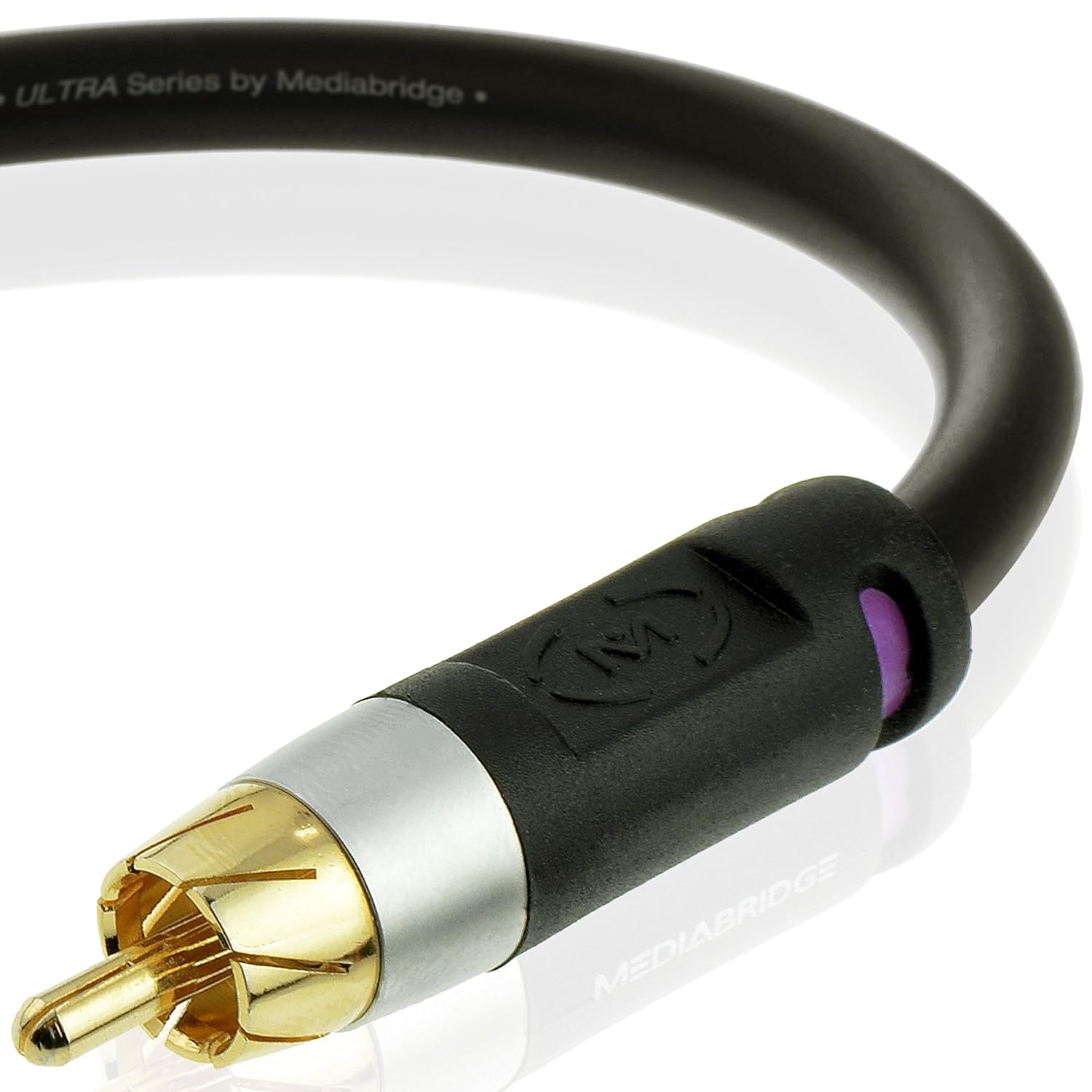
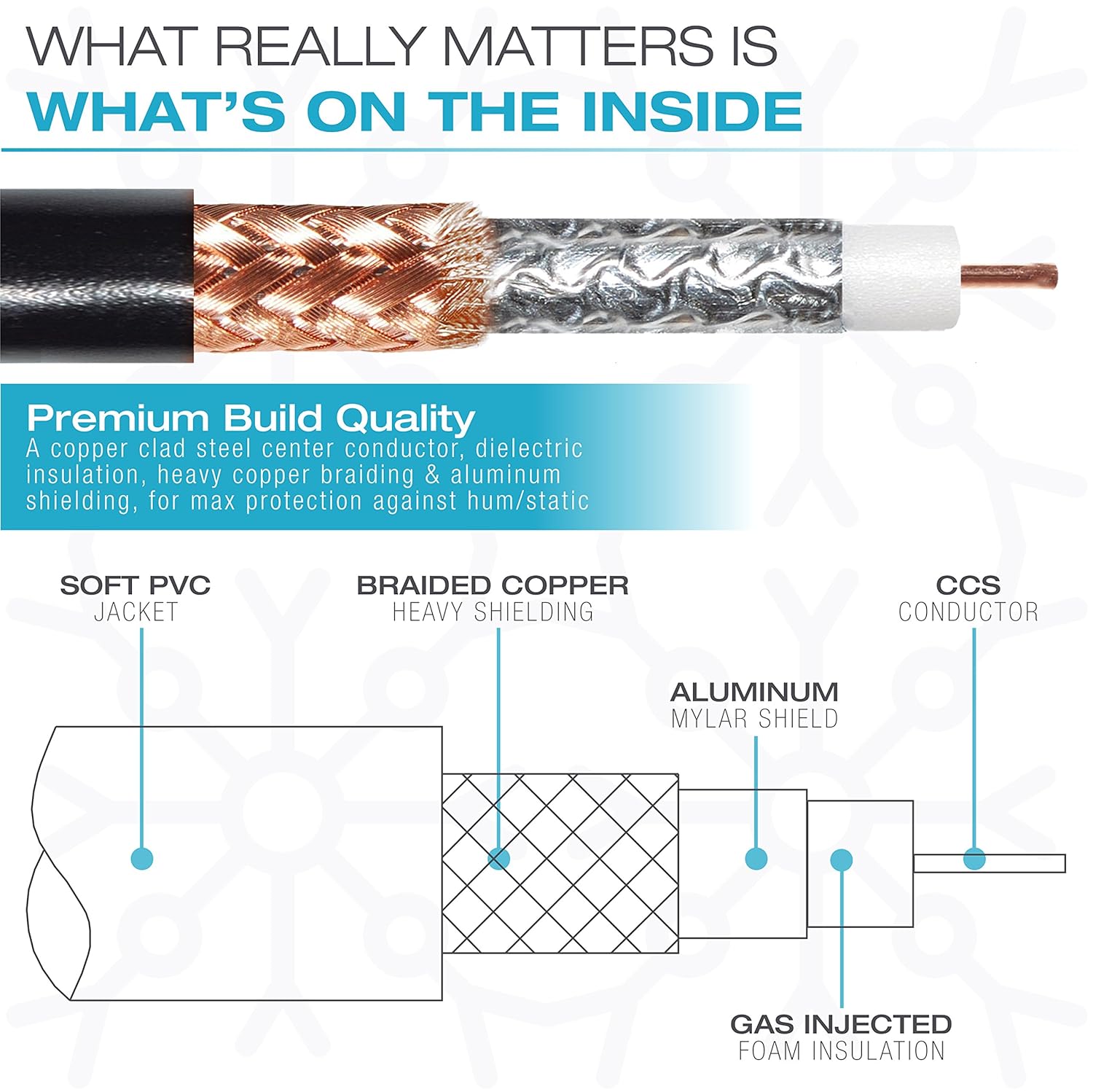
I like Blue Jeans Cables most of my system is connected with their cables. I had an expensive 35 foot BJC LFE cable connected my subwoofer. It was damaged and I decided to get a quick replacement while I saw to repairing the BJC. I replaced it with an very well made cable 15 foot Mediabridge ULTRA Series Subwoofer Cable. The BJC subwoofer cable was $57 Dollars, the Mediabridge Ultra cable was $9,99 cents, I cannot tell the difference. :) I have not repaired the BJC LFE cable yet.

81l1iG4XMwL._SL1500_.jpg


916TDSK1FaL._SL1500_.jpg
 
Last edited:
I bought a pair of IC's from 8Audio a couple of years ago. They are IMO a huge bargain. For $45 (current price) you can get a 1 meter pair of shielded cables with Silver plated high purity Copper wires, all covered with Tec flex and terminated with locking RCA connectors. IIRC they were $39 when I bought mine.
 
I purchased one of 8 Audio power cables. I didn't get it for improving the sound of anything used it on my Heathkit SB-200 HF amp. Their power cables are superbly shielded so there is no chance of the 600 watts of RF this amp can output getting into the power cable and back into the amp causing all kinds of problems.
 
So what's your take? Were you using them to replace standard RCA cables like I was?

Definite improvement, tried it so far on the hobby system in the dining room. Using my Modern Lovers CD as a reference point which gets played to death on it.

It's opened it up and made the sound a little crisper.

Oh, BTW, little Jimmy down the road found your escaped rooster. Go pick it up near the bike racks.

rooster1.JPG
 
Oh, I know there is a difference as I've borrowed various IC's from a mate to try. Some sounded better , and some worse. For myself there are still greater benefits to be had upgrading other components . Once that is done , I might just look at better IC's.

To my mind IC's are the very last upgrade before everything goes into record and CDs collecting. :)

That will be a while off though as my secondary system isn't quite complete, and the system in my back yard shed has only just begun ;)
 
I'm a skeptic - 110%, no question about it. And I've watched this poor horse get beaten here numerous times. But I'm going to reconsider this topic, and say there might actually be something to it.

Today, I replaced the 12 foot run of RadioShack RCAs that connect my CD player to my receiver with a much nicer 15 foot set I just received from Amazon.

From these:
04200489_00_600x600_crop_center.progressive.jpg


To these:
$_58.JPG

FOSCBL-2193-C1.jpg


Nothing too incredibly fancy or expensive, but nicer nonetheless.

There is no doubt in my mind that there's a difference in sound for the better. My first play was one of my favorite CDs which I've memorized over the last 20 years or so - I know every letter, note, and nuance: Jerry Rivera's - Lo Nuevo y Lo Mejor.

A brighter, more engaging soundstage, lively, and even a little more pronounced and tighter bass.

By the time I got to track 11, No Hieras Mi Vida, (probably the best track on the album), I had to sit down and just absorb how good it actually sounded.


This was absolutely and totally unanticipated. I had only bought these cables because they were just a bit longer than the RS, which would make that run around the corner a little cleaner looking instead of cutting across the floor under the chair.

I already have a 3ft set of the same brand that I use to connect my laptop's external sound card to the stereo, and I just liked the quality of the connectors (those plugs feel like the ceramic bezel of the old DiaStar watches) - besides that, though, I never really gave them much thought.

But there was no mistaking how much better these made the sound from the Teac to the Yamaha.

Now, one could reasonably argue that I was in a good mood because the electric grid had just finally been restored here in PR this afternoon after our total, island-wide blackout on Wednesday.

One could also argue that of course it sounded better since I've been only listening to a cacophony of generators in the neighborhood for the last 3 days.

I can't argue against either. Both statements have reasonable merit.

But, every CD I've played has presented similar sonic improvements - even using the Teac's USB port to stream from my phone.

Count me in. There just might be something to nicer cables improving the final sound.

(Disclaimer: I don't represent fospower or any company that sells them.)

Good news, I just bought some Fospower to replace Radioshack as well! glad to hear you like them.
 
Dumb question. Electronics is my weak subject, so bear with me.

In many of these better cables, the shield or overbraid is used as one of the conductors.

We use a lot of shielded, twisted pair, cables in running control circuits at work (two conductors plus the braided shield). The shield is only ever connected at one end, and taken to chassis ground. This is an attempt to limit "noise" in the control signals and control ground loops to some extent.

Anyone use this type of cable in audio? Where would you attach the shield? Would you just tie it to the negative of the RCA connector (if so, how do you pick which end), or take it outside the connector and ground them all together at the power amp (assuming you are running separates)?

Also, what Belden wire do you recommend? I want to make some patch cables to custom length.
 
Connecting shielding at one side is a Faraday shield.
https://en.wikipedia.org/wiki/Faraday_cage

As for Belden cable choices call up Blue Jeans Cable they have Belden cable of all types and they can advice you as to what would be the best choice and you can purchase it from them or you can have them custom make the cable you want for a very reasonable cost. They have made me several, and with the equipment they have you cannot make them as good.
 
Not sure how its done... and I agree with "Transmaster"... some things are better left to the professional or experienced types in the industry.

However, I believe proper shielding is paramount to quality signal transfer. One can not account for the various types of RF and LI potential in todays circuit and system configurations. And why need worry about those factors to begin with anyways... where it can be eliminated by a "cable".. :dunno:?

Not that I am endorsing $100/foot routing,.. just saying if you looking for a stable signal path, you have to consider the quality or performance of what's getting it there.
 
I like Belden cable, When you consider their long history stretching back to 1902 and the fact they have been in on the ground floor of every hard wired signal transmission innovation. It has been a recording studio standard since the 1950's when Belden invented flexible shielded cable that could be laid out in a concert hall for the use of multiple microphone recording. Perhaps the single greatest development was the ultra flexible electric guitar cord. If you read up on it's development you understand how difficult it was early cable if moved and stretched got noisy and had huge changes in impedance which with the vacuum tube technology of the time was not exceptable. For me there is no reason to look any farther. As I point out time and time again the music you are listening to was probably recorded using Belden cabling. As I said up thread it is what you use for the termination that makes it. A good quality RCA. XLR, phone plug, etc is what makes the biggest difference as long as you have selected a good cable.

A Faraday shield is a trap not a transmission line so EMI is not conducted down the shield from one place to another instead it is caught and conducted to ground.

What makes the construction of BJC interconnects so good is they use ultrasonic welding on the connectors not solder.
https://www.bluejeanscable.com/articles/ultrasonic-welding.htm
 
Last edited:
Back
Top Bottom