

-
Please note that there are a few updates and clarifications made in the Audiokarma Rules, mostly relating to advertising and the addition of the new "Paying it Forward" & "Giving back" forums in the AudioKarma Audio Marketplace section.
You are using an out of date browser. It may not display this or other websites correctly.
You should upgrade or use an alternative browser.
You should upgrade or use an alternative browser.
Power consumption... are you starting to think Green?
- Thread starter myu701
- Start date
- Status
- Not open for further replies.


merrylander
AK Member
Although this house was built 22 years ago the exterior walls are 2 x 6 with equivalent insulation, double paned window, 199" attic insulation, low E glass skylight and patio doors.
When we leave a room the lights go off, when not listening to stereo or tv it is we do have two automaitic lights but thankfullly there are no CFLs to worry about. CFLs bother my wife's eyes and since it is almost impossible to find US made CFLs in any case. The Chinese ones ar notorious for starting fires.
When we leave a room the lights go off, when not listening to stereo or tv it is we do have two automaitic lights but thankfullly there are no CFLs to worry about. CFLs bother my wife's eyes and since it is almost impossible to find US made CFLs in any case. The Chinese ones ar notorious for starting fires.

Arkay
Lunatic Member
Similost, I like that! :lmao: :thmbsp:
I agree that there is a lot of silly and mis-construed stuff that gets passed off as "green" these days. It's a bit like "organic" sugar-covered chocolate bars... they might be organic, but they're still bad for you, as are 100 percent organic Amanita mushrooms, the most poisonous plants (to man) known to exist.
As consumers, we should do our homework and THINK a little, in making our decisions. We don't have to stop living or go to extremes. Anyone recycle their urine, to conserve water? It's not necessary, outside of a spacecraft, but getting a leaky faucet fixed so you stop a constant wastage would be the right thing to do. Are paper bags really more "green" than plastic bags? Highly debatable, when you factor in the total life cycle of the bag, and what trees might be destroyed to make them; trees contribute more to the environment than oil deposits!
I recently tried converting some of the light bulbs in my apartment from regular incandescents to LED types, hoping this would save a lot of electricity. I don't like the "flickery" and "off" light I get from those energy-saving bulbs with the coiled tube lighting, but I thought/hoped the LEDs would be good. As soon as the weather got cold, one stopped working altogether, and the other began flickering almost like a strobe light. I noticed the very limited color wavelength made vision "weird"; I can't quite describe it. You can see everything, yes, but there is something vaguely altered, almost insubstantial, about how everything looks. I think it's because only a very few of the eye's receptors are activated. Definitely un-natural! My wife complained about how much trouble she had putting her make-up on in the morning, due to the weird light. Now I'm probably stuck with the most expensive AND the most useless light bulbs I've ever bought -- ones that were supposed to last for years and years, to justify their higher price. If I had a chance to take a baseball bat to the conmen who promote these rip-offs, I would. And until they come up with a light bulb that is as comfortable for the eyes as regular incandescents, I'll continue to waste electricity by using them. I check every month; if they ever take steps to ban them here (as they have in a few other places) I'll stock in a couple hundred bulbs, so I can continue to protect my vision, even if it uses more electricity. I'd LOVE to save money by using more environmentally-friendly bulbs, but not if the light quality is unacceptable.
As for my stereo, it, like most of the gear I have which has "standby" mode, usually gets turned off at the power switch before I sleep at night. This saves the "trickle" current that these appliances have running all the time, which can add up across a whole home.
If I plan to listen to the main system, though, I know that I'm using electricity. The Magnum Opus One has a two-color light system that tells you when the tubes are warmed up and everything has stabilized for playing; this takes a while, and anything with 19 tubes in it gives off a fair amount of heat. Hold your hand near one of the power supplies, or the preamp itself, and you can feel the heat coming off the tubes. The 101M power amp is solid state, but at 500+ WPC it can consume a fair amount of electricity, too. The main system "eats" a lot, even at rest. Almost the antithesis of energy-sparing, it's an expensive energy hog. If I could get the same quality sound from a small, energy-sparing amplification system, I'd gladly switch, but I haven't found that possible (yet).
I don't use it in the hot summer months, though, and even in winter I only turn it on for serious listening, not for background music. It gets used several days a week, but not every day; I use less energy-burning things for background listening. In the late-night hours, I'm often listening through headphones via a small 1-tube preamp, fed by my laptop. That's pretty efficient, even though the tube does waste heat energy. Sometimes I run the sound through a Marantz 1060 or one of the receivers in a stack in my office-room; that uses more electricity, but still isn't too bad.
Our consumption of electricity for heating and cooling is pretty environmentally-friendly, by Hong Kong standards, because we live in an older building. The thicker walls and higher ceilings mean better insulation, so the place naturally stays cooler in summer and warmer in winter, than the more modern buildings. I figure that helps offset any electricity I "waste" with my main stereo system. We only turn the hot water heater on before a shower (and off afterward), and the same for the water boiler in the kitchen; Hong Kong apartments typically do NOT use central water heaters, so there is less waste there, too.
I buy appliances that should last a long time, and then use them a long time before changing them (I'm typing this on a Pentium III! ), and sometimes I buy vintage things will otherwise end up in landfill and restore them for continued use, so that helps reduce the overall burden I place on the environment.
In general, I recycle whenever I can, carrying things like plastic containers an extra block away to the recycling bins, instead of the closer trash bins, and generally try to live with a "small footprint", but I don't take it to extremes. I think a prudent balance is good.
Oh, and I have one other "environmentally friendly" characteristic that I can claim, that few can; in over a half-century on this planet, I have NEVER littered. Not once, not one bit, EVER. (Unless something fell out of my pocket or bag completely unknown to me... but never knowingly or willingly.) I don't bury my trash when backpacking, I pack it back out with me. I carry my trash, no matter how small, until I find a proper trash-receptacle for it.
I also do NOT smoke, so I don't make much of a contribution to air pollution. I don't think any smokers have any right to complain about air pollution; they are among the worst of all offenders, since they put their pollutants right into the air space where people have to breathe.
I don't drive a gas-guzzling car; in fact, in Hong Kong I don't even have a car, as there is no need here. When I travel elsewhere, I sometimes rent a car to drive, but overall I have a very small "transportation footprint".
Since I am gluten intolerant, I eat a lot of raw, unprocessed foods and minimally-processed foods (steamed fresh vegetables), and do NOT eat fast food or highly-processed junk food. This saves a lot of wasted resources (something few people think about) and is a "green" way to eat.
Several of these things are by-products of my lifestyle or choices made for other reasons than just environmental conservation, but I'm glad that they work out to be good things for others, and not just for me.
As I said, I think it is about a reasonable balance: not wasting electricity or any other resources that can be conserved or recycled, while still "having a life". If everyone just made a few adjustments to be a little less wasteful, we'd all be better off... and hopefully as the world moves towards a little more conservation, there will still be chances to enjoy our stereo systems without guilt or excessive cost!
I agree that there is a lot of silly and mis-construed stuff that gets passed off as "green" these days. It's a bit like "organic" sugar-covered chocolate bars... they might be organic, but they're still bad for you, as are 100 percent organic Amanita mushrooms, the most poisonous plants (to man) known to exist.
As consumers, we should do our homework and THINK a little, in making our decisions. We don't have to stop living or go to extremes. Anyone recycle their urine, to conserve water? It's not necessary, outside of a spacecraft, but getting a leaky faucet fixed so you stop a constant wastage would be the right thing to do. Are paper bags really more "green" than plastic bags? Highly debatable, when you factor in the total life cycle of the bag, and what trees might be destroyed to make them; trees contribute more to the environment than oil deposits!
I recently tried converting some of the light bulbs in my apartment from regular incandescents to LED types, hoping this would save a lot of electricity. I don't like the "flickery" and "off" light I get from those energy-saving bulbs with the coiled tube lighting, but I thought/hoped the LEDs would be good. As soon as the weather got cold, one stopped working altogether, and the other began flickering almost like a strobe light. I noticed the very limited color wavelength made vision "weird"; I can't quite describe it. You can see everything, yes, but there is something vaguely altered, almost insubstantial, about how everything looks. I think it's because only a very few of the eye's receptors are activated. Definitely un-natural! My wife complained about how much trouble she had putting her make-up on in the morning, due to the weird light. Now I'm probably stuck with the most expensive AND the most useless light bulbs I've ever bought -- ones that were supposed to last for years and years, to justify their higher price. If I had a chance to take a baseball bat to the conmen who promote these rip-offs, I would. And until they come up with a light bulb that is as comfortable for the eyes as regular incandescents, I'll continue to waste electricity by using them. I check every month; if they ever take steps to ban them here (as they have in a few other places) I'll stock in a couple hundred bulbs, so I can continue to protect my vision, even if it uses more electricity. I'd LOVE to save money by using more environmentally-friendly bulbs, but not if the light quality is unacceptable.
As for my stereo, it, like most of the gear I have which has "standby" mode, usually gets turned off at the power switch before I sleep at night. This saves the "trickle" current that these appliances have running all the time, which can add up across a whole home.
If I plan to listen to the main system, though, I know that I'm using electricity. The Magnum Opus One has a two-color light system that tells you when the tubes are warmed up and everything has stabilized for playing; this takes a while, and anything with 19 tubes in it gives off a fair amount of heat. Hold your hand near one of the power supplies, or the preamp itself, and you can feel the heat coming off the tubes. The 101M power amp is solid state, but at 500+ WPC it can consume a fair amount of electricity, too. The main system "eats" a lot, even at rest. Almost the antithesis of energy-sparing, it's an expensive energy hog. If I could get the same quality sound from a small, energy-sparing amplification system, I'd gladly switch, but I haven't found that possible (yet).
I don't use it in the hot summer months, though, and even in winter I only turn it on for serious listening, not for background music. It gets used several days a week, but not every day; I use less energy-burning things for background listening. In the late-night hours, I'm often listening through headphones via a small 1-tube preamp, fed by my laptop. That's pretty efficient, even though the tube does waste heat energy. Sometimes I run the sound through a Marantz 1060 or one of the receivers in a stack in my office-room; that uses more electricity, but still isn't too bad.
Our consumption of electricity for heating and cooling is pretty environmentally-friendly, by Hong Kong standards, because we live in an older building. The thicker walls and higher ceilings mean better insulation, so the place naturally stays cooler in summer and warmer in winter, than the more modern buildings. I figure that helps offset any electricity I "waste" with my main stereo system. We only turn the hot water heater on before a shower (and off afterward), and the same for the water boiler in the kitchen; Hong Kong apartments typically do NOT use central water heaters, so there is less waste there, too.
I buy appliances that should last a long time, and then use them a long time before changing them (I'm typing this on a Pentium III!
), and sometimes I buy vintage things will otherwise end up in landfill and restore them for continued use, so that helps reduce the overall burden I place on the environment.In general, I recycle whenever I can, carrying things like plastic containers an extra block away to the recycling bins, instead of the closer trash bins, and generally try to live with a "small footprint", but I don't take it to extremes. I think a prudent balance is good.
Oh, and I have one other "environmentally friendly" characteristic that I can claim, that few can; in over a half-century on this planet, I have NEVER littered. Not once, not one bit, EVER. (Unless something fell out of my pocket or bag completely unknown to me... but never knowingly or willingly.) I don't bury my trash when backpacking, I pack it back out with me. I carry my trash, no matter how small, until I find a proper trash-receptacle for it.
I also do NOT smoke, so I don't make much of a contribution to air pollution. I don't think any smokers have any right to complain about air pollution; they are among the worst of all offenders, since they put their pollutants right into the air space where people have to breathe.
I don't drive a gas-guzzling car; in fact, in Hong Kong I don't even have a car, as there is no need here. When I travel elsewhere, I sometimes rent a car to drive, but overall I have a very small "transportation footprint".
Since I am gluten intolerant, I eat a lot of raw, unprocessed foods and minimally-processed foods (steamed fresh vegetables), and do NOT eat fast food or highly-processed junk food. This saves a lot of wasted resources (something few people think about) and is a "green" way to eat.
Several of these things are by-products of my lifestyle or choices made for other reasons than just environmental conservation, but I'm glad that they work out to be good things for others, and not just for me.
As I said, I think it is about a reasonable balance: not wasting electricity or any other resources that can be conserved or recycled, while still "having a life". If everyone just made a few adjustments to be a little less wasteful, we'd all be better off... and hopefully as the world moves towards a little more conservation, there will still be chances to enjoy our stereo systems without guilt or excessive cost!

similost
Rockin and Rollin....
Yeah.. don't get me wrong.. I do believe we can all do better, but I also know that "Green" is more about real "Green" (read cash, corperations anr lobbiests) than it is about the enviroment..
On Capitol Hill they had a recycling system set up.. turns out, it was costing a lot more to run it than it was saving, (both monitarily and carbon wise) and a few people were getting nice and rich off it... imagine that.. So they have discontinued it.. which actually shocked me.. .
On Capitol Hill they had a recycling system set up.. turns out, it was costing a lot more to run it than it was saving, (both monitarily and carbon wise) and a few people were getting nice and rich off it... imagine that.. So they have discontinued it.. which actually shocked me.. .

zenith2134
Addicted Member
My amp uses ~ 700W at full power. As for the rest of the gear, I don't know..because I don't care too much.
On being Green
Let's see...
My Technics SL-1210 uses 13.5 watts.
My Sony CD player uses 10 watts.
Obviously the Planet would be happier if I just listened to CDs.
Oh, wait! There is my belt drive Technics SL-B303 that only uses 3 watts. And the same cartridges as the SL-1210. Now I can go back to listening to records.
No, wait! The B303 uses rubber drive belts that go in the landfill when they get too hard and dried out. Obviously the Planet would be happier if I made my own music. Maybe I'll get a guitar.
Oh, wait! Guitars are made from wood, which comes from dead trees, which leaves more cee-oh-two in the air.
I could just try singing.
Oh, wait!
Singing involves physical exertion, which makes more cee-oh-two!
I guess if I want music it would be best if I just use my imagination.
Oh, wait! "My Imagination". By Hall and Oates. I have that on CD and vinyl. Now which version do I want to play first...?
Let's see...
My Technics SL-1210 uses 13.5 watts.
My Sony CD player uses 10 watts.
Obviously the Planet would be happier if I just listened to CDs.
Oh, wait! There is my belt drive Technics SL-B303 that only uses 3 watts. And the same cartridges as the SL-1210. Now I can go back to listening to records.
No, wait! The B303 uses rubber drive belts that go in the landfill when they get too hard and dried out. Obviously the Planet would be happier if I made my own music. Maybe I'll get a guitar.
Oh, wait! Guitars are made from wood, which comes from dead trees, which leaves more cee-oh-two in the air.
I could just try singing.
Oh, wait!
Singing involves physical exertion, which makes more cee-oh-two!
I guess if I want music it would be best if I just use my imagination.
Oh, wait! "My Imagination". By Hall and Oates. I have that on CD and vinyl. Now which version do I want to play first...?

Unless you're running high-power tube gear 24/7...power consumption isn't really a concern. From 40 years of experience in broadcasting...electronics last MUCH longer if you just turn 'em on & forget it. We use windows & fans a lot during the summer...it takes a really hot day coming to shut everything up & run the central A/C...and even then we shoot for 72 or so. CFLs are EVERYWHERE in my house...except the dining room fixture which is on a dimmer & not used that often. As far as CFL life...had the first one fail a couple of weeks ago after being in one of the kitchen fixtures for about 7 years. No flames or smoke...just up & quit. So I threw it in the trash


JBL GUY
Addicted Member
Unless you're running high-power tube gear 24/7...power consumption isn't really a concern. From 40 years of experience in broadcasting...electronics last MUCH longer if you just turn 'em on & forget it. We use windows & fans a lot during the summer...it takes a really hot day coming to shut everything up & run the central A/C...and even then we shoot for 72 or so. CFLs are EVERYWHERE in my house...except the dining room fixture which is on a dimmer & not used that often. As far as CFL life...had the first one fail a couple of weeks ago after being in one of the kitchen fixtures for about 7 years. No flames or smoke...just up & quit. So I threw it in the trash
IIRC those CFS contain mercury and are not supposed to be put in the
your regular trash.

Your green may be fading.:yes:

VinylHanger
Navigaret ex ironia
I started a post about this in BAP. I have pretty much given up on saving power water or anything else. I try and they keep raising the rates so my cost goes up anyway. It isn't about saving the planet, it is about saving the providers money on new infrastructure. I don't really care about them too much.
I turn stuff off and have a few CFL's around, some I even have gotten to where I prefer the light to regular ones. But I don't bother making sure I turn everything off or take short showers.
I am interested in the new lights out of geekiness, not greenness.
I turn stuff off and have a few CFL's around, some I even have gotten to where I prefer the light to regular ones. But I don't bother making sure I turn everything off or take short showers.
I am interested in the new lights out of geekiness, not greenness.

ARRAY
Super Member
In short, yes!
Addendum:
I'm about as much of a tree hugger as Paul Bunyan and politically correct as Andrew Dice Clay. So, when I say I'm interested in "green" amplification it means I don't need much power to begin with and secondly I've found some really, really beautiful kit amplifiers that meet personal needs at 80% efficiency. I like efficiency when properly applied, and especially not sacrificing quality.
Addendum:
I'm about as much of a tree hugger as Paul Bunyan and politically correct as Andrew Dice Clay. So, when I say I'm interested in "green" amplification it means I don't need much power to begin with and secondly I've found some really, really beautiful kit amplifiers that meet personal needs at 80% efficiency. I like efficiency when properly applied, and especially not sacrificing quality.
Last edited:

Sadly, I'm a bit of a power hog...
IIRC those CFS contain mercury and are not supposed to be put in the
your regular trash.
Your green may be fading.:yes:
Don't think I would've added the green smiley guy if I was serious. Brought it to work & put it in with our fluorescent tubes to go to the recycler.
JBL GUY
Addicted Member
Don't think I would've added the green smiley guy if I was serious. Brought it to work & put it in with our fluorescent tubes to go to the recycler.
I figured as such...
But just wanted to make a point to be sure.
A lot of my friends do not have a clue about the mercury in CFL lamps.
I have a hard time with the color temperature of some of the CFLs and especially some of the replacement LED lamps. My eyes do not like the broken spectra of the LEDs.
I guess it is back to candles for me:yes:


bhunter
The Spherical Cow
i can't help thinking that the more green we become the faster energy prices rise..:scratch2: maybe we should have a national "no electricity" day just to test the theory ?
so i guess my answer is..if i pay for it..i make sure i use it :thmbsp:
"Green" is not profitable unless it is subsidized. We get less than ~1% of energy from wind and solar, whereas, wood provides ~2% of energy. Sadly, "green" gets all the positive airplay. I think petroleum is quite green and natural...just takes a bit of pressure and time. <g>
bhunter
The Spherical Cow
Are you freeking kidding me??? Fifty cent per kwh??
Good gravy, man.....Jesse James used a gun!
Ummmm......I pay about five cents. Don't want to bum you out.
Welcome to the California. Our fuel prices are also typically the highest. Where I live, San Diego, we typically have the highest fuel prices, along with housing, food, etc., in California.
bhunter
The Spherical Cow
I think generating power should be made as green as possible. The power companies are responsible for this not the consumer. (However the consumers have to pressure the institutions.).
That said;
I would like solar panels on the roof, wind generator (or how do ya call it) and a wood burner that redirects heat to the central heating system.
My amp is incidentally a low power consuming unit (T-amp..).
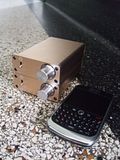

At what cost? Aside from nuclear, there are no competitive energy sources to petroleum. What is the environmental impact of producing all those high technology "green" products.

- Status
- Not open for further replies.