Pros vs Cons of 2 Smaller Woofers vs. One big one?

Hanleyster

ambitious but rubbish
Lets compare ADS L710 with two 6.5" woofers to its cousin the L880 with the 10" woofer.

I did some maths, and it seems as though the two 6.5" woofers equal the same area as woofer with a diameter just over 9".

What is the science behind it? Anyone with insight welcomed, even if just speculation.

Thank you
 
Register to hide this ad
My Epicure Model 20's have two 8'' woofers per box, and the bass can get nice and low. Interested to hear what the experts say on this matter.
 
Two bass drivers need to be perfectly matched or they will react differently to the shared signal. Result is smearing. Space permitting, single larger driver is always better. IMO, IMO!
 
Two smaller drivers can respond "faster" with similar extension downward and higher xover upward, but sharing midrange between two drivers can be a very mixed curse without very good design.

Sent from my SM-N900V using Tapatalk
 
Lots of good reasons. Narrower front baffle means less diffraction and better imaging. The enclosure size can be smaller and will be naturally stiffer due to the narrower baffle. Although the larger woofer will probably be able to go a bit deeper, the dual woofers will tend to sound much tighter, and the stiffer boxes less boomy with equal bracing efforts.

Never even touched on WAF issues. Tall, narrow towers are sexier to look at for women. They are also easier to ship, store in the warehouse, handle, etc.

BTW, a lot of the "dual woofer" product with 5 and 6" woofers are actually a 2 1/2 way design when there is no separate midrange driver. Trying to get both woofers to do midrange isn't good design practice. The lower woofer does bass alone, and often the middle woofer does both, or is sometimes rolled off somewhere as the midbass starts rolling in.
 
Last edited:
Just FWIW, here's what master speaker builder Troels Gravesen has to say on this general subject:

There's one thing that adds a specific character to this speaker [his reimagined L100 Century]: Having a 12" driver handling the midrange up to around 1-1.5 kHz. It's kind of studio sound. Professional studios - and cinemas for that matter - often use huge drivers for midrange. Why? To reduce distortion obviously. We're so sensitive to distortion of the human voice and a proper designed 10-12" driver can do things here that no 6" can ever do.

And:

A 12" driver usually has a cone area of a little more than 500 cm^2. This is more than 3 times a ScanSpeak 18W/8531G00 driver! Imagine 3 x 6½ drivers in the same cab. A 12" based system can do things none of today's 6" skinny runts can do. It seems like most diy'ers start with a 6" 2-way making deep bass from 24-33 litre and an efficiency rarely exceeding 85 dB. We're all impressed from the bass it can make - but after some time we find out it really can't play very loud and we try another 6" driver or we make a 2½-way from 2 x 6" drivers. And we're never really getting anywhere. So, if you can handle a 60-70 litre cab, find a 12" driver, mount it on the side if the speaker must be skinny and use a 6" for midrange with a point of crossover around 250-350 Hz - and now hear what happens. With a 12" making 90-92 dB and a large middriver that no longer also has to handle the bass - we have a much better starting point in making an easy-to-listen-to speaker. Generally people have way too high expectations from a 24 litre floorstander. And they're often misled from much too optimistic specs. Very often you can subtract 2-3 dB from claimed sensitivity and 5-15 Hz from claimed low-end extension.
 
Last edited:
Two bass drivers need to be perfectly matched or they will react differently to the shared signal. Result is smearing. Space permitting, single larger driver is always better. IMO, IMO!

I've heard a lot of dual woofer speakers that performed quite well through the midbass and bass regions, with no sign of "smearing." With the manufacturing tolerances of the past 20 years or so, I don't think that's a huge issue. The only ones I've ever heard that produced what I would call audible "smearing" were cheap speakers and most of the smearing was noticeable cabinet resonances or tuning issues.

I still think about the Energy C5s driven by a tube integrated at the Montreal HiFi show back in their day. For the money, the sound was absolutely stunning. It was their ultimate precision through the midbass and bass that really set in after the mids and the highs caught my attention. Just sounded so "right." A well designed, "average" priced speaker. On the pricier side of life, my former co-worker bought the big version of my speakers, the Audiovector M3 Signatures. They were breathtaking withe the right amplification. His was biamped with an Arcam integrated and matching amp. His room was too small for them, but coherency was not an issue. Then again, I think they were about $5k/pr.
 
Comparing 6" and 12" drivers isn't that fair, though.

Comparing 2 smaller drivers with a single larger (say 2x8" vs 1x12") that give about the same cone area becomes a bit more meaningful and there are pros and cons - as always.

Firstly, the drivers need to be comparable - something that isn't always possible. That means compliance, magnet (engine) strength and excursion. Having these comparable, then simulations can show that low frequency extension becomes pretty similar (perhaps lose a few Hz with the smaller drivers, perhaps not) and the smaller drivers will break up higher than the bigger one in the midrange.

So, if you are going 2 way then two smaller drivers can usually give you similar performance in the low end and better performance in the midrange.

Two woofers can - as already mentioned - give you the option to go 2.5 ways that helps with baffle step and also allow for a narrower front baffle that also helps with imaging.

An interesting example is the Ref 105.2 and Ref 105.4 from KEF. Both three ways, the first employs a single 12" woofer in a 70lt enclosure and an f3 of 38Hz while the second employs 2x8" drivers in a 40lt enclosure and an f3 of 55Hz. The smaller one loses in low frequency extension but that's not because of the drivers as much as because of the enclosure volume being a bit more than half of the biger brother.
 
A larger driver will usually have more excursion than one of two smaller drivers equalling it's area, thus more output than them, that might be important. Or might not. As has been mentioned a smaller driver might reach higher into the midrange, that might be important. Or might not.

Subjective "tightness" of bass is determined more by cabinet design than driver size--IME larger woofers can sound just as tight as smaller ones.

All in all I see no great advantage to either way--execution is the key.
 
Thought I'd chime in, as someone who has gone from a single 12" - University 312 - to dual 6" - Focal 826.

Even allowing for the 40 year difference in manufacturing technology, I can say I'm way happy with my Focals (which are indeed a 2-1/2 way design). The Universitys in their massive enclosures may have had subjectively a touch more bass, but the Focals have better bass. Tighter, quicker, more character - not just thump thump. That, to me, is the benefit of two smaller drivers over a larger single one. Two small woofers can start and stop faster than one big cone; no mater the cone material, inertia still plays a part that can't be ignored.

Still, as said, execution is the determining factor, and so the question can't be definitively answered. It's like direct drive vs. belt drive TTs; I've got one of each, and enjoy them both.:thmbsp:

Happy trails,
Larry B.
 
Tighter, quicker, more character - not just thump thump. That, to me, is the benefit of two smaller drivers over a larger single one. Two small woofers can start and stop faster than one big cone; no mater the cone material, inertia still plays a part that can't be ignored.

You're drawing a general conclusion from a specific case. It's more likely the University sounds inferior because of other reasons than size, such as it's inherent frequency response or because of it's enclosure design. Any size woofer can be underdamped.

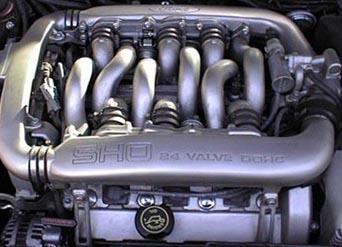
Note too that if one values "power to weight" (though I now think such a notion is dubious) light coned 12s and 15s with very powerful motors such as Altec 515s, 416s and 414s will surpass many smaller drivers. Consider the way a heavy Ford Taurus SHO accelerates and brakes better than a much lighter Ford Fiesta.
 
Last edited:
Lets compare ADS L710 with two 6.5" woofers to its cousin the L880 with the 10" woofer.

I did some maths, and it seems as though the two 6.5" woofers equal the same area as woofer with a diameter just over 9".

What is the science behind it? Anyone with insight welcomed, even if just speculation.

Thank you
The thing to keep in mind, most, is mass. As drivers get larger there is more mass moving, hence composite, graphite and other exotic materials to reduce the "moving mass" of the piston. I have 10" running with passive radiators that produce amazing bass. Listening to "Nickleback" is a good way to judge bass performance of speakers, or Telarc 1812 Overture. I've been impressed with 6"+ size pairs and while they don't dig really deep, like 12" or larger, they produce what most people "shop" for and that's strong mid-bass, though often they don't realize that is the range they're listening to.
 
You're drawing a general conclusion from a specific case. It's more likely the University sounds inferior because of other reasons than size, such as it's inherent frequency response or because of it's enclosure design. Any size woofer can be underdamped.

Note too that if one values "power to weight" (though I now think such a notion is dubious) light coned 12s and 15s with very powerful motors such as Altec 515s, 416s and 414s will surpass many smaller drivers. Like the way a heavy Taurus SHO accelerates and brakes better than a much lighter Ford Fiesta.
The SHO having a highly refined, by Yamaha, motor. Otherwise, I hate the Taurus, owned one, never again. But I would own a 1990 SHO. New ones seem interesting. But that's off topic. As for braking, I'd beg to differ. Like speaker size, the "mass" of a Taurus still must be stopped, and if brakes and tires are overwhelmed you get skidding, sometimes even with anti-lock brakes. Of course try to get a Fiesta up to SHO speed would require a steep incline and a tail wind.
 
1993_ford_taurus_4_dr_sho_sedan-pic-9680.jpeg
 
The SHO having a highly refined, by Yamaha, motor. Otherwise, I hate the Taurus, owned one, never again. But I would own a 1990 SHO. New ones seem interesting. But that's off topic. As for braking, I'd beg to differ. Like speaker size, the "mass" of a Taurus still must be stopped, and if brakes and tires are overwhelmed you get skidding, sometimes even with anti-lock brakes. Of course try to get a Fiesta up to SHO speed would require a steep incline and a tail wind.

The current SHO uses no Yamaha motor but a Ford EcoBoost dual turbo 3.5 six. The same motor is used in my F-150, though the truck version is tuned for more low end torque. Both versions make 360hp though.

In any event I'm no longer convinced such power to weight is important with loudspeaker performance, especially with regards to bass quality. But I throw the analogy out there to stimulate thought.
 
Correct me if I'm wrong. Aren't a lot of "dual woofer" systems really a 2-1/2 way configuration? Or 3-1/2 way? Meaning the 2 woofers are run so that one is run full range below the cut off of the speaker above (mid or tweet) and the 2nd woofer is run just up to or below the baffle step point? I think that one advantage is that maybe crossover doesn't need a slope to compensate for baffle diffraction loss, just a simpler cut-off point for the lower driver. Just speculating after researching some 2-1/2 ways that I've had. Still learning.
 
Different doesn't mean better or worse. Sometimes it's about what compromises you can live with.

My Alon IV mains are wonderful. For two channel I prefer them over my buddies system (Monitor Audio Silver series towers) but for theater his super tight punchy speakers rule.

My Alon 12's hit long before you hear it. When measuring at 17hz the window frames rattle and you feel it anywhere you sit on my large circular couch, but you hear it above 20hz. His Silvers need an added Sub for that (SVS 12") but even the super tight sounds during a movie just sound so on the edge of your seat punchy with his.

His sound great two channel too. Mine are smooth, laid back while detailed, but his Silvers sound super tight and detailed. Both are great.
 
BTW, a lot of the "dual woofer" product with 5 and 6" woofers are actually a 2 1/2 way design when there is no separate midrange driver. Trying to get both woofers to do midrange isn't good design practice.

Tell Greg Timbers that some of his designs, like the JBL Studio 570 and 580 "isn't good design practice", both of which are dual woofer and 2-way, not 2 1/2 way x-o's, while the 590 is 2 1/2-way. Not to mention the many D'Appolito and other dual woofer models out there. I've been told that Timbers likes the 580's sound better than the 590's. I've owned the 580's and 590's and think they're both excellent sounding, the 590 having just a few more Hz extension and a tad more efficiency because of larger cabs/drivers, but no advantage I can discern in the mids.

Another benefit of dual smaller woofers is there can be theoretically less distortion, since 2 woofers move half as much as a single one for the same output, though maybe not directly equal to a single larger woofer of approximately equal radiating area.

However, I generally like the sound of larger drivers for bass (say a 12" or 15") if done right, over two smaller drivers. There are so many other variables though that I don't base my buying decisions on that alone.
 
The radiating area of two 8" woofers is approximately equal to that of a single 12" woofer.

Some contend better transient response of using two smaller drivers, others claim smaller drivers inherently have less distortion.

Still others contend the dual LF driver method greatly improves power handling over that a single driver - which there is probably some basic truth to that - all other things equal, of course.

Whatever the case, there are probably both excellent and poor performing versions of each design.
 
Last edited:
Back
Top Bottom