• The move to the new server is done. There are some software and database maintenance updates in process. This has us passing the hat around to help out. We appreciate any donations. Seriously, even a dollar helps. The payment page may be found here - https://www.audiokarma.org/support.html

Radio Shack STA-790 Equalizer Slider Pots

Wesley01

New Member
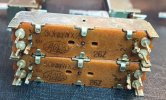
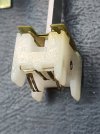
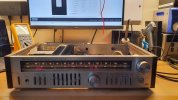
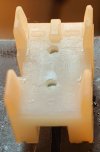
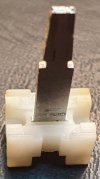
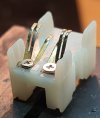
Hi y'all, longtime reader, longtime restorer of Sansui, first time poster, and first time working on a Radio Shack / Realistic receiver. This one's for a family member who has had it since new. This thing had many issues and all are resolved but one, and it's a tricky one. The old Alps slider pots used in the graphic equaliser are failing. They're not looking repairable (unless anyone knows a cure for broken plastic - see pics) so I'm looking for a replacement 50K dual slider, 30mm travel, as close as possible to the original, preferably with centre detent. The current Alps range has something similar but it's a much shallower body and short shaft. Nothing in the Bourns range looks compatible. Can anyone suggest where I might find something close to the original? 20260901_220329.jpg20260901_224902.jpg20260901_223741.jpg20260830_071537.jpg
 
Register to hide this ad
Might be tricky, but sometimes JBWeld is good for repairing broken plastic parts
or you could find a parts/donor unit.
Those sliders might be used in other receivers/EQs so I would also cross-reference this part to other Realistic products they've gone into.
Probably not really a question of if you'll find the part, but when. I've waited months to find a donor part.

Looks like it's made by Alps.
Might get lucky doing a search on 'Alps 50k slide pot'
 
Im kind of surprised to see ALPS pots in Realistic gear. RS tended to use some pretry cheap potentiometers.
I was a little surprised too. This model seems to be a mix of quality components and cheap design shortcuts. Nice power amp section yet no speaker muting / protection. Nice big filter caps, yet regulators with no heatsinking that run hot as hell...
 
I was a little surprised too. This model seems to be a mix of quality components and cheap design shortcuts. Nice power amp section yet no speaker muting / protection. Nice big filter caps, yet regulators with no heatsinking that run hot as hell...
I've added heat sinks to hot running regulators before. It helps a lot. Especially helping to keep the PCB from getting too crispy. You can always replace it with a regulator that can handle higher current also. Just adding a heat sink usually does the trick though. I built a tube amp that has a regulated DC filiment heater circuit. It has a dual 5 volt, 5amp regulator. The tubes pulled right at 5 amps.
So within a minute or so the regulator got so hot it shut down. I added a big finned aluminum heat sink that dropped the temp down to around 95°F.
I built the amp years ago and its still running fine without issue.
 
3D print and move contacts? It looks like the contacts were placed on a rectangular post and the tops of the post melted over them.

On the one you show it appears the little post broke.
 
3D print and move contacts? It looks like the contacts were placed on a rectangular post and the tops of the post melted over them.

On the one you show it appears the little post broke.
I think you're right. This pic with the goop removed shows the face of the plastic part with the stubs of the two rectangular posts. The contacts are salvageable if I were to 3D print a new plastic block, but the pot shaft is encased in the existing block. It must have been moulded around it...I guess.
 

Attachments

  • 20260904_220842.jpg
    20260904_220842.jpg
    67.9 KB · Views: 8
  • 20260904_221700.jpg
    20260904_221700.jpg
    61.8 KB · Views: 8
I think you're right. This pic with the goop removed shows the face of the plastic part with the stubs of the two rectangular posts. The contacts are salvageable if I were to 3D print a new plastic block, but the pot shaft is encased in the existing block. It must have been moulded around it...I guess.
I am not an expert on 3D printing but perhaps you could print the block with a shaft. No idea if it would strong enough, not a lot of "meat" there.

Or decide if you want to sacrifice the broken one and see if the shaft is flared or barbed or could be modified to press fit in a new block. Does the hole in the side go all the way through? looks like a spring is in it?

Another perhaps off the wall idea. How about a micro sheet metal screw? I imagine that the block is maybe brittle so might not work at all.
Pilot drill the plastic block so it does not break and use a screw to secure the contact to the block.
I don't have any size reference to go by for the block but an m1 x 2 or m1 x 3 might work?
 
I am not an expert on 3D printing but perhaps you could print the block with a shaft. No idea if it would strong enough, not a lot of "meat" there.

Or decide if you want to sacrifice the broken one and see if the shaft is flared or barbed or could be modified to press fit in a new block. Does the hole in the side go all the way through? looks like a spring is in it?

Another perhaps off the wall idea. How about a micro sheet metal screw? I imagine that the block is maybe brittle so might not work at all.
Pilot drill the plastic block so it does not break and use a screw to secure the contact to the block.
I don't have any size reference to go by for the block but an m1 x 2 or m1 x 3 might work?
ok, now if I can just manage this six more times...
 

Attachments

  • 20260905_222855.jpg
    20260905_222855.jpg
    76.4 KB · Views: 15
That is awesome. :rockon: :jump::thumbsup:

Was it a bit scary? Did the plastic seem brittle? Maybe not so off the wall after all, fingers crossed on the next batch.
strangely not brittle. Maybe the reason the original rectangular posts had broken off was because the pot mechanisms were sticking as the ageing lubricant got dusty and started to grip, causing the lever and plastic block with contacts to 'rock' more as they were moved. So rather than moving with the block parallel to the base, it was being pushed or pulled on a slight angle due to friction. This might have put too much pressure on the contact mounts. Just a theory... Thanks for the suggestions!
 
Back
Top Bottom