

-
Feeling lucky? Check out the AK 24th Anniversary Giveaway thread and join in the fun!
You are using an out of date browser. It may not display this or other websites correctly.
You should upgrade or use an alternative browser.
You should upgrade or use an alternative browser.
Suckout causes
- Thread starter RobInONT
- Start date
Register to hide this ad

Denten
Addicted Member
Standing waves. At the beginning of this gif, you can see the wave moving away from the speaker, but when the reflection of the wave comes back and mixes "out of phase" with the wave coming from the speaker they will cancel each other out.
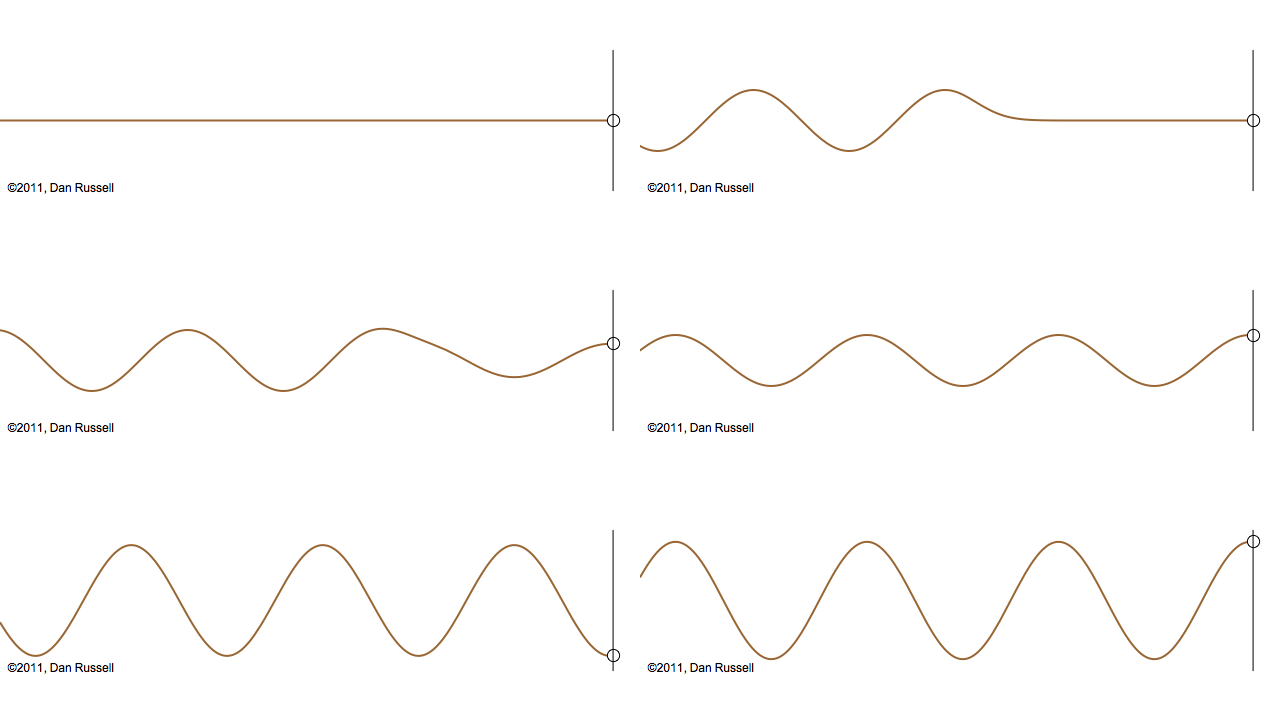
http://arqen.com/acoustics-101/speaker-placement-boundary-interference/
http://arqen.com/acoustics-101/speaker-placement-boundary-interference/
Last edited:


twiiii
Lunatic Member
If you have ever wondered why a Sound system sound different out doors? No room effects. I'll admit the bass will be thin and there will be other issues, dogs barking, birds singing and wind blowing. But if you really want to know the fundamental sound of your speakers take them out side. If you want more bass place them against a large wall, with no other structures in the vicinity. Stand back and listen to great sound without all the annoying reflections. You will really appreciate the difference in recording techniques that you'll experience that have been masked and changed by your room. Every year we provided sounds systems for different types of entertainment out doors. Christmas celebrations and tree lighting cerimonies, Home Comings, half time shows, large weddings, dedications and historical re-inactments, etc. It was always a very enjoyable experience once everything was set up, checked out, and rehearsals completed. Pre recorded music took on an entirely new perspective with minute details previously masked by reflections being heard for the first time. Instruments in the percussion section take on a new clarity, background instruments playing softer counter melodies or re-enforcing the melodies in lower octaves gain more recognition. Maybe you will hear a bassoon part you have never heard before, Alto Clarinet, Euphonium, Eb bass, or flugelhorn will be discovered. Every heard a bass trumpet or Wagnerian horn? bass Flute? all gain clarity when heard on systems outdoors. You can pad your room removing some reflections but room modes caused by rigid structures reflecting long wavelengths that can't be absorbed in your room or sympathetically vibrating structures that null out frequencies will change the sound negatively. Out doors the complications are much less destructive. Make sure you have a cook-out and invite the neighbors.
Last edited:


ev13wt
Super Member
I have a problem around 8,6KHz, moving my head an inch results in total cancelation. Not at the listening position though.  Just where the darn EQ sits. Really make it easy. Wifey made me move the PC to another room, I am stuck without EQ and DSP for a bit until I build something to hide under the couch
Just where the darn EQ sits. Really make it easy. Wifey made me move the PC to another room, I am stuck without EQ and DSP for a bit until I build something to hide under the couch
ev13wt
Super Member
Standing waves would be reinforcement, not cancellation. I forget whether there is a name for cancellation.
Isn't both? A standing wave can result in a null I would say.

RobInONT
Active Member
Y'all are apparently spot on. I moved the speakers out a couple of feet and the suckout is much smaller. Problem now is convincing my wife that the speakers look fine located there. 
On a side note, I never noticed this until I changed amplifiers. The new amp did not sound right and I thought maybe it needed service. I ran some sweeps near the speakers and everything was good. At the listening position, not so much. How on earth could changing amplifiers cause this? I'm being completely honest that I noticed the bass difference as soon as I tried the new amp. It's much much better now.
On a side note, I never noticed this until I changed amplifiers. The new amp did not sound right and I thought maybe it needed service. I ran some sweeps near the speakers and everything was good. At the listening position, not so much. How on earth could changing amplifiers cause this? I'm being completely honest that I noticed the bass difference as soon as I tried the new amp. It's much much better now.

Insufficient damping factor? If so, then perhaps a gross speaker/amp mismatch? A more extreme example would be how anemic the bass of electrostat speakers can sound due their high load impedance (megohms) at low frequencies, as the structure of ESLs are virtual capacitors. Most ESLs, therefore, require powerful amplifiers to develop sufficient signal voltage across the ESLs when called to reproduce low frequencies.How on earth could changing amplifiers cause this?
It was a BGW 250C originally, replaced by an MC2125.
Your BGW needs to be recapped. You will likely favor it once it is done.
I use a restored 250D, and it easily holds its own against amps in the $10k price-range.
It is currently driving a set of Acoustat Spectra 11's to perfection.

"Troughs"Standing waves, where there is a peak right next door is a valley. You can attenuate peaks but you can't boost valleys.
Similar threads


- Replies
- 6
- Views
- 600
- Replies
- 7
- Views
- 751


