Ultrasonic cleaning of LP's

I’ve been using Tergiklean. I’ll make the switch to Jet Dry.
you don't have to if that's acting as a surfactant for you.

I've never used the stuff myself. Lots of other chemicals over the years (in work environments), but not that stuff. The only thing I've heard about T-clean that sounds like a PITA is you need to rinse a couple times afterwards to get it off.

I use jet dry mainly because it's inexpensive and readily available, but also because it sheets clean off with the water and leaves no residue.

Finally, tegitol (active ingredient in tergiclean) is not supposed to be disposed of in drain or other common disposal methods. Jet dry can simply be poured down the drain after use without concern.

I'm a big fan of keeping processes like this simple and easy. It means I'm far more likely to do it more often, which means my records stay nice and clean. Another bonus is they come out of the US cleaner as static free as they will ever be.

There's just no downsides to US cleaning vinyl records.
 
Last edited:
Finally, tegitol (active ingredient in tergiclean) is not supposed to be disposed of in drain or other common disposal methods.

Many years ago, I bought a full bottle of Triton X100. It resides in my fridge. Honestly, I'll never EVER use it all, and it kind of scares me. I have zero idea how to dispose of it.
 
Many years ago, I bought a full bottle of Triton X100. It resides in my fridge. Honestly, I'll never EVER use it all, and it kind of scares me. I have zero idea how to dispose of it.
hazmat stuff. Highly toxic to aquatic life IIRC.

When they want to destroy it, it's usually incinerated at high temperatures.

we used to have services that dealt with out waste hazmat. We just collected it after use, they "disposed" of it.
 
hm, honestly never realized it was that problematic. Guess I should have read the SDS.

maybe I'll switch back to the Jet Dry. I don't notice that one out-performs the other.
 
I’ve been using Tergiklean. I’ll make the switch to Jet Dry.
Tergikleen is a blend of two nonionic surfactants – Dow™ Tergitol™ 15-S-3 and Tergitol™ 15-S-9. Both of these surfactants are high performance secondary alcohol ethoxylates which are more readily biodegradable and less toxic than primary alcohol ethoxylates.

Jet Dry contains 3 different surfactants:

Polyethylene glycol monoisotridecyl ether -a nonionic surfactant

C12-15-branched and linear, ethoxylated propoxylated alcohol - a nonionic surfactant - This is an ethoxylate surfactant similar in structure to the Dow Tergitols. Compared to secondary alcohol ethoxylates as in the Tergitols, the linear primary ethoxylates are more toxic.

Sodium cumenesulphonate - anionic surfactant - one would like to avoid anionic surfactants for cleaning records.

Many years ago, I bought a full bottle of Triton X100. It resides in my fridge. Honestly, I'll never EVER use it all, and it kind of scares me. I have zero idea how to dispose of it.
Triton-X-100 is harmful to aquatic life and should be disposed of properly by taking it to a household hazardous waste collection site. In fact all concentrated surfactants should be handled with care and disposed of properly.

The C12-15-branched and linear, ethoxylated propoxylated alcohol in Jet Dry is a common surfactant found in many laundry detergents, dish soaps and household cleaners. However, it is also harmful to aquatic life. Studies suggest that these alcohol ethoxylates impair gill epithelial cell function in fish.
 
Last edited:
Tergikleen is $30 and has a shelf life.
Most surfactants have a shelf life. One reason all dish soaps have preservatives, stabilizers and antibacterial agents in their formulations is to extend their shelf life. Jet Dry actually includes 2 different preservatives in their formulation.

I would comment that the shelf life listed for Tergikleen is very conservative.
 
One of these days I'm going to have to buy one of those. I just can't seem to justify it for what those things cost, which is more than a number of components I own. I always think that I'd rather spend that on some kind of upgrade, if not something totally non-related to audio. I keep holding out for a deal on a used one, which I may one day come across. That being said, I'm surprised at just how good, and how quiet so many of my records sound, without ever having cleaned more thoroughly than with the Diskwasher treatment. I feel like I've never heard my LPs quieter since I've gotten a TT with the Denon DL-110 cart I have on it, which supposedly, with it's elliptical stylus, does very well with the surface noise thing...
 
Last edited:
I run a DL-110 on my 1229Q.

It is a very good cart, especially considering its quite affordable price.

Well, cost ls more now than when I bought mine, but it’s still reasonable.

The VMN40ML I have on an AT132 on the SL-QL15 edges it out just a little bit in pulling out some of the details, but its a toss up as to which sounds better on any given day.

Can’t go wrong with a DL-110.

:)
 
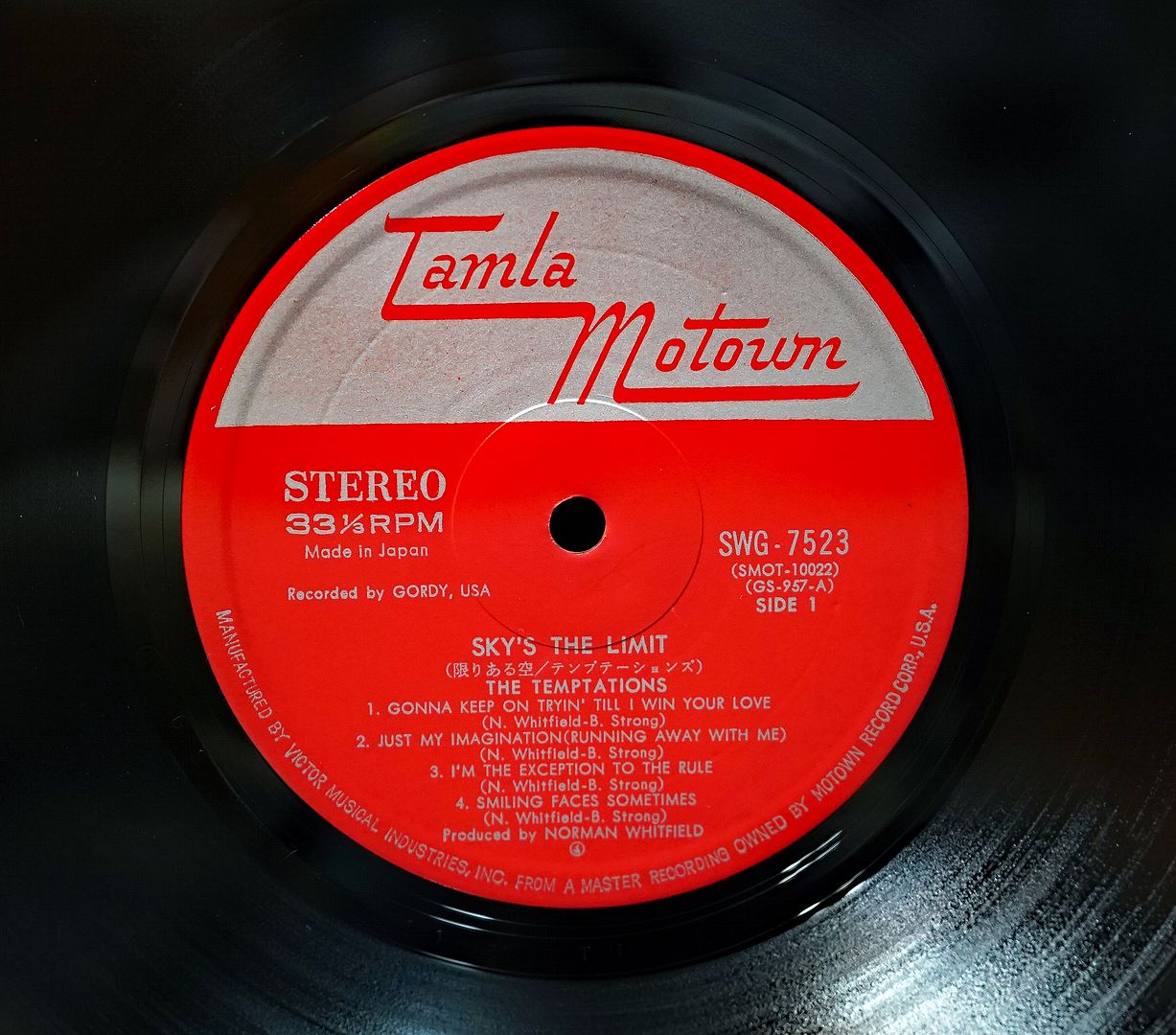
I've looked for Japanese Tamla-Motown pressings. They seemed to have been treated more kindly by their owners. Good pressings, too!


Just My Imagination.
Off Temptation's "Sky's The Limit." Tamla-Motown SWG -7523. Victor Musical Industry (Japan) pressing. 1971.
Run-out: GS 957A 111 ✲ THK OP

161b4546-985a-46a1-9587-14363822fd45.jpg
I regret selling my SL1200MKll..those are great tables!
 
I run a DL-110 on my 1229Q.

It is a very good cart, especially considering its quite affordable price.

Well, cost ls more now than when I bought mine, but it’s still reasonable.

The VMN40ML I have on an AT132 on the SL-QL15 edges it out just a little bit in pulling out some of the details, but its a toss up as to which sounds better on any given day.

Can’t go wrong with a DL-110.

:)
They're actually pretty cheap right now on Amazon. I have a few hundred hours left on the thing (by my estimate) but I may just have to order another sooner rather than later because it could be that the cheap stock will dry up before I actually need a replacement and prices could go WAY up.
 
They're actually pretty cheap right now on Amazon. I have a few hundred hours left on the thing (by my estimate) but I may just have to order another sooner rather than later because it could be that the cheap stock will dry up before I actually need a replacement and prices could go WAY up.
Mine only has 150 hrs on it, but I think I might have it retipped with an ML or shibata when the time comes. May see if a boron cantilever is an option.

I’m thinking that might make a “giant
killer” cart.

Be a fun little experiment if nothing else.

:)
 

Maybe @Lou G would step in and tell us more about it. My take is that damage caused by US machines, though not observable if the exposure is kept below a certain threshold, is nevertheless real. Maybe I misunderstood.
Vinyl records are composed of a copolymer of polyvinyl chloride (PVC) and polyvinyl acetate (PVAc). Polymeric materials can suffer damage in an ultrasonic bath due to excessive exposure times, high temperatures, or chemicals and solvents in the bath solution that can soften and swell the polymer surface. If one uses only distilled water and an appropriate surfactant with reasonable exposure times, a 40 kHz ultrasonic bath is completely safe for vinyl records. Excessive exposure time is probably of most concern. In a typical 40 kHz ultrasonic bath with a rotating spindle I have found that between 6 to 9 minutes is safe without any significant observable degradation to the record. Longer times can result in observable degradation. These experiments were done using a variety of surface sensitive analytical instrumentation.

I used my ultrasonic cleaners for over 30 years and cleaned several thousand records with excellent results and no issues. I only used distilled water and a non-ionic surfactant in my bath solution. I typically cleaned my records at 2 RPM for 6 min for new records and sometimes 9 min for previously owned records.
 
Last edited:
In a typical 40 kHz ultrasonic bath with a rotating spindle I have found that between 6 to 9 minutes is safe without any significant observable degradation to the record. Longer times can result in observable degradation.
Is this the safe limit for one session, due to the time it takes the vinyl to soften and/or swell in the solution? That is, it could withstand another 6-9 minute exposure at a later time, provided it has been completely dried in the meantime?
Or is the damage cumulative over the life of the record? I.e. cleaning it once for 6 minutes will not cause observable damage, but cleaning it again in the future for another 6 minutes will?
 
Is this the safe limit for one session, due to the time it takes the vinyl to soften and/or swell in the solution? That is, it could withstand another 6-9 minute exposure at a later time, provided it has been completely dried in the meantime?
Or is the damage cumulative over the life of the record? I.e. cleaning it once for 6 minutes will not cause observable damage, but cleaning it again in the future for another 6 minutes will?
The vinyl record surface does not soften or swell in an aqueous solution containing only a surfactant. It would require other components in the bath solution to soften and swell the vinyl record surface.

I never looked at repeat ultrasonic cleanings so I don't have a definitive answer. I would think that 6 minutes a second time would be ok. However, there are several effects that occur during ultrasonic cleaning and one might be cumulative. The diffusion of additives from the bulk to the surface occurs slowly over time and eventually reaches a steady state. Ultrasonic cleaning accelerates this diffusion process.

I found that once a record is ultrasonic cleaned and handled and stored properly it will not require another ultrasonic cleaning.
 
I regret selling my SL1200MKll..those are great tables!
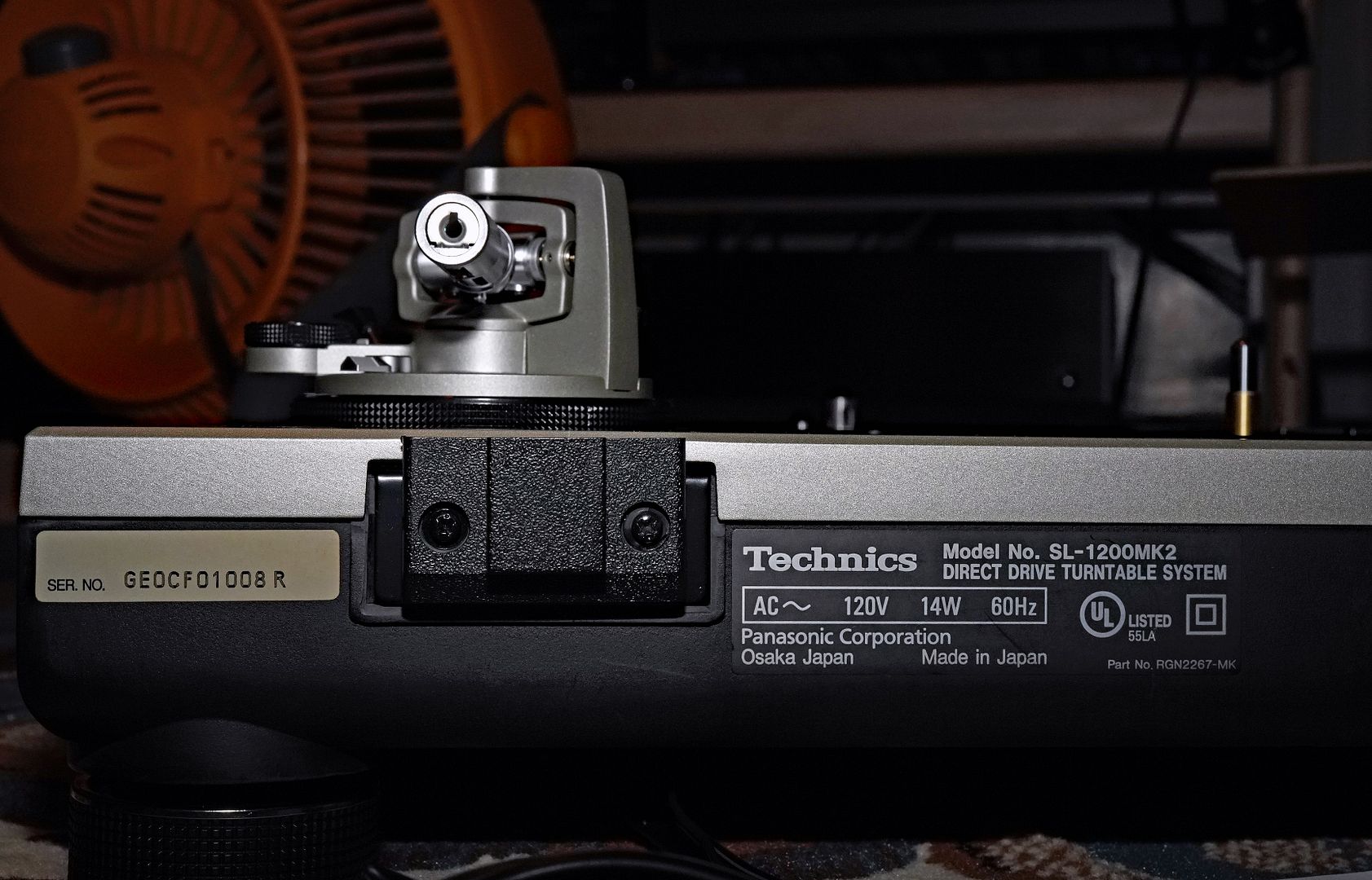
I was fortunate to buy one of the last Osaka-made 1200s, new in a sealed box. The seller had two, but I only bought one (maybe I should have bought the second one :idea:). It's been 100% reliable. I have done no modifications to it (other than adding a heavier counterweight for the MC cartridge).
87b3cb86-e472-4117-9f68-2c199c49299a.jpg
 
hazmat stuff. Highly toxic to aquatic life IIRC.

hm, honestly never realized it was that problematic. Guess I should have read the SDS.

maybe I'll switch back to the Jet Dry. I don't notice that one out-performs the other.

Tergikleen is a blend of two nonionic surfactants – Dow™ Tergitol™ 15-S-3 and Tergitol™ 15-S-9. Both of these surfactants are high performance secondary alcohol ethoxylates which are more readily biodegradable and less toxic than primary alcohol ethoxylates.

Jet Dry contains 3 different surfactants:

Polyethylene glycol monoisotridecyl ether -a nonionic surfactant

C12-15-branched and linear, ethoxylated propoxylated alcohol - a nonionic surfactant - This is an ethoxylate surfactant similar in structure to the Dow Tergitols. Compared to secondary alcohol ethoxylates as in the Tergitols, the linear primary ethoxylates are more toxic.

Sodium cumenesulphonate - anionic surfactant - one would like to avoid anionic surfactants for cleaning records.


Triton-X-100 is harmful to aquatic life and should be disposed of properly by taking it to a household hazardous waste collection site. In fact all concentrated surfactants should be handled with care and disposed of properly.

The C12-15-branched and linear, ethoxylated propoxylated alcohol in Jet Dry is a common surfactant found in many laundry detergents, dish soaps and household cleaners. However, it is also harmful to aquatic life. Studies suggest that these alcohol ethoxylates impair gill epithelial cell function in fish.

I love when an expert speaks up. Thank you for your knowledge, Lou. After accidentally getting some Triton on my finger, and seeing just how effortlessly it seemed to remove all oils, I realized this stuff should NEVER end up in the water table.

I think I read that when experimenting with heart cells, scientists took a heart, and soaked it in tergitol, and all that remained was the structure of the heart. All blood, color, etc, was GONE. Then, this was injected with new cells, they grew, and eventually, the heart beat.

Definitely taking this stuff to a hazardous waste event, and after 6 years or so in my fridge, it likely needs to go anyway, yes?

And if I am hearing you correctly, Jet Dry is even more toxic?

Again, thanks for sharing your expertise.
 
Found it.

In cardiac tissue engineering, scientists use detergents like Triton and Tergitol to "wash out" cells from a heart. This leaves behind the native extracellular matrix (ECM) scaffold, which is then reseeded with new cells, such as stem cells or cardiomyocytes. Under the right conditions, the recellularized heart can be stimulated to begin beating again.

I tried to link to the study, but my computer is being a punk.
 
And if I am hearing you correctly, Jet Dry is even more toxic?

One of the surfactants in Jet Dry (C12-15-branched and linear, ethoxylated propoxylated alcohol) is more harmful to aquatic life than the Tergitols. It is similar to Triton-x-100 regarding harm to aquatic life. However in the Jet Dry formulation it is not concentrated but present in a low concentration. All alcohol ethoxylate surfactants are harmful to aquatic life to varying degrees. The main reason some are worse than others is how quickly they biodegrade.
 
Back
Top Bottom