• Please note that there are a few updates and clarifications made in the Audiokarma Rules, mostly relating to advertising and the addition of the new "Paying it Forward" & "Giving back" forums in the AudioKarma Audio Marketplace section.

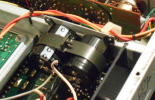
Voltage selector of a Marantz 2226B amp

BassBias

Member
I changed the universal voltage selector from 220V to 240V mode on my Marantz 2226B (and also replaced all fuse lamps with leds).
Several minutes after switching the amp on it produced an ugly smell and a cloud of smoke and died. Fuse F001 (1.6AT) was blown and the voltage transformer was still really hot after removing the lid. And a burnt smell seems to come from the transformer.

1000025576.jpg
1000025508.jpg
After inspection of the connected wires on the voltage selector I noticed an odd connection. The green wire was not connected to pin 5 but to pin 7. This means that in 240V mode (just like in 220V mode) only a part of the primary transformer coil (between the yellow and green wire) is used instead of the complete coil (between the yellow and blue wire).
Is this normal?

Can switching the voltage selector from 220V to 240V have been the cause of the disaster described above? For instance a bad connection in the universal voltage selector? Bad transformer coil between the red and orange wire? Something else..?


I measured the resistance between all primary transformer wires:
Coil 1
yellow - blue: 3 Ohm
yellow - green: 2.6 Ohm, green - blue: 0.6 Ohm
Coil 2
brown - orange: 5.8 Ohm
brown - red: 4.9 Ohm, red - orange: 0.8 Ohm

I also measured the resistance between the orange secondary wires (while still connected to the rectifier): 0.6 Ohm
Are the above DC resistance values normal?

The rectifier still seems ok, but I could be wrong.
The negative voltage filter cap is gone (I measured a high resistance)
What could have been the cause of the problem?

1000025509.jpg
I need a TS19608020 voltage transformer replacement, can somebody help?
 
Last edited:
Register to hide this ad
I try to repair my Marantz 2226B receiver, is there on one who can help?

Is it still worthwhile to restore it if the tranny is a goner or should I chuck it in the bin?
 
Hi. With respect to this diagram which terminals were jumpered together:
  1. when the plug was in the 220V position
  2. when the plug was in the 240V position.
1720852783250.png
 
The selector in 220V mode connects:
pin 5 and 7
pin C and 3

The selector in 240V mode connects:
pin 6 and 8
pin C and 4

On the amp, the green wire is not connected to pin 5 but to pin 7 (together with the light blue mains wire, see photo)
 
OK... here's what I think happened. See color coded diagram below.
  • Dark blue and Brown lines are the AC voltage in from the socket
  • The colored lines represent the wire colors according to the schematic and your photo
  • The Green wire soldered to terminal 7 permanently selects the 220V option, in either 220V or 240V positions
  • The yellow line connects the other end of the top transformer winding to the center lug C
  • The plug will then select to use the full primary windings for 240V operation (Orange), or part of the winding for 220V operation (Red)
  • So now what happened when you put the selector plug into 240V operation?
  • The top part of the primary (because of the Green wire soldered to 7 always selects the 110V transformer tap
  • The bottom part of the primary selects the Red for 220V or Orange for 240V, depending on selector
  • So, when the 220V is selected, the top is 110V (hardwired) + the bottom selects 110V = 220V
  • When 240V is selected, the top is still 110V (hardwired) + the bottom selects 120V = 230V
  • When in 240V position both the Blue wire and Green wire will carry 120V to the transformer, but since they are the same voltage it will not cause a problem
CONCLUSIONS:
  • CAUTION: Unplug the receiver when making resistance measurements to avoid shock hazard
  • I would also suggest that you build a Dim Bulb Tester (DBT) to connect between your receiver and the AC line socket. It will prevent any further damage due to short circuits in the receiver. Search online for "Dim Bulb Tester" or "DBT" to see how to construct one.
  • When you moved the voltage selector to 240V, the transformer was setup for 230V operation (vs 240V)
  • I don't think this would cause a major "melt down" of the transformer
  • I would move the Green wire back to terminal 5 where it should be
  • Terminals 7 & 8 should be connected together and connected to the blue wire that comes from the AC switch
  • Terminal 6 should have the other blue wire that goes to the transformer
  • Test the transformer resistance with you Ohm meter set to measure resistance.
  • Pull out the selector plug:
    • Measure Blue wire to Yellow wire
    • Measure Green wire to Yellow wire
    • Measure Orange wire to Brown wire
    • Measure Red wire to Brown wire
  • Install voltage selector set to 240V and measure Ohms from terminal 8 to 1
1720977501573.png
1720977530048.png
 
Last edited:
Thanks for your elaborate reply, appreciated!

The amp always worked with the selector in 220V mode, so the selector in 240V mode, which is in fact a 230V mode due to the incorrect green wire connection, is only an improvement.

Pin 7 and 8 are connected together.

I already measured the resistance between the primary wires (with the selector plug removed):

Top Coil
yellow - blue: 3 Ohm
yellow - green: 2.6 Ohm, green - blue: 0.6 Ohm
Bottom Coil
brown - orange: 5.8 Ohm
brown - red: 4.9 Ohm, red - orange: 0.8 Ohm

(See also the first post of this thread)

Are above values normal?

I will solder the green wire to the correct pin (5), but why did the Marantz factory connect it to pin 7? Could it be because the selector jumper contacts are not robust?
I wonder if it wouldn't be better not to use the selector at all and hardwire all primary wires or at least connect the green wire to pin 6 for a more robust connection.

After that I will measure the resistance between pin 1 and 8 with the selector plug installed in 240V position.

I will also build a DBT.

One of the big filter caps seems to be destroyed (I measured a high resistance)

How to continue?
 
Are above values normal?
While I don't know exactly what it should be, since the transformer primary windings are just a long wire... your resistance measurements look reasonable.
(I transferred your measurements onto the schematic)
1720984204139.png
...but why did the Marantz factory connect it to pin 7?
I'm not sure that the green wire soldered to pin 7 is a factory wiring mod? Who knows why it was wired this way?
Here's a photo from the internet... a little hard to see, but it looks like only the blue wire. Also, soldering looks clean, yours looks like its been worked on.

1720986140235.png
One of the big filter caps seems to be destroyed (I measured a high resistance)
Testing large capacitors will be difficult to except in the case where there is a short.
CAUTION: Large caps will sometimes carry a large voltage even when power is off. To be cautious, discharge the + & - terminals with a 100 ohm resistor across them.
Does your DMM have a capacitance test function (looks like a cap symbol)? If so, you can use that to test capacitance.
Examine both filter caps to see if there are signs of leaking electrolyte or bulging of the cap.
Also, make sure that the installed polarity of the caps is correct. The (+) side of one cap and the (-) side of the other cap are connected together to ground usually by a bar or wire (see photo).
Are these original caps?

1720986941901.png
 
Last edited:
I changed the universal voltage selector from 220V to 240V mode on my Marantz 2226B (and also replaced all fuse lamps with leds).
Did you change the LEDs and voltage selector at the same time? If yes, perhaps it is the LEDs that are the cause of the problem.
Take a look at the LED path in green below.

LED voltage comes off of the transformer secondary with green leads through fuse F704. Check to see if this fuse was also blown. The lamps are driven with an AC voltage. LEDs are driven with DC voltage (unless a set of diodes are included in the package). Make sure that the LEDs will operate with AC voltage. Did you change all 9 lamps or only the dial lamps?
They will say something like this:
1720995333930.png
1720995959625.png
 
Last edited:
Did you change the LEDs and voltage selector at the same time? If yes, perhaps it is the LEDs that are the cause of the problem.
Take a look at the LED path in green below.

LED voltage comes off of the transformer secondary with green leads through fuse F704. Check to see if this fuse was also blown. The lamps are driven with an AC voltage. LEDs are driven with DC voltage (unless a set of diodes are included in the package). Make sure that the LEDs will operate with AC voltage. Did you change all 9 lamps or only the dial lamps?
They will say something like this:
View attachment 3251523
View attachment 3251538
Indeed, I did change the lamps and the voltage selector at the same time. After turning on the amp, everything was working fine for 5 minutes after that an ugly smell and smoke.

I did change the 5 dial lamps and the 2 meter lamps.
The pointer lamp wasn't replaced, still ok.
The stereo lamp wasn't replaced yet, no idea if it was still ok.

The LEDs should be suitable for AC, I bought a complete Marantz set from AliExpress:
Tecolampe 1 New Set Of AC8V LED Lamp Kit for Marantz Model 2216B 2218 2226B 2228B 2238B 2252B and 2265B Other Vintage Receivers

I will check fuse F704 and the leds
 
While I don't know exactly what it should be, since the transformer primary windings are just a long wire... your resistance measurements look reasonable.
(I transferred your measurements onto the schematic)
View attachment 3251349

I'm not sure that the green wire soldered to pin 7 is a factory wiring mod? Who knows why it was wired this way?
Here's a photo from the internet... a little hard to see, but it looks like only the blue wire. Also, soldering looks clean, yours looks like its been worked on.

View attachment 3251385

Testing large capacitors will be difficult to except in the case where there is a short.
CAUTION: Large caps will sometimes carry a large voltage even when power is off. To be cautious, discharge the + & - terminals with a 100 ohm resistor across them.
Does your DMM have a capacitance test function (looks like a cap symbol)? If so, you can use that to test capacitance.
Examine both filter caps to see if there are signs of leaking electrolyte or bulging of the cap.
Also, make sure that the installed polarity of the caps is correct. The (+) side of one cap and the (-) side of the other cap are connected together to ground usually by a bar or wire (see photo).
Are these original caps?

View attachment 3251402
 
Yup, the caps are original, no signs of leakage or bulging. I have a 5W, 270 ohm resistor to discharge the caps.
If I measure the resistance of the right one (in circuit!), it starts with a small value and slowly increases. If I measure the resistance of the left one (in circuit!) I measure a high resistance, doesn't that indicate a very high ESR?
I have an old Beckman 3020 DMM without capacitance test function, it only has a diode test function

1000025545.jpg
 
Last edited:
If I measure the resistance of the left one (in circuit!) I measure a high resistance
Are you measuring the resistance with the black lead on the (-) capacitor terminal in both cases... or did you connect it to the bar?
 
Are you measuring the resistance with the black lead on the (-) capacitor terminal in both cases... or did you connect it to the bar?
With the black lead on the (-) capacitor terminal.

Left capacitor:
Black lead on the white wire (-V)
Red lead on the bar (0V)

Right capacitor:
Black lead on the bar (0V)
Red lead on the red wire (+V)
 
F704 looks like it is blown (see the ball of metal). Remove it and check resistance = 0ohms. Also make sure it is a 2A fuse.

1721050012034.png
 
I re-measured the resistance of the primary wires of the transformer. The new values are slightly smaller.

Old values (plug removed):
Top Coil
yellow - blue: 3 Ohm
yellow - green: 2.6 Ohm, green - blue: 0.6 Ohm
Bottom Coil
brown - orange: 5.8 Ohm
brown - red: 4.9 Ohm, red - orange: 0.8 Ohm

New values (plug removed):
Top Coil
yellow - blue: 2.8 Ohm
yellow - green: 2.4 Ohm, green - blue: 0.5 Ohm
Bottom Coil
brown - orange: 5.1 Ohm
brown - red: 4.7 Ohm, red - orange: 0.6 Ohm

With the green wire still connected to pin 7 and the plug in 220V mode I measured no constant resistance between the brown and green wire. The values I measured went all over the place from 100 Ohm to no connection at all!

The problem was a bad connection of the center pin of the plug.

I can endlessly turn the plug screw clockwise.
It tightens up to a certain point and loosens again. Is that normal?

Am I missing some part of the center screw?
Some washer or spring?
1000025654.jpg
1000025655.jpg

Eventually I managed to get a good connection and measured 7.4 Ohm between the brown and green wire.

I really don't trust the voltage selector.
I noticed that the screws to fasten the voltage selector to the chassis were damaged. So I guess someone (i.e. my father who is the original owner) must have removed the voltage selector to solder the green wire to pin 7. An indication that a long time ago there already was a problem with it.
 
F704 looks like it is blown (see the ball of metal). Remove it and check resistance = 0ohms. Also make sure it is a 2A fuse.

View attachment 3251979
It was hard to measure the resistance of the fuse (oxidized?). Lowest value was 0.02 ohms, so not blown. Should I still replace it?
It is a 2A 250V T fuse.

Should I replace the fuse with a lower amperage fuse, since I replaced the high current lamps by low current LEDs?
 
Last edited:
Your fuse sounds like it is OK. No, don't put a lower amp fuse in its place.

As far as the resistance measurements:
  • BRN to ORG = 5.1 Ohms
  • YEL to GRN = 2.4 Ohms
  • 5.1 + 2.4 = 7.5 Ohms, which is close to what you measured.
I have not seen a voltage selector up close so I can't tell you specifics, but it looks like there is a screw thread on the end of the fastener (1st photo red arrow) that should thread into the threads on the metal conductor in the fixed piece mounted in the chassis (2nd photo, red arrow).

The spiral conductor piece that is just below the screw threads on the 1st photo (green arrow) looks like it may be a spring so when you assemble it together it will press against the center brass piece of the voltage selector to make contact.

You can check to see if the threads are OK by trying to screw the center piece into the piece to see if it tightens into the threads. If it does, then I think what you need to do is to press the screw to compress the spiral contact in while rotating it clockwise until it tightens.

Clean the contact surfaces and plugs with isopropyl alcohol or Deoxit to remove any oxidation/oil that may be on it.

Just a thought, but that green wire that is connected to pin 7 of the voltage selector is coming from the same side of the transformer as all of the other wires -- Yes? Just making sure that it is not connected to one of the green wires that come out of the secondary side of the transformer that was connected by mistake.

1721092608944.png 1721092214241.png
 
The green wire is a primary wire, no worries. It protrudes from the same hole in the tranny as the other primary wires.

The "nut" in the socket base (see last photo) seems to be a tiny bit askew. Good idea to screw in the center piece without the plug itself to see it it can be fully tightened.

In case we need to completely bypass the voltage selector because a solid connection cannot be achieved, what would be the best alternative to connect the primary wires? A screw-type terminal block? Solder + end caps for the unused wires? Something else?

Noob question about the voltage transformer:
Both primary coils are "120V" coils so why isn't the DC resistance of both coils equal?
EIther one coil wire has a larger diameter and/or one coil wire has a larger length.
Has this to do with inner layer windings and outer layer windings?
Is the coil with the brown, red and orange wire on the outside?
 
Last edited:
The selector in 220V mode connects:
pin 5 and 7
pin C and 3

The selector in 240V mode connects:
pin 6 and 8
pin C and 4
Hmmm... something doesn't make sense to me. What pins are connected when you switch to 120V?

1721115108522.png
 
Back
Top Bottom