• The move to the new server is done. There are some software and database maintenance updates in process. This has us passing the hat around to help out. We appreciate any donations. Seriously, even a dollar helps. The payment page may be found here - https://www.audiokarma.org/support.html

Which cartridge do you like the best, the least, and why

Which cartridge do you like the best, the least, and why.

  • A is best

    Votes: 2 14.3%
  • B is best

    Votes: 8 57.1%
  • C is best

    Votes: 1 7.1%
  • The difference is too small

    Votes: 4 28.6%
  • The difference is easy to hear

    Votes: 4 28.6%
  • A is worst

    Votes: 6 42.9%
  • B is worst

    Votes: 1 7.1%
  • C is worst

    Votes: 0 0.0%

  • Total voters
    14
I think these clips sound vastly different. And I think this is still a fairly simple track to track.
I'm a bit surprised that people here find that these tracks sound the same.

I have the suspicion that if you let these cartridges play a really difficult piece of music to track (say... MJ's Billy Jean, but there are loads of 80's DMM pop songs on the inner groove), that especially cartridge B will be oblitirated by mistracking.
I have a feeling it's a bonded conical or bonded elliptical. Maybe a Grado? Or some cheap goldring elan? M44 or other dj cart?
That Shure V15 suggestion could also be, with a worn stylus (how many playing hours has B?). But I think that cartridge B (besides sounding dull) also has very mediocre channel separation and the stereo balance is off compared to A and C. If it's a Shure, it needs a lot more capacitance (or similar tonal adjustment). But judging on this file I'd say something is wrong with the stylus, but that would show more clearly in a more difficult signal to track.

A has imho the best tracking qualities but is a bit bright which could use some adjustment (my guess would be a ML stylus on MC or MM with laminated cores), followed by C (tonal balance on C is good, I expect nude shibata or nude elliptical) and then there's a big gap, and then there's a mediocre $10 at-3600l and then there's B.

If you would list which cartridges you used (without telling which sample is which cartridge) and their respective playing hours, I might be able to match them?
That would be an interesting experiment.
 
Last edited:
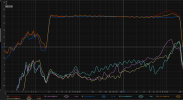
All cartridges show very good channel crosstalk -30 or better on my usual test record, not so good in an other record. So the match for separation will depend on the music record too. All cartridges have one thing in common , none are conical none are elliptical. I will reveal the identities this weekend . None are older than 160 hours..
1787331038772.png

Not sure how to freeze the votes, but people seem to like even flat frequency response (blue=B). Test record is the gold standard JVC TRS-1007 near mint condition, still in original wrap, so I think the response differences are representative

1787331213744.png
 
Last edited:
All cartridges have one thing in common , none are conical none are elliptical. I will reveal the identities this weekend . None are older than 160 hours..
I didn't expect that.
Test record is the gold standard JVC TRS-1007 near mint condition, still in original wrap, so I think the response differences are representative
But test records (the sweep track at least) hardly shows tracking problems related to the stylus. If any, those sweeps are designed to minimize that effect. That is why sweeps are so low in volume. Just like most classical music.
Before you reveal which cartridge is which, I'd rather have you make new samples with music that is more difficult to track, to make differences in cartridge/stylus performance more apparent. Because classical music is so easy to track, it doesn't really say that much about the cartridge's performance.
I don't know if you have the Tacet test record, but recording the inner fricatives test for each cartridge would be more useful imho, as I suspect cartridge B having some major issues that don't show up in a sweep but do in signals that are harder to track. Or maybe use Billy Jean or some similar piece of modern pop music (preferably on inner grooves) that is known to be difficult to track.

As an example on how big the difference between your classical music file "Violin A" and a modern hard to track pop song is (in this case Billy Jean), I took 30s of the intro of billy jean and compared it to your 'Violin A' sample (the one with the most high frequency content).
I volume compensated both tracks on the same volume (-18 LUFS), made a spectral plot of both and put them over eachother.
And look at the difference, especially in the high frequencies. In your Violin A sample, there's just nothing there. above 6khz there's pretty much no energy compared to Billy Jean.
Everything purple in the plot is Billy Jean, everything black is Violin A:
Billyjeanviolinadifference2.jpg


So this is why that classical music sample is so easy to track. There's just no short wavelength content there. (obviously Billy Jean also has more bass, but bass is really easy to track)
So I think, to actually say something concrete about the quality/tracking performance of the cartridges, we need a different, more critical sample.

Also I see that your samples have some seriously strong low frequency filtering. Maybe switch that off too.

I think tracking performance is the most important aspect of a cartridge. Little differences in tonal balance are easily corrected with tone control or some loading (or even caused by incorrect loading), but effects of mistracking are impossible to correct.
 
Last edited:
i also noticed the surprising?( maybe not) lack of low frequencies in the violin piece. I did use 25hz low cut filter/subsonic filter in the recording. Because that is how I listen . The filter is quite good/benign when I measured it .

I do have the Tacet test record, but not the Billie Jean disco music. On the same record as the violin is a track of Bach Toccata and a jazz trio, would those track be too easy too?


I am happy to extend the test with more music tracks. I have number of Deep Purple , Led zeppelin records and Steely Dan and dire straights, Joe Cocker etc, but only one disco record Donna Summers most popular one , forgot the name . Tommy Bolin Teaser and “private eyes” has some heavy bass tracks too, the one below should be pretty full range and more complex and demanding than a Jazz trio which sounds nice on almost every system

please suggest another LP/track if lucky I have it. If the track below is suitable I will use that since I like it a lot and know it well

Tommy Bolin
 
Last edited:
I do have the Tacet test record, but not the Billie Jean disco music. On the same record as the violin is a track of Bach Toccata and a jazz trio, would those track be too easy too?
No, in general jazz and classical is just very easy to track for a stylus. With tracking in this sense I mean what some people call tracing. So high signal strenght on short wavelengths.
This is mainly 80's pop music. In the early 80's general sound character changed dramatically on records. Partly because of the CD (on which low or high frequencies dont matter regarding badwidth), partly because of more complex stylii became available (microridge, VdH, Gyger II) and partly because of improvements in laquer cutting (amongs others DMM) that made reproducing high energy signal in high frequencies (short wavelengths) both possible and desireable.

The tacet fricatives test is the best way to rate stylii on igd performance if you're talking about nude stylii (so in this case).
In general I think that test is already too difficult to distinguish between a bonded conical and a bonded elliptical.

To emphasize how important tracing is, this is an interesting test/topic from @JP where he gives a blind test between 2 cartridges:
with the 'normal tracks' in the opening post, no one could hear a statistical difference, but once he gave a test of the inner track (in this case from a norah jones record) the difference became night and day. And with tracing problems, everyone (in the tests I've held) thinks the tracing distortion is undesireable. It sounds ugly. So it's not really a matter of taste like in the tests in this topic, where a lot of people mainly seem to focus on the frequency response.

I still think something is off with cartridge B. If it's actual tracing capabilities of the stylus I'm not 100% sure. I've listended to the samples again (it might be not as bad as I initially wrote, but stil..), the stereo balance is still off compared to the A and C sample. It's more focussed to the left. So that is very strange too.
Sample A and C seem to sound the same stereo wise in my ears.
Maybe a stylus/alignment issue on cartridge B, but it would also be interesting if you can do an induction measurement on the left and right coils. Preferably both on 1khz and 10khz It could be a cartridge body issue. If tracking on high frequencies is ok (and the stylus/alignment thus is ok), something could be done with this cartridge electrically.
For sure cartridge B isn't my favorite in the samples you provided. I have a feeling cartridge A is my favorite if the high frequencies can be tuned down a bit, otherwise it's C for this specific piece of music. (C has the better tonal blance, so maybe A is an AT cartridge with improper loading)
But to really distinguish between A and C, a tacet fricatives test would give the final word (or billy jean :D). IGD sibilance is my pet pieve. Once it's there, it's just horrible to listen to.
 
Last edited:
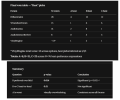
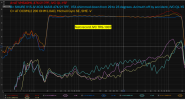
results cartiridge details are given here


a1787505155844.png
1787505172818.png
 
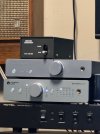
My fav is the Denon DL-103r. It’s mounted in My Gerrard Zero 100a. I picked up a Denon AU-305 transformer that makes a huge difference in performance. It goes into a Cambridge phono
Preamp. My Pickering XV-15 is amazing. My Audio-Technica AT-VM95ML is also a great sounding cartridge.

IMG_2992.jpeg
 
Can you please make a recording of each and share?
Well... I have a DL-103R uploaded. If you don't mind. :idea:


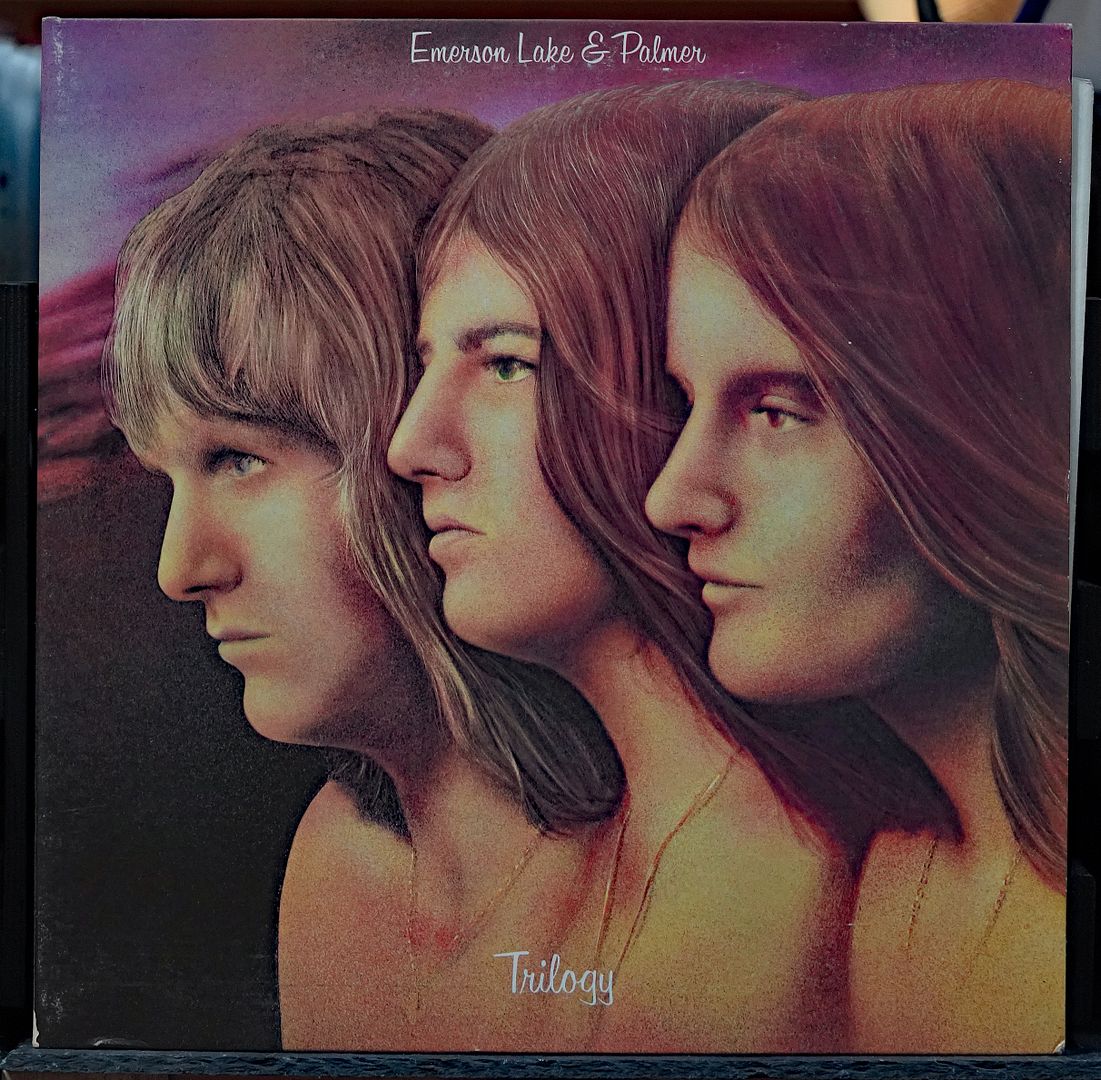
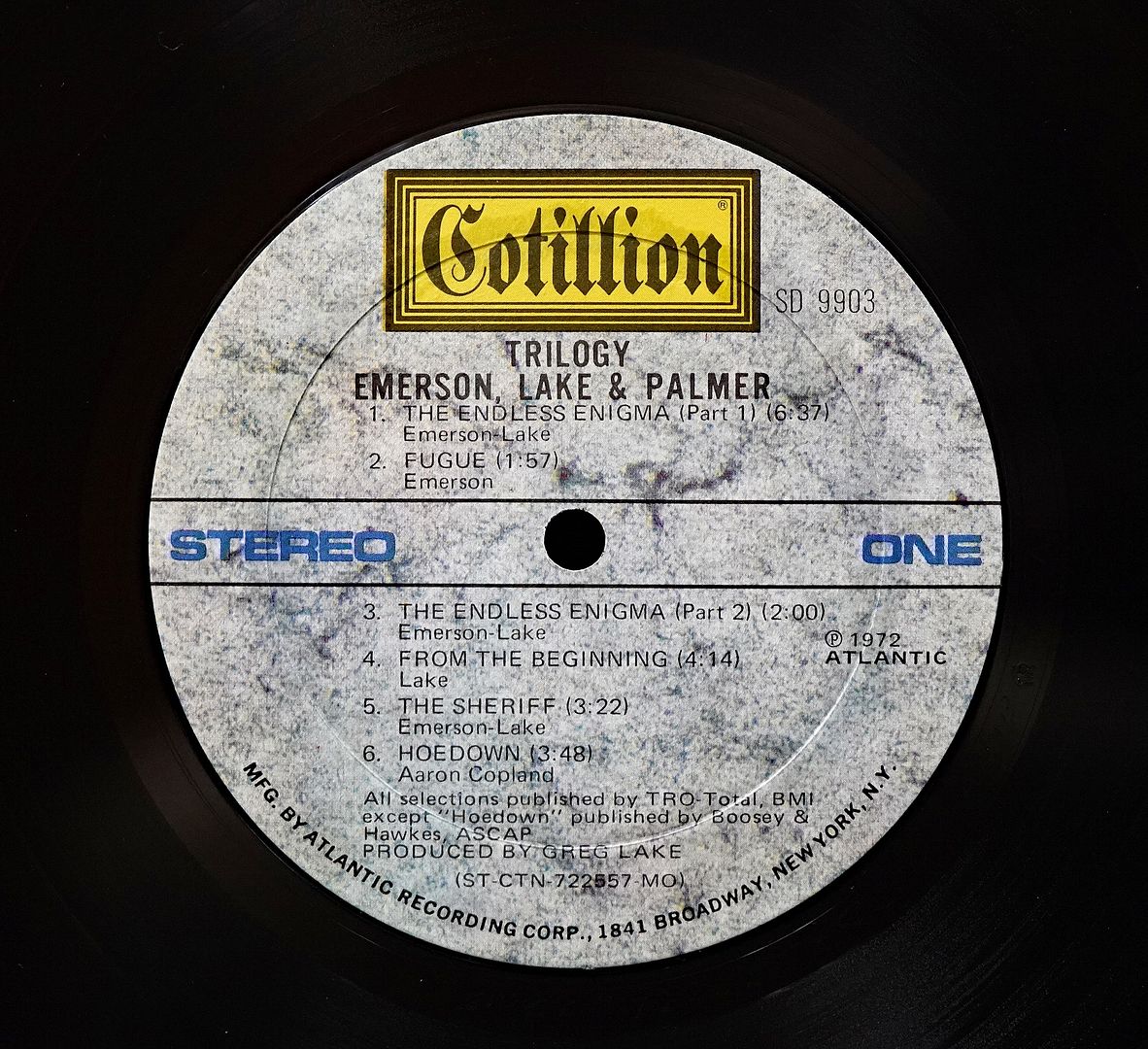
From The Beginning.
Emerson, Lake, and Palmer. "Trilogy." Cotillion Records. SD 9903. Monarch pressing. George Piros mastering. 1972.
Run-out: ST-CTN-722557-CC Repl AT/GP (MR) △17137 (1A).

cb661929-1ca6-46db-b995-085c48d6a3ed.jpg


e6be6d10-bdc0-43d2-9abb-aacaa001a83a.jpg
 
Back
Top Bottom