• The move to the new server is done. There are some software and database maintenance updates in process. This has us passing the hat around to help out. We appreciate any donations. Seriously, even a dollar helps. The payment page may be found here - https://www.audiokarma.org/support.html

“Barn Find” MAC 1900

Dauner

New Member
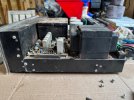
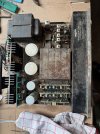
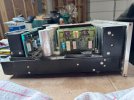
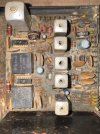
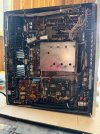
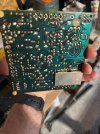
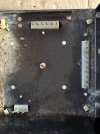
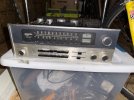
Hi everyone, in a moment of weakness I purchased a McIntosh MAC1900 receiver basically sight unseen for $75. It was clearly advertised as for Parts. From the few pictures in the Facebook marketplace ad it looked like all the knobs were there and the glass was not broken so figured I could get my money back out of those. When I went to pick it up, the seller seemed pretty happy to get his 75 bucks and was off pretty quickly. When I got home, it was quite a bit worse than what I was thinking. I already knew there was quite a bit of rust on the cages, but the amount of dirt and grime on all of the exposed top side surfaces was impressive. Seems like it was worse than just sitting in a damp basement. Anyway, it was generally complete except for one massive letdown. One of the power supply circuit boards was missing. I searched eBay and the rest of the Internet and was pretty surprised that I couldn’t find a single one for sale. There was one in Canada for $110 but I’m not sure it was available annymore. Other parts for these units seem to be pretty reasonable. I have a lot of testing to do on the transformer, the big filter caps, etc. before I decide whether I wanna plunk down 75 more dollars for a circuit board into what could easily be a big boat anchor.

I understand that a large majority of the electronic components could be bad both due to age or the laughably harsh environment that this has lived in. Has anyone ever brought a unit in this bad of shape back to life? Any hot tips where I can find another board if some of the other major vital organs seem to test out on it OK?

Playing around with vintage Hifi is my hobby and with something like this, I’d probably just spend time on it seeing if I could get anything to work. Definitely don’t need the tuner circuitry to work.

No plans to put power to anything anytime soon.
 

Attachments

  • IMG_8752.jpeg
    IMG_8752.jpeg
    243.7 KB · Views: 136
  • IMG_8751.jpeg
    IMG_8751.jpeg
    294.6 KB · Views: 115
  • IMG_8753.jpeg
    IMG_8753.jpeg
    203.7 KB · Views: 98
  • IMG_8769.jpeg
    IMG_8769.jpeg
    286.9 KB · Views: 86
  • IMG_8760.jpeg
    IMG_8760.jpeg
    347.2 KB · Views: 83
  • IMG_8758.jpeg
    IMG_8758.jpeg
    356 KB · Views: 86
  • IMG_8756.jpeg
    IMG_8756.jpeg
    286 KB · Views: 93
  • IMG_8773.jpeg
    IMG_8773.jpeg
    215.1 KB · Views: 84
  • IMG_8779.jpeg
    IMG_8779.jpeg
    209.2 KB · Views: 92
  • IMG_8816.jpeg
    IMG_8816.jpeg
    226.5 KB · Views: 141
Last edited:
Register to hide this ad
I have an alternative point of view on this. Whether to proceed or not depends on your ability to find a suitable power supply circuit board. If you can find one then I would dive in on this unit. Dirt, grime, corrosion, cobwebs, mouse residue, etc.,will all clean up with less effort than first glance suggests. You stated audio is a hobby of yours and here you have the opportunity to turn a sow’s ear into a silk purse. It won’t be especially pretty when you’re finished but performance should be just fine. Vintage Mac gear does tend to retain value. As long as you don’t go overboard you should come out at least even financially.

One added thought. AudioKarma subscribers get access to a forum titled BarterTown. This is where members here buy/sell/trade equipment and parts. This is a very helpful and supportive group. It’s only $25 annually. For me becoming a subscriber has been the value of a lifetime. And it’s where I would begin my search for a power supply board.
 
Last edited:
In the world of vintage McIntosh audio, cosmetics are absolutely everything.
Any competent technician can fix the electronics, but restoring degraded McIntosh cosmetics is brutally expensive, and in some cases, completely impossible. Badly rusted exterior can instantly turn a legendary piece into an unfixable eyesore.

In a good conscience, you cannot even sell parts of this unit without disclosure of the unit condition.
 
I have an alternative point of view on this. Whether to proceed or not depends on your ability to find a suitable power supply circuit board. If you can find one then I would dive in on this unit. Dirt, grime, corrosion, cobwebs, mouse residue, etc.,will all clean up with less effort than first glance suggests. You stated audio is a hobby of yours and here you have the opportunity to turn a sow’s ear into a silk purse. It won’t be especially pretty when you’re finished but performance should be just fine. Vintage Mac gear does tend to retain value. As long as you don’t go overboard you should come out at least even financially.

One added thought. AudioKarma subscribers get access to a forum titled BarterTown. This is where members here buy/sell/trade equipment and parts. This is a very helpful and supportive group. It’s only $25 annually. For me becoming a subscriber has been the value of a lifetime. And it’s where I would begin my search for a power supply board.
Thanks for the above commentary and the suggestion on the BarterTown forum. I'll check it out. I maybe should have done a better job on calibrating my hobby. I do this kind of stuff for fun and as a personal challenge. I'm not a flipper. I don't repair for hire. I'm not an EE but have access to them ( I have a mechanical engineering degree). I've been restoring vintage tube and solid state hifi for probably 10 years or so and have a decent collection of vintage test equipment as well. For the past 5 years or so I have also focused on restoring and collecting high end portable cassette players. Think Sony Walkman with metal enclosures instead of plastic kind of stuff.

Nowhere on my bench is there any high end digital analytical equipment (except for signal generator and power supply :).

I can easily spend 6 weeks working on a $25 Sony Walkman knock off just to see if I can get it running as good or better than new. I'm in no hurry and hop from hobby to hobby to keep my interest up and frustration down. Example: I'm on the 20 year plan of restoring my old Porsche 911. Engine rebuild couple years ago. That's real glutton for punishment stuff.

I think I'll just peck away at testing transformer, big caps, and anything else I can do without power, and search for that board. This will never be a showpiece but honestly I can strip and repaint the black metal covers and they will probably look decent from 10 feet away. My C-28 and MC2505 that i have in one of my setups are minty mint and restored so I have that box checked...

If I have questions on anything I might just continue the thread.

Thanks!
 
I would start by documenting all connections, remove and clean thoroughly every board and component. The RF section will be the hardest to restore if there is substantial corrosion in the chokes, tuner, etc., so if the AM/FM is low-priority you might be just fine rebuilding this into an integrated amp (for now).

IMO the EASIEST board to emulate would be the power-supply so not finding one isn't death to this receiver. There's a schematic out there and at worst you can breadboard a substitute until / unless an original becomes available.

I have seen worse McIntosh amps pictured on here, ones that were in barns, garages, basements, dropped, and at least one that was in a fire (corrosive smoke and water damage) that were restored into working units. Although making this into a museum piece might not be feasible it is most likely repairable, and to some McIntosh loyals a noble task so enjoy the project.
 
Hi everyone, in a moment of weakness I purchased a McIntosh MAC1900 receiver basically sight unseen for $75. It was clearly advertised as for Parts. From the few pictures in the Facebook marketplace ad it looked like all the knobs were there and the glass was not broken so figured I could get my money back out of those. When I went to pick it up, the seller seemed pretty happy to get his 75 bucks and was off pretty quickly. When I got home, it was quite a bit worse than what I was thinking. I already knew there was quite a bit of rust on the cages, but the amount of dirt and grime on all of the exposed top side surfaces was impressive. Seems like it was worse than just sitting in a damp basement. Anyway, it was generally complete except for one massive letdown. One of the power supply circuit boards was missing. I searched eBay and the rest of the Internet and was pretty surprised that I couldn’t find a single one for sale. There was one in Canada for $110 but I’m not sure it was available annymore. Other parts for these units seem to be pretty reasonable. I have a lot of testing to do on the transformer, the big filter caps, etc. before I decide whether I wanna plunk down 75 more dollars for a circuit board into what could easily be a big boat anchor.

I understand that a large majority of the electronic components could be bad both due to age or the laughably harsh environment that this has lived in. Has anyone ever brought a unit in this bad of shape back to life? Any hot tips where I can find another board if some of the other major vital organs seem to test out on it OK?

Playing around with vintage Hifi is my hobby and with something like this, I’d probably just spend time on it seeing if I could get anything to work. Definitely don’t need the tuner circuitry to work.

No plans to put power to anything anytime soon.

If it makes you feel any better, I would have taken a chance and bought it sight unseen myself for 75 bones. Even a McIntosh parts unit sells for good change.
 
Hi everyone, little update on my journey. Again my goal was to keep inspecting major components before I invest any more in it. What I’ve done so far:
- serial number AN1848
- tuning capacitor spins freely and was very clean under the rusty cover. All other pots turn smoothly
Push buttons are terrible. Worst I’ve ever seen. I think good doses of deoxit and fader lube will bring them back.
- tested all four power transistors. No shorts or odd resistance values with my Fluke 117.
- tested transformer primary resistance at the cord about 2 ohms. Definitely not open
- checked all fuses underneath and the main fuse in back. No blown fuses.
- Checked the diodes on the rectifier board. No failures
- the big 50V 9300 mfd capacitors. They are dated 1975 so I assume original. I restored and calibrated an old Sprague TO-6A couple years ago. I removed both caps and went through a slow ramp of voltage watching leak current along the way. 10V, 25V, 40V, and then 50V. Each step I waited 15 minutes or so until the current settled in. A little bit of gentle reforming? For the cap furthest from the transformer it settled in around 0.5mA at 50V. For the other one it settled in around 1.5mA at 50V. I then used a cheap Chinese ESR meter on both. They kind of swapped on performance. The cap that was at 0.5mA leakage had a higher ESR of 0.129 ohms. The cap that settled at 1.5mA had an ESR of 0.048 ohms.

Unfortunately my TO-6A only measures capacitance up to 2000mfd :(. I’ll need to find another way if people think critical that I know that particular metric before putting power to it.
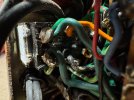
So that’s kind of where I’m at. No major fails yet. One question I have is on testing the transformer secondaries. The schematic shows the main high current winding as Gr Gr wires (not worried about the center taps right now). It looks to me like those green wires go straight to the 4ohm 8ohm switch on the back. There’s a LOT of stuff in that particular part of the underside.
- Can I just ohm out what I think are those two green wires on the switch body? I really don’t want to do any aggressive wire moving or unsoldering. The two brown wires that are low voltage for the lamps seems pretty straightforward. I’ll attach a couple of pics.

I can’t wait to remove the other boards and get cleaning them. Any conventional wisdom on that? After vacuum and paint brush, I used to always just go to town with deoxit and compressed air and really grimey boards clean up reasonably well. Others online say that’s a no-no. Q-tips or small foam swabs with IPA. Maybe a toothbrush. Don’t worry about them being meticulous. For sure with the tuner board flood coating bad as far as what I’ve read this week.

This has been pretty fun so far.

Thanks!
 

Attachments

  • IMG_8893.jpeg
    IMG_8893.jpeg
    218.5 KB · Views: 6
  • IMG_8908.jpeg
    IMG_8908.jpeg
    182.4 KB · Views: 6
Last edited:
If you are sure of the board that is missing, you can get one made up from one of the many circuit board manufactures in China. The real effort is the design of the board. I have used a program called KiCad to do that. The learning curve is steep but it is worth learning for the power it provides. It will output the gurber files you need as well. If what I saw in the photo was correct, the board design will be a challenge but I think @MACKIE1975 is correct about the missing board, in which case you will have another one to look at to help with parts placement and orientation.

Good luck and enjoy the ride.

Shelly_D
 
Back
Top Bottom