• The move to the new server is done. There are some software and database maintenance updates in process. This has us passing the hat around to help out. We appreciate any donations. Seriously, even a dollar helps. The payment page may be found here - https://www.audiokarma.org/support.html

3D Printed Thorens TP 68 headshell for TP28 tonearm/TD318 MKII and other tables

Capitol C

AK Subscriber
Subscriber
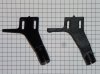
I received a 3D printer as a present from my family and decided to learn how to use it by making a spare TP 68 head shell for my Thorens TD318 MKII turntable which has the TP28 tonearm. This head shell apparently also fits some other tone arms, see http://www.theanalogdept.com/thorens_tonearms.htm. After a good amount of learning, I’ve got a design that I’ve been using which works well.
In two of the pictures I show comparisons between the original and the copy. A third picture is taken from an angle, and a fourth shows the copy on the tonearm. I made some dimensions thicker for strength and rigidity, but the key dimensions are the same, in particular the angle between the tonearm and the cartridge. The head shell is 100% density PLA. As is typical for 3D printing, lines show in the finished object.
As far as I can tell, the only disadvantage is the visible lines. You can find metal TP 68 head shells on line, but they are rare and often not cheap.
I'd welcome feedback on this and the general question of 3D printed parts, also whether you think there is a market for this, or if most audiophiles would prefer original parts?
 

Attachments

  • Comparison bottom view.jpg
    Comparison bottom view.jpg
    67.1 KB · Views: 115
  • Comparison top view.jpg
    Comparison top view.jpg
    85.7 KB · Views: 109
  • Angle view.jpg
    Angle view.jpg
    44.6 KB · Views: 108
  • On tonearm.jpg
    On tonearm.jpg
    58.2 KB · Views: 112
Last edited:
Register to hide this ad
I'm sorry, I should have been more aware of the rules. I wasn't trying to sell here, but there were links to other people who wanted to sell. I've edited the post, if anyone sees further outlaw behavior on my part, please let me know!
 
Great work. I think most people would prefer OEM parts... at the right price. However given the availability vs demand there more than likly is a market as long as the price difference provides perceived value to the buyer. Either way it's amazing what 3D promises to the audio hobby. Already a number of items that were unobtanium that are no longer that way due to 3D printing.
 
Great work. I think most people would prefer OEM parts... at the right price. However given the availability vs demand there more than likly is a market as long as the price difference provides perceived value to the buyer. Either way it's amazing what 3D promises to the audio hobby. Already a number of items that were unobtanium that are no longer that way due to 3D printing.
I bought a spare a while back, but it cost me dearly--more than my first AR turntable in 1969, although of course that doesn't account for inflation. Whether or not anyone else wants them, I know how to use my 3d printer now!
 
@Capitol C
recently I started looking into 3D printed headshell and found this thread. My reason for going this route is to build a headshell with a material that is rigid at the same time has low sound energy conduction, like a vibration insulator or absorber, and the materials (plastics) that can be used for 3D printing fall into this category. I have two questions for you -
Which material do you think would satisfy this requirement the most ? ABS ? Nylon ? HDPE ? There are so many - https://www.tomsguide.com/us/3d-printing-materials,news-24392.html

Where did you find the sme connector ? Are they generally available or did you salvage it out of other headshell ?
 
I bought a spare a while back, but it cost me dearly--more than my first AR turntable in 1969, although of course that doesn't account for inflation. Whether or not anyone else wants them, I know how to use my 3d printer now!

Wish you lived closer. Nice work. Would love to see how you did it.
 
I received a 3D printer as a present from my family and decided to learn how to use it by making a spare TP 68 head shell for my Thorens TD318 MKII turntable which has the TP28 tonearm. This head shell apparently also fits some other tone arms, see http://www.theanalogdept.com/thorens_tonearms.htm. After a good amount of learning, I’ve got a design that I’ve been using which works well.
In two of the pictures I show comparisons between the original and the copy. A third picture is taken from an angle, and a fourth shows the copy on the tonearm. I made some dimensions thicker for strength and rigidity, but the key dimensions are the same, in particular the angle between the tonearm and the cartridge. The head shell is 100% density PLA. As is typical for 3D printing, lines show in the finished object.
As far as I can tell, the only disadvantage is the visible lines. You can find metal TP 68 head shells on line, but they are rare and often not cheap.
I'd welcome feedback on this and the general question of 3D printed parts, also whether you think there is a market for this, or if most audiophiles would prefer original parts?
Nice looking print there. I've been messing about with 3D printing myself and when I see another audio hobbiest doing similar it gets my attention. The print appears to be FDM. I presume the filiment was ABS. That would be strong enough material for the task I'm certain. I did some research a while back on the suitability of using ABS for record player parts. I found that ABS has a similar 'impedence' value to that of the vinyl record itself. So vibrations flowing in the one material should transfer into the other readily. For whatever that is worth.
On a tonearm part like the head shell I'm not sure if it damps vibes or just transmits them. I suppose you can listen to the difference between head shells by making a recording with each of the different head shells (but otherwise same setup) and compare the recordings to one another.

It looks like you have some CAD modeling skills. Cool:beatnik:

-Steve
 
@Capitol C
recently I started looking into 3D printed headshell and found this thread. My reason for going this route is to build a headshell with a material that is rigid at the same time has low sound energy conduction, like a vibration insulator or absorber, and the materials (plastics) that can be used for 3D printing fall into this category. I have two questions for you -
Which material do you think would satisfy this requirement the most ? ABS ? Nylon ? HDPE ? There are so many - https://www.tomsguide.com/us/3d-printing-materials,news-24392.html

Where did you find the sme connector ? Are they generally available or did you salvage it out of other headshell ?
Fortunately for me, there is no connector on this headshell--the wires come out of the tonearm with individual connectors attached. It takes a little more effort to connect the cartridge one conductor at a time, but it is much cheaper to make replacement headshells. As for the acoustical properties of the headshell material, the originals are made of aluminum. Aluminum conducts sound very well (with little damping). What save the day, I believe, is not the specific material for the headshell, but the acoustic impedance mismatches that sound encounters. The stylus vibrates, of course, but it is coupled to the cartridge is a highly-compliant way (even with older cartridges). Some of the sound will get into the structure which holds the stylus. From there, sound has to go from the stylus support into the rest of the cartridge, from there into the shell. At each point where the material changes, some energy is reflected, and some is transmitted. In the end, I believe that the amount that gets into the headshell is not significant. But I am guided here by my knowledge of optics and transmission lines, I don't know the specific numbers for this situation.
Nice looking print there. I've been messing about with 3D printing myself and when I see another audio hobbiest doing similar it gets my attention. The print appears to be FDM. I presume the filiment was ABS. That would be strong enough material for the task I'm certain. I did some research a while back on the suitability of using ABS for record player parts. I found that ABS has a similar 'impedence' value to that of the vinyl record itself. So vibrations flowing in the one material should transfer into the other readily. For whatever that is worth.
On a tonearm part like the head shell I'm not sure if it damps vibes or just transmits them. I suppose you can listen to the difference between head shells by making a recording with each of the different head shells (but otherwise same setup) and compare the recordings to one another.

It looks like you have some CAD modeling skills. Cool:beatnik:

-Steve
Nice looking print there. I've been messing about with 3D printing myself and when I see another audio hobbiest doing similar it gets my attention. The print appears to be FDM. I presume the filiment was ABS. That would be strong enough material for the task I'm certain. I did some research a while back on the suitability of using ABS for record player parts. I found that ABS has a similar 'impedence' value to that of the vinyl record itself. So vibrations flowing in the one material should transfer into the other readily. For whatever that is worth.
On a tonearm part like the head shell I'm not sure if it damps vibes or just transmits them. I suppose you can listen to the difference between head shells by making a recording with each of the different head shells (but otherwise same setup) and compare the recordings to one another.

It looks like you have some CAD modeling skills. Cool:beatnik:

-Steve
Steve, Some of what you are asking about is partly addressed in the note to Triode in this thread. I want to emphasize that I have some knowledge from my teaching of vibrations and waves and from my research, but I haven't researched or put pencil to paper in any detail on this specific problem. My guess is that rigidity and total mass matter most, with smaller effects from the sonic properties of the material, but it is a guess. Thanks for the (undeserved) compliment on CAD. I knew nothing about it when I started out. I do know some mechanical drawing and part design from working with machinists, though. What I did here was break the part into simpler pieces, measure, print, curse in a colorful manner, correct measurements, realize that the printer is not a milling machine and that the design dimensions are only loosely connected to the printed-part dimensions, try printing parts in different orientations, add scaffolding by hand, let the program add scaffolding, try to find a cat to kick, get mad because the cats are too smart for me, etc. I'm not saying that the price of ABS went up because of my efforts, but it is a distinct possibility that it did. In the end, though, I learned a lot and had fun.
 
Fortunately for me, there is no connector on this headshell--the wires come out of the tonearm with individual connectors attached. It takes a little more effort to connect the cartridge one conductor at a time, but it is much cheaper to make replacement headshells. As for the acoustical properties of the headshell material, the originals are made of aluminum. Aluminum conducts sound very well (with little damping). What save the day, I believe, is not the specific material for the headshell, but the acoustic impedance mismatches that sound encounters. The stylus vibrates, of course, but it is coupled to the cartridge is a highly-compliant way (even with older cartridges). Some of the sound will get into the structure which holds the stylus. From there, sound has to go from the stylus support into the rest of the cartridge, from there into the shell. At each point where the material changes, some energy is reflected, and some is transmitted. In the end, I believe that the amount that gets into the headshell is not significant. But I am guided here by my knowledge of optics and transmission lines, I don't know the specific numbers for this situation.


Steve, Some of what you are asking about is partly addressed in the note to Triode in this thread. I want to emphasize that I have some knowledge from my teaching of vibrations and waves and from my research, but I haven't researched or put pencil to paper in any detail on this specific problem. My guess is that rigidity and total mass matter most, with smaller effects from the sonic properties of the material, but it is a guess. Thanks for the (undeserved) compliment on CAD. I knew nothing about it when I started out. I do know some mechanical drawing and part design from working with machinists, though. What I did here was break the part into simpler pieces, measure, print, curse in a colorful manner, correct measurements, realize that the printer is not a milling machine and that the design dimensions are only loosely connected to the printed-part dimensions, try printing parts in different orientations, add scaffolding by hand, let the program add scaffolding, try to find a cat to kick, get mad because the cats are too smart for me, etc. I'm not saying that the price of ABS went up because of my efforts, but it is a distinct possibility that it did. In the end, though, I learned a lot and had fun.
:rflmao:
I bought an Ender 3 last cmas. Great fun!
 
What are you guys thoughts on making cartridge bodies ? Currently the only swapable bodies I am aware of are wood bodies costing much. I am sure good plastic can still beat wood for this job. Would love to see a Shure V15 style body that shrouds more of the cartridge and reduces the area of contact with the headshell.
Perhaps mounting hardware too - screws, nuts.
 
What are you guys thoughts on making cartridge bodies ? Currently the only swapable bodies I am aware of are wood bodies costing much. I am sure good plastic can still beat wood for this job. Would love to see a Shure V15 style body that shrouds more of the cartridge and reduces the area of contact with the headshell.
Perhaps mounting hardware too - screws, nuts.
I don't see the advantage unless the cartridge is missing a body. That said, I printed an insert of PLA to fit a cartridge body to an alloy U-channel mounting frame used for rigidity and mass. The cart body doesn't touch the alloy, but the 2 together form a hybrid that is far more rigid than the plastic alone. The hybrid body can also be templated to fit different cartridges, requiring only the PLA insert to be customised to fit the cartridge in question.
 
Back
Top Bottom