• The move to the new server is done. There are some software and database maintenance updates in process. This has us passing the hat around to help out. We appreciate any donations. Seriously, even a dollar helps. The payment page may be found here - https://www.audiokarma.org/support.html

4 Transformers in a 2 Channel Amp?

heton03

New Member
Does anyone know why a 2 channel amp would have 4 transformers in it rather than just 2 or 1? I'm going to try and attach a screenshot I took from Bedini's webpage that shows the internals of their Dual Mono 100/100. Usually I only ever see 1 or 2 transformers in a 2 Channel amp. I have a 100/100 like this one but it's in need of repair, I’m waiting to find time to take it in. In the meantime, I was just wondering if anyone knew why the extra transformers.
 

Attachments

  • Screenshot (4).png
    Screenshot (4).png
    834.6 KB · Views: 94
Last edited:
Register to hide this ad
4 small transformers will fit better in the unit than 1 or 2 massive transformers. Two paralleled transformers per channel.
 
I initially thought that as well, and that very well may we true, but would confuse me because there is a 200/200 model Bedini that has only two transformers and it's twice the power of the 100/100, so they have fit bigger ones in there

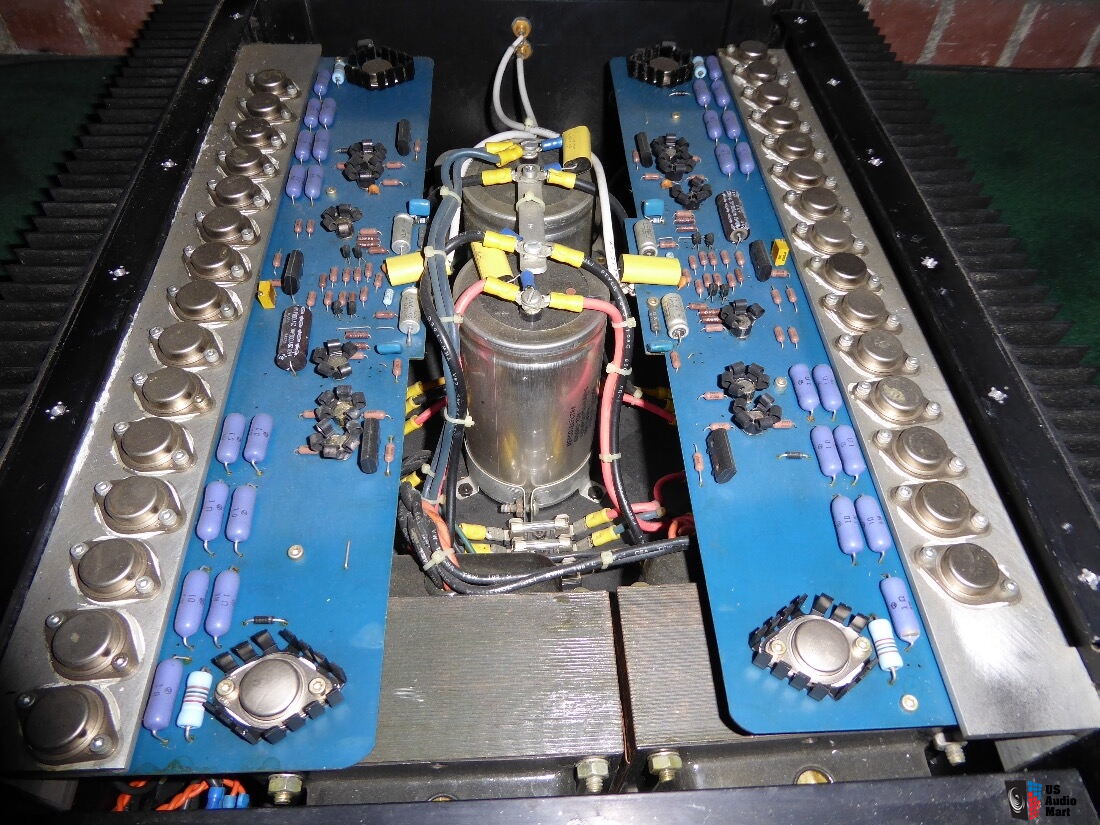
Heres a photo of the insides of the 200/200 I found online w/the two big ones vs four small ones in the 100:
EDIT: The 100/100 is "Dual Mono" vs the 200/200 is "Stereo" so maybe that has something to do with it? I honestly have no clue
1354335-bedini-200200.jpg
 
From Rod Elliots website " Elliot Sound Products "
Larger transformers (i.e. higher VA rating) usually have lower losses (watts per VA), both at idle and at full power. This is because they need fewer turns of heavier gauge wire with a larger core. That means that the DC voltage will be higher than for an otherwise similar transformer of lower rating. For example, the DC output from a 25-0-25V 500VA transformer will significantly higher than that from a 25-0-25V 100VA transformer at the same DC load current. This is particularly important for Class-A amplifiers, because they draw considerable current 100% of the time.

Because the regulation of small transformers is worse than for large ones, you may find that the no-load DC voltage is higher than expected, and the full-load voltage lower. This is normal, and always varies depending on the size of the transformer. A large transformer will nearly always provide a DC voltage that has better regulation than you can get from a small transformer with the same AC voltage output.
 
I
EDIT: The 100/100 is "Dual Mono" vs the 200/200 is "Stereo" so maybe that has something to do with it? I honestly have no clue

Dual Mono usually means no shared components or boards. The stereo amp might have a shared input board or something.
 
Looks like the 100/100 1MEG amp had the quadruple transformers. Apparently the 1MEG variant is an upscale model line so it's not a direct comparison to a "plain old" 100/100 or 200/200. Unfortunately a lot of detail doesn't seem like low-hanging fruit.
 
I found a website that mentioned that Bedini amps are "quasi complementary with dual power transformers operating in push pull" and the 1 MEG models had a description saying it had "dual differential positive feedback feed forward front end design". Not sure what the majority of that stuff means but maybe theres a clear answer in there somewhere(or avionic original conclusion is correct, I just figured I'd put this information here since I came across it). Website: https://emediapress.com/johnbedini/icehouse.net/john1/index001.html (There's multiple pages, starts talking about the dual power supplies on the bottom of first page and on the second page)
 
4 transformers. 2 for the left channel and 2 for the right channel. 1 transformer is for the the +22 V & 0 V and the other for the -22 V & 0 V. When the Bedini's were originally built, toroidal transformers were not common, and if so, were rather expensive. A single E-core transformer for both channels would have been monstrous. Therefore 4 smaller E-cores that could fit into the available space. The other big difference is that by splitting the transformers into separate units, the argument is made that the one channel cannot influence the other channel in any way. Separate rectifiers, caps and power feed to each channel in one box.
I am currently building a new Bedini 25.25 as my original has come to the end of its life. The PCBs are packing up, tracks lifting etc. A friend did a new layout for me, and the new box will be considerably bigger (width and depth) to accommodate the new heatsinks, which have almost twice the radiating area of the originals. Also to house the CRC-CapMX PSUs and two toroidal transformers.
Kevin
 
Back
Top Bottom