• The move to the new server is done. There are some software and database maintenance updates in process. This has us passing the hat around to help out. We appreciate any donations. Seriously, even a dollar helps. The payment page may be found here - https://www.audiokarma.org/support.html

49 year old camera....up and running...

hbrocks

Super Member
Having fun playing with this old camera I found at the thrift!

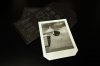
Found this Polaroid 100 Automatic at a Salvation Army for $9.

I converted out the old single-cell 4.5v hard-to-find battery and soldered in a battery holder that takes 3-AAA's.

Ordered some Fuji 3000B film off amazon and Snapped my 1st picture with this last night.


390898_323732900980570_100000315881237_1082778_1533668270_n.jpg
 
Register to hide this ad
That's pretty cool!

I have a 1930's Voigtlander Avus camera originally designed to use glass plates for film. It has a 120 roll-film adapter on the back. To use it, you have to remove the film back, focus using the ground-glass, remove the ground-glass, insert the film back, remove the dark slide, and take the exposure. A tripod is obviously required. Lots of fun, though!


Fallasburg Bridge by Wigwam Jones, on Flickr


Voigtlander Avus by Wigwam Jones, on Flickr


Fallasburg Covered Bridge, Lowell, Michigan by Wigwam Jones, on Flickr
 
Thank you Sparton....
Wigwam....I'll have to check out your pics later from home....work has flickr blocked :(

The negatives are nice because you can scan them and...convert them to positives and then play with the contrast and other dynamics.
 
I have one of those I think it's a 450 Can you take a picture of how you
converted it to take the new battery's would be great!

Tube
 
Thank you Sparton....
Wigwam....I'll have to check out your pics later from home....work has flickr blocked :(

The negatives are nice because you can scan them and...convert them to positives and then play with the contrast and other dynamics.

One of the old Polaroid films had a positive and a negative; you could fix the negative in a solution and then scan it or print from it in the traditional way later, as if it were a 4x5 negative. Type 55? Can't recall. Sadly, it's gone now.

I hope that someday, the price of huge digital sensors drops to the point where you can put a full-size digital back on any old camera you choose, from 35mm to 8x10, and get digital images cheaply. Just a dream, I know. In the meantime, there are adapters to put digital SLR cameras on the backs of older view cameras, but of course with the much smaller sensors, the lens apparent focal length is increased mightily.
 
The Polaroid auto pack cameras used 1 of 2 batteries. There is enough space in the battery compartments of either to convert them to AAA cells. Easy enough to do. Find out which battery originally was used and then go to say Rat Shack and get either the 2 or 3 AAA battery holder. If the battery holder has snap clips, no soldering required even. These cameras depending on model used either plastic or Dow Corning glass lenses and one of 2 finders, the Polaroid plastic and the Zeiss metal finder. While the glass lenses are visibly better, the company showed just how good a plastic lens could be - and that is very good.

Best to stay away from the models with the electronic times as they model intrudes further into the film chamber and the Fuji film packs are slightly thicker than the Polaroid pack and the combo can create problems in pulling the film after exposure.

Polaroid really put a lot of quality in these cameras, even the bottom of the line 100 is quite good. I have a carton of various models sitting including the 2 fully manual cameras, the 180 and 195. If you want to really explore the film form, look for one of the higher model glass lens, mechanical timer models or one of the manual models. The manual models were used by professionals for testing shoots. I used mine as main cameras while walking and in the everglades in lieu of my MF and 35mm systems.

To get the best out of any of them, use a tripod, Though touted as a hand holdable camera by the company, it really is not the way to get the best results.

Also, if you get into them, look for Ansel Adams book on using the Polaroid camera. He consulted with Land in developing the film and his book really gets into how to use the camera and film that moved me from an occasional user to using the system as a main system. Also, there are a number of accessories for the various models including closeup and portrait lenses, filters, etc.

Prices on these cameras are very low as most persons do not know of the Fuji film and the Impossible Project. All but the 180 and 195 in the autopack series can be had in the free to about $20 range. The 180 and 195 still go for bucks because they are mechanical and some are converting them to rollfilm and sheet cameras.

Good luck and enjoy.
 
Brian...WOW...
that was a ton of info...thanks!

There are very adequate youtube videos that show how to perform the battery mod and also what film to purchase/where and how to use these camera's. Enough info to get you up and running.

Not too sure I plan on taking this much further for now.
 
BTW, love your Pug, 1 o my 2 favorite dogs. I used the cameras when I taught photography class. I issued them to the students so they could learn composition and have instant feedback; yes, pre-digital age.
 
One of the old Polaroid films had a positive and a negative; you could fix the negative in a solution and then scan it or print from it in the traditional way later, as if it were a 4x5 negative. Type 55? Can't recall. Sadly, it's gone now.

I hope that someday, the price of huge digital sensors drops to the point where you can put a full-size digital back on any old camera you choose, from 35mm to 8x10, and get digital images cheaply. Just a dream, I know. In the meantime, there are adapters to put digital SLR cameras on the backs of older view cameras, but of course with the much smaller sensors, the lens apparent focal length is increased mightily.

Yep, Polaroid T-55 Pos/Neg film. This was probably my favorite film to use because it produced a beautiful 4x5 negative. If you were aiming to proof a shot in the field you generally would expose the T-55 film to produce a good proof print using an E.I. of 80 or 100. However, when shooting for the negative for the purpose of using it to make enlarged prints an E.I. of 50 would be more accurate for the film negative. T-55 film required sodium sulfite to clear the negative. Polaroid made a lidded bucket with individual compartments so that you could clear your negatives in the field. I never used their bucket and so I would wait till I got home to "pull" the film through the film holder to develop the film and then clear it in a tray of 18% sodium sulfite solution. I sure miss T-55 film. I still have a small supply but I would be lucky if it's even any good since the chemical pods tend to dry out after about a year.

Polaroid Type 55 Positive

attachment.php


Polaroid Type 55 Film Negative

attachment.php


Polaroid Type 664 Black & White Film used with my Bronica NPC Polaroid Back with my ETRSi

attachment.php
 

Attachments

  • T55_Polaroid.jpg
    T55_Polaroid.jpg
    73.8 KB · Views: 73
  • T55_Negaive.jpg
    T55_Negaive.jpg
    80.8 KB · Views: 74
  • T664Polaroid.jpg
    T664Polaroid.jpg
    95.4 KB · Views: 73
The images on the 664 film were taken on a photo trip to Mesa Verde during the summer of 2006. I used my Bronica ERTSi for most of my photography even though I had my 4x5 with me. I was at least 30 pounds heavier then and the extra weight and lugging a 4x5 and all of the gear I would use with it would have been a little too much. The 645 was enough as it was. Lot of hiking was involved on that trip.
 
I have been using my 250 lately. Also, with the Fuji B&W film. If you measure the entrance pupil, you can figure which disk is close to f22 ( or whatever works for your flash) and just plug a flash into the socket. If you take your finger off the button quickly the shutter closes and won't give the prolonged exposure that it wants to give in the low light.

Polaroid250.jpg
 
Back
Top Bottom