• Please note that Audiokarma will be offline briefly for updates early on Monday morning, September 28th.

6V6 SE plate voltage is higher than supply voltage.

VikingAmps

New Member
I've never come accross this before. I didn't think it was even physically possible, considering the there should always be a voltage drop across the OT.

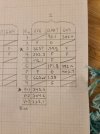
I'm restoring a pair of V-M model 165s for a friend. After replacing all the old carbon comp resistors with modern metal film resistors of the same values, every voltage tests fine except this wierd anamoly. I have a bunch of 6V6 tubes and no matter what tube I use, the plate voltage (measured to ground) is consistantly 20 to 30 volts higher than the supply voltage (also measured to ground) for that stage. I haven't played any audio through it yet but I hooked up a apeaker to check noise and hum; no noise, minimal hum.

Anyone know what's going on here?
 

Attachments
  • 20231102_190917.jpg
    20231102_190917.jpg
    94.2 KB · Views: 26
  • 16989784885477323869914719570212.jpg
    16989784885477323869914719570212.jpg
    126.7 KB · Views: 22
Last edited:
Register to hide this ad
Has to be something with the measurement since it's not possible for a tube to generate higher voltage without signal present. Your discrepancy is close to the negative supply amount, is it possible you are including the negative grid supply in the plate measurement? Are you using the same ground for both measurements, with no input and a dummy load on the OPT?
 
Has to be something with the measurement since it's not possible for a tube to generate higher voltage without signal present. Your discrepancy is close to the negative supply amount, is it possible you are including the negative grid supply in the plate measurement? Are you using the same ground for both measurements, with no input and a dummy load on the OPT?
Same ground for all measurements: Chassis ground. I was wondering if the grid bias was affecting this. Looking at my measurements before replacing anything, I must not have noticed, I had the same issue. 373.7 V plate, 356.8 V V+1, and -17V in the grid. I've never worked on a single ended amp that has a fixed bias. Is this normal? Because you're right, 373.7 - 17 = 356.7.
 
Must he something about where exactly you're taking measurements, and yes the fact that grid voltage + B+ = Va is too much of a coincidence for you to be measuring anything else. If the source of the voltage for the tube is B+, it is not possible to have higher quiescent voltage at the plate, so check your measurement method and try a different ground (and check that it's really at ground).
 
So I swapped out the original 12AX7, (which tested fine in my tube tester) with a modern JJ tube and that seemed to fix things. I'm now reading 345.5 B+, and 335.1 at the plate. 6V6 grid bias is -16V.

I measured the other 165 amp with the same method I used with this one and the readings are are normal. Must have been a bad 12AX7. Still a lot to learn!
 
If the problem isn't the preamp tube or happens to be something else more complicated than what I've learned, then I'm also considering leakage on the final 100nF coupling cap between the 12AX7 driver stage and the 6V6 grid. The cap is an older paper type, coated in wax. It tested within 5% based on my multimeter (which is a Klein) cold and out of circuit. I'm not sure if a proper farad reading accounts for leakage at operating conditions. I'm thinking about substituting in a 100nF Orange Drop that I know is stable and seeing if that makes a difference.
 
This is no doubt a stability issue with the amplifier. Placing your meter probe on the plate terminal of the 6V6 is very likely causing the amplifier to go into oscillation. This could either be confusing your meter into producing an inaccurate reading or, if the oscillation is strong enough, it could be driving the 6V6 into creating its own additional bias to then reduce current draw and therefore produce the increased voltage reading at the plate. This last condition is exactly the same way that a Horizontal Output tube achieved its bias in about a bazillion old black and white or early color TV sets that employed vacuum tubes. Of course, it could be a combination of both conditions as well. Installing a different 12AX7 no doubt changed the characteristics of the circuit just enough to prevent the oscillation from happening. Simple changes in lead placement can also affect these types of issues.

Interestingly enough, I just restored a different stereo V-M amplifier for a client that had a related but slightly different problem: When the tone controls were set to a specific setting, then in one channel only, a parasitic oscillation would show up on sine waves at near (but not) full power output conditions. Like your scenario, nothing was "wrong" with the amplifier. It was built and wired correctly, and all components were in tolerance, with NOS tubes installed -- except it oscillated in one channel under the condition noted. It too was an instability problem with the amplifier. A slight adjustment to the step network employed not only fixed the problem, but improved the HF transient response as well. For these types of problems, you really need a scope so you can see what's going on when the condition occurs so you can properly diagnose it.

I hope this helps!

Dave
 
welcome to the wild and whacky world of oscillation!


If a different 12ax7 stops it, confirm the parts in the tone control circuits. Thats your negative feedback loop, and if those parts have gone off it may very well cause it to oscillate. a slight difference in tube may be just the difference between normal and not normal but the stability is too marginal for my liking. I wouldn't rely on it to not decide its going to go off the rails at some point in the future.
 
If the problem isn't the preamp tube or happens to be something else more complicated than what I've learned, then I'm also considering leakage on the final 100nF coupling cap between the 12AX7 driver stage and the 6V6 grid. The cap is an older paper type, coated in wax. It tested within 5% based on my multimeter (which is a Klein) cold and out of circuit. I'm not sure if a proper farad reading accounts for leakage at operating conditions. I'm thinking about substituting in a 100nF Orange Drop that I know is stable and seeing if that makes a difference.
Change that coupling cap.
 
This is no doubt a stability issue with the amplifier. Placing your meter probe on the plate terminal of the 6V6 is very likely causing the amplifier to go into oscillation. This could either be confusing your meter into producing an inaccurate reading or, if the oscillation is strong enough, it could be driving the 6V6 into creating its own additional bias to then reduce current draw and therefore produce the increased voltage reading at the plate. This last condition is exactly the same way that a Horizontal Output tube achieved its bias in about a bazillion old black and white or early color TV sets that employed vacuum tubes. Of course, it could be a combination of both conditions as well. Installing a different 12AX7 no doubt changed the characteristics of the circuit just enough to prevent the oscillation from happening. Simple changes in lead placement can also affect these types of issues.

Interestingly enough, I just restored a different stereo V-M amplifier for a client that had a related but slightly different problem: When the tone controls were set to a specific setting, then in one channel only, a parasitic oscillation would show up on sine waves at near (but not) full power output conditions. Like your scenario, nothing was "wrong" with the amplifier. It was built and wired correctly, and all components were in tolerance, with NOS tubes installed -- except it oscillated in one channel under the condition noted. It too was an instability problem with the amplifier. A slight adjustment to the step network employed not only fixed the problem, but improved the HF transient response as well. For these types of problems, you really need a scope so you can see what's going on when the condition occurs so you can properly diagnose it.

I hope this helps!

Dave
Ah yes, the good old observer principle. The problem I'm having is that even with a speaker attached I'm not getting any audible oscillation when I probe with my multimeter. It could be supersonic for all I know. I'll have to break out my scope if this continues.
 
Change that coupling cap.
Got an old Sprague Orange Drop 100nF cap I want to try. It's 1000v, and I feel that's overkill but, on the other hand, I don't have to order one. That will save my buddy some cash. I don't want to charge him an arm and a leg for this job, especially since I'm learning a lot too.
 
welcome to the wild and whacky world of oscillation!


If a different 12ax7 stops it, confirm the parts in the tone control circuits. Thats your negative feedback loop, and if those parts have gone off it may very well cause it to oscillate. a slight difference in tube may be just the difference between normal and not normal but the stability is too marginal for my liking. I wouldn't rely on it to not decide its going to go off the rails at some point in the future.
That NFB loop, having both tone controls included in it, is definitely new territory me. I work mostly on guitar amps which have pretty predictable (Marshall or Fender) stacks or Baxandall tone circuits. I'm not used to the distortion mitigating ciruitry of hifi amps. I have a Calrad SA30-B that I restored and it incorporates a similar feed back tone control. The problem with that amp was in the power amp section so it was easy for me. Luckily I didn't have to dick around with the tone circuit!
 
Last edited:
I'm not really a fan of power amp feedback loop tone controls just because it makes the whole thing way more complex. I'd rather have a flat response power amp and stick the controls in front of it. Usually its an economy measure when you see stuff like this.
 
Got an old Sprague Orange Drop 100nF cap I want to try. It's 1000v, and I feel that's overkill but, on the other hand, I don't have to order one. That will save my buddy some cash. I don't want to charge him an arm and a leg for this job, especially since I'm learning a lot too.
Try it. Better overkill in voltage ratings, than too little. :thumbsup:
 
Back
Top Bottom