

Saryrian86
New Member
Hello guys  This is my first post on audiokarma and maybe one of the longest post i have written.
Backstory:
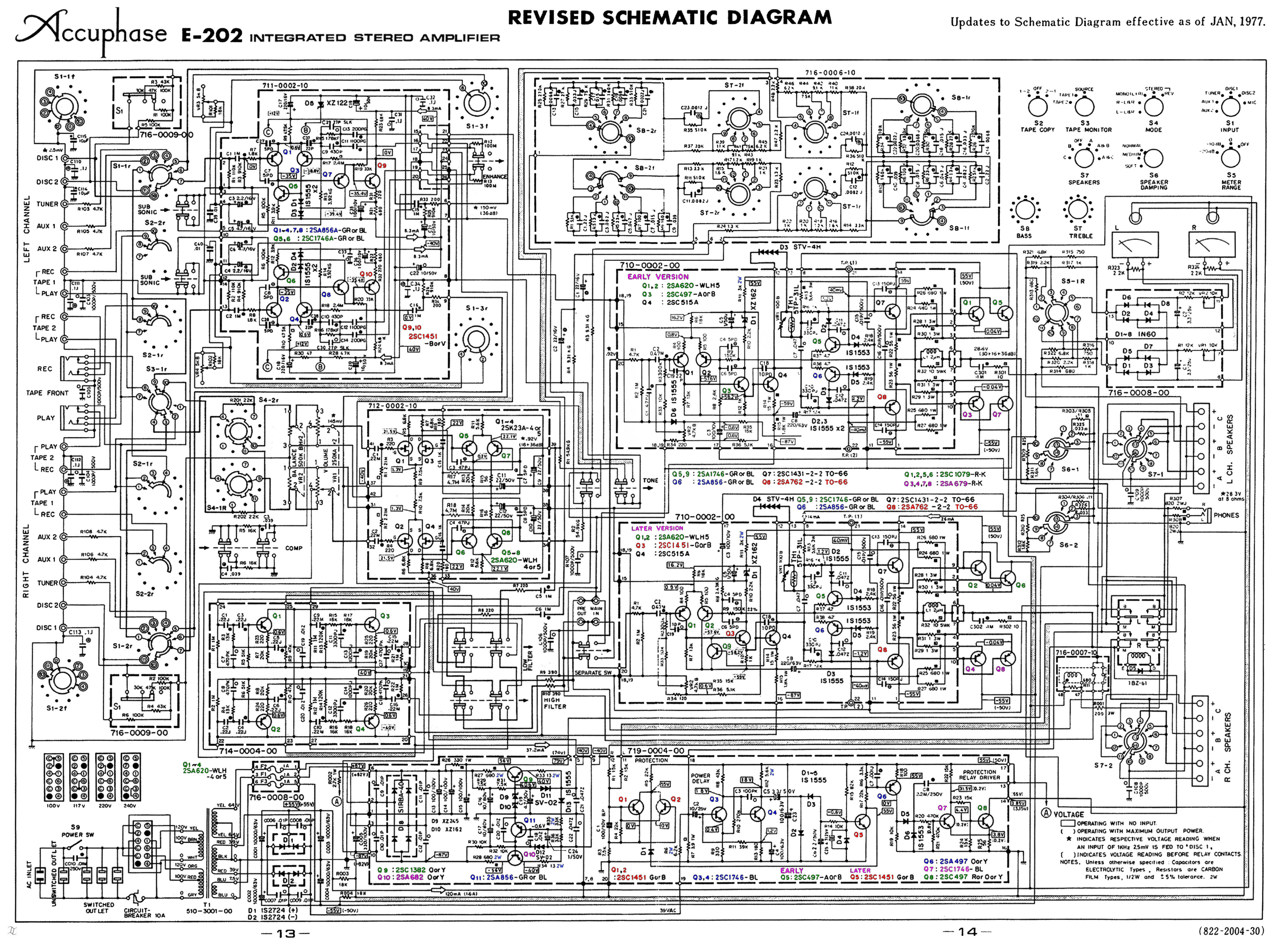
I got a job modifying a tube amplifier for a guy that live local to me. during the conversations over the phone about that amp about parts and etc , he told me about another amp that he had. A solid state one. A Accuphase E-202 that someone else had recapped for him a few years ago.
It had a issue with lower sound on one channel and after he got it home after the job was done the amp started to smoke right after he turned it on. He asked me if i could maybe look at it and see if i could find what the issue was.
im mostly into tube amp building and repairing so i was a little hesistant at first. I have tried to repair solid state amplifiers in the past and either have not figured out the problem or not found the real issue.
But i thought. I can't let a amplifier make a fool of me. I can do this! So i said i could look at it and maybe see if i can fix it
So this will be my first time trying to fix a solid state amplifier and get it really working again. This time i will not give up! And maybe with help from you guys i will reach my goal.
So back to the amp.
The owner told me where the smoke came from when he tried to fire it up. And that was around the power supply card area. And it blew a capacitor. The capacitor got swapped but the problem did not go away
The first thing i did was to check that all the electrolytic capacitors was mounted the correct way on the power supply card. And changed some of the old ones that the previous tech
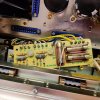
did not swap out. And cleaned it real good. It showed that it had been warm over a long period of time from many years of use but nothing that looked really burned .a trace had been fixed Some point in time and Some resistors showed clues of been worn, but nothing stood out from everything else. I measured some of the resistors and changed the ones that had wandered to much in value with the correct values and watt size.
I even swaped out one of the transistors because it gave some odd measures.
Fired it up with a variac and took it slowly up in voltage. It did not take long before smoke started to appear again in the same area. I was not sure if it came from the card or from under it.
I shut the amp right of again. Ok.
That did not fix the issue. Lets see what got hot. I was to fast to shut it down so i could not find where the smoke came from. And i could not find one part that did go wrong at first glimse. Only clue i think was that one of the AC wires going to the 2 double diodes that delivers DC power to the power supply card looked a little like it could have been a little hot. So i soldered the two double diodes out and measured them with my multimeter. They measured good both of them. Ok.
Whats Next .
So i thought. Lets go through the power supply card part by part and see if i can find a issue.
So i did.
i may have found a issue im gonna investigate further. 2 of the 3 2sc1451 measured a little weird between base and emitter . And what i was told when i asked a little about thid was i needed to solder them out and then measure them so that the posibillity that the circuit around them could mess up my measuring is eliminated.
So my next step is to solder them out and measure them.if they still measure a little funky im gonna replace them.
Are the issue with those transistors big enough to have made the amp start letting out smoke or did i just found a issue that have not showed it self yet and the real problem are somewhere else still?
What do you guys think?
This is my first post on audiokarma and maybe one of the longest post i have written.Backstory:
I got a job modifying a tube amplifier for a guy that live local to me. during the conversations over the phone about that amp about parts and etc , he told me about another amp that he had. A solid state one. A Accuphase E-202 that someone else had recapped for him a few years ago.
It had a issue with lower sound on one channel and after he got it home after the job was done the amp started to smoke right after he turned it on. He asked me if i could maybe look at it and see if i could find what the issue was.
im mostly into tube amp building and repairing so i was a little hesistant at first. I have tried to repair solid state amplifiers in the past and either have not figured out the problem or not found the real issue.
But i thought. I can't let a amplifier make a fool of me. I can do this! So i said i could look at it and maybe see if i can fix it
So this will be my first time trying to fix a solid state amplifier and get it really working again. This time i will not give up! And maybe with help from you guys i will reach my goal.
So back to the amp.
The owner told me where the smoke came from when he tried to fire it up. And that was around the power supply card area. And it blew a capacitor. The capacitor got swapped but the problem did not go away
The first thing i did was to check that all the electrolytic capacitors was mounted the correct way on the power supply card. And changed some of the old ones that the previous tech
did not swap out. And cleaned it real good. It showed that it had been warm over a long period of time from many years of use but nothing that looked really burned .a trace had been fixed Some point in time and Some resistors showed clues of been worn, but nothing stood out from everything else. I measured some of the resistors and changed the ones that had wandered to much in value with the correct values and watt size.
I even swaped out one of the transistors because it gave some odd measures.
Fired it up with a variac and took it slowly up in voltage. It did not take long before smoke started to appear again in the same area. I was not sure if it came from the card or from under it.
I shut the amp right of again. Ok.
That did not fix the issue. Lets see what got hot. I was to fast to shut it down so i could not find where the smoke came from. And i could not find one part that did go wrong at first glimse. Only clue i think was that one of the AC wires going to the 2 double diodes that delivers DC power to the power supply card looked a little like it could have been a little hot. So i soldered the two double diodes out and measured them with my multimeter. They measured good both of them. Ok.
Whats Next .
So i thought. Lets go through the power supply card part by part and see if i can find a issue.
So i did.
i may have found a issue im gonna investigate further. 2 of the 3 2sc1451 measured a little weird between base and emitter . And what i was told when i asked a little about thid was i needed to solder them out and then measure them so that the posibillity that the circuit around them could mess up my measuring is eliminated.
So my next step is to solder them out and measure them.if they still measure a little funky im gonna replace them.
Are the issue with those transistors big enough to have made the amp start letting out smoke or did i just found a issue that have not showed it self yet and the real problem are somewhere else still?
What do you guys think?
Last edited:



 when it plays really good on 5 dollar speakers from a cheap surround stereo setup i got for free. (My testbench speakers) the amp must play really really good on a pair of quality speakers .
