• The move to the new server is done. There are some software and database maintenance updates in process. This has us passing the hat around to help out. We appreciate any donations. Seriously, even a dollar helps. The payment page may be found here - https://www.audiokarma.org/support.html

ADC Cartridge Find

davstev

Well-Known Member
As luck would have it, today I was walking down my street and someone had put a box with a mediocre looking 80's pioneer turntable in it. Unable to resist almost any free stereo gear, I hauled it home, thinking maybe I could give it to a friend or someone interested in starting out with vinyl.

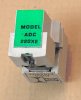
In the box, more importantly than the blah turntable, were two cartridges- an ADC 230ex and also a 240 ex (see photo).

I think this is a pretty nice find. Neither of them have a stylus, just the bodies.

Few questions, then for anyone who knows ADC carts.

  • Does anyone have any comments on comparing these two carts? (I would guess they're similar to each other).
  • How would they compare to the ADC XLM?'
  • ...to Shure V15's?
  • Also, any suggestions for styli, based on experience?

Many thanks in advance for your replies.

David
 

Attachments

  • 20160716_211354.jpg
    20160716_211354.jpg
    52.3 KB · Views: 111
Register to hide this ad
Similar to the point of identity, they're both private-label versions of the 220XE, ADC's least-expensive elliptical, which came along in 1970, the same year Shure Improved its most-expensive cartridge, the V15 Type II.
ADC 220XE (2).jpg
ADC 220XE

So comparing them would be a little unfair, but fun, and the 220XE does have a different sound that you might prefer, as I did myself 45 years ago. It's surprisingly capable, considering it often sold for around $10 (list was $20).

The 220XE is a member of what we informally refer to as the Brick Era of ADC's cartridges. It lasted from about 1968 to the arrival of the original XLM in 1972. The Bricks are similar enough to the original XLM that if you liked the XLM, you'll like the Bricks.

The Bricks were heavier than the XLM, though, and need either very light tonearms or else one of the Brick styli with stiffer internal rubber bits that allowed them to track up to 1.5g, and that's what the 220XE has. You can still get new-old-stock R-20XE styli for the 220XE, but they won't be as cheap as ADC originally intended. See if anyone in Canada offers a genuine R-20XE stylus. But you can also swap in R-50XE, R-60XE or R-90XE styli (I own all of these). Pfanstiehl indexed them all as 104-DE, and if you can't find them in Canada, there are a couple of US vendors that stock them.
 
Last edited:
Similar to the point of identity, they're both private-label versions of the 220XE, ADC's least-expensive elliptical, which came along in 1970, the same year Shure Improved its most-expensive cartridge, the V15 Type II.

ADC220XE2_zps8c77d94c.jpg


So comparing them would be a little unfair, but fun, and the 220XE does have a different sound that you might prefer, as I did myself 45 years ago. It's surprisingly capable, considering it often sold for around $10 (list was $20).

The 220XE is a member of what we informally refer to as the Brick Era of ADC's cartridges. It lasted from about 1968 to the arrival of the original XLM in 1972 and, aside from producing some top models like the 25 and 10E Mk IV, acted as test beds for ideas that showed up as features in the XLM-- electrodynamic damping of high frequencies, extremely light tracking, and an unusually clean, even "sweet", top end. Also, very important, value for money. ADC's designs were, in retrospect, amazingly consistent.

The Bricks were heavier than the XLM, though, and need either very light tonearms or else stiffer rubber bits that made them track around 1.5g, and that's what the 220XE has. You can still get new-old-stock R-20XE styli for the 220XE, but with the exchange rate being what it is, it won't be as cheap as ADC originally intended. See if anyone in Canada offers a genuine R-20XE stylus. But you can also swap in R-50XE, R-60XE or R-90XE styli. Pfanstiehl indexed them all as 104-DE, and if you can't find them in Canada, there are a couple of US vendors that stock them.

wualta,

Thanks so much for the very thorough reply. I now have pretty good context for what these cartridges are. I wonder why it is that ADC made so many cartridges that were so very similar (220, 230, 240, etc?) and some would say almost indistinguishable from each other.

By the sounds of it, it'll be worth getting a single stylus for the pair I have, as the stylus should be interchangeable, and give them a listen/compare for myself.

I was thinking of springing $60US for an elliptical JICO replacement stylus. I've had SAS JICO's in the past and been very pleased. But I'll look into those you suggest too.

I have a feeling ADC's are pretty cool in that they are probably excellent value for money and great sounding, if a bit of an ugly duckling (which I actually don't mind) but I'll let my ears be the judge.

Thanks again!
 
A known-good US vendor that ships to Canada, should your search for local sources prove fruitless.
 
Last edited:
Fixed it. Thanks!
Oh, and while I'm thinking of it, you'll read authoritative-sounding statements on the interweb from folks you trust to the effect of "all ADC [Brick] bodies are the same".

Not true, especially if you actually measure them.
 
Last edited:
Hey, this is great info. So the XLM is not a brick. Is it superior to the brick series? Any subjective evaluations or comparisons on sound character or quality?
 
...So the XLM is not a brick.
No, the XLM is a Turkish slipper. Or a pointy Italian shoe. Or something other than a brick or concrete block with parallel sides and sharp right angles. Maybe a ballet slipper? We should have a contest.
Is [the XLM] superior to the brick series? Any subjective evaluations or comparisons on sound character or quality?
The original 1972 XLM used much the same tech as the last top model Brick, the 10E Mk IV, but the XLM body is lighter-- it weighs around 2 grams less all up, which as you can imagine is a welcome advantage when you're using a stylus that's so softly sprung that it tracks at less than a gram. Later XLMs and ZLMs are better built, plus they're more capable, more highly refined versions of the original design, capable of superb sound and worth pursuing.
 
Last edited:
Listening to fleet wood Mac Tango in the night on my Pioneer PLX1000 using and ADC220x.

This cart came with my Lenco when I bought it... And didn't use it for some time. Sounds very nice, balanced, and smooth... Much better than in the Lenco... Really enjoying it. Tracks at 1.2 g
 
I'm using a 990, from the previous to the brick range. Not perfect, but surprisingly listenable. Tossed it in because the various higher end MMs and low/mid end MCs were not doing it for me, and I'd tried, with surprising results, an early 60s Stanton, which was dynamic and exciting in a different system, and was curious. It's been in there for months. So you may like what you hear.
 
I'm using a 990, from the previous to the brick range. Not perfect, but surprisingly listenable. Tossed it in because the various higher end MMs and low/mid end MCs were not doing it for me, and I'd tried, with surprising results, an early 60s Stanton, which was dynamic and exciting in a different system, and was curious. It's been in there for months. So you may like what you hear.

Definitely going to give it a shot. I wonder what replacement stylus would be best? I am thinking of going with a JICO conical or elliptical.
 
I wonder what replacement stylus would be best? I am thinking of going with a JICO conical or elliptical.
I'd love to be proven wrong, but I suspect that the Jico styli for the 220XE family (Pfanstiehl 104-DE)-- the elliptical ones-- are all the same.

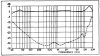
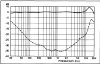
After all, the originals had specs that differed, but not by very much¹. For kicks, take a look at the Feb 1971 Gramophone test of the 220XE family. Here are the graphs for the 220X conical (left, VTF=2g) and the top beige model, the 550XE (right, VTF=1.5g):
220X FR-sep graph, Gramophone, Feb 1971 Capture.JPG Gramophone 1971 550XE.JPG

The similarities in the graphs are remarkable, and test author John Borwick points out that while there were audible differences between the 220X and 550XE (and the 990XE, priced midway between the other two), "...the differences were indeed small and might not show at all in some systems.."

¹We'll see this pattern again in the blue K series of cartridges in 1975.
 
Last edited:
Back
Top Bottom