• The move to the new server is done. There are some software and database maintenance updates in process. This has us passing the hat around to help out. We appreciate any donations. Seriously, even a dollar helps. The payment page may be found here - https://www.audiokarma.org/support.html

Adcom GFP-555 Preamp's phono stage vs Rega Fono

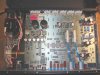
Although I don't listen much to the 565 lately, I'd never trade or sell it. Bought mine used around 5 years ago and it included a tweak I'd completely forgotten about and made me laugh after removing the top cover. Applied to all the caps and maybe other components too were little round circles in various colors sorta like the holes from a hole punch but smaller and in glossy colors. Thought they called them dots and they were supposed to make the parts sound better.

Anyone else remember 'em?

Dave/ChairSpud
 
Although I don't listen much to the 565 lately, I'd never trade or sell it. Bought mine used around 5 years ago and it included a tweak I'd completely forgotten about and made me laugh after removing the top cover. Applied to all the caps and maybe other components too were little round circles in various colors sorta like the holes from a hole punch but smaller and in glossy colors. Thought they called them dots and they were supposed to make the parts sound better.

Anyone else remember 'em?

Dave/ChairSpud

Dots you say, dots hummmmmmmmmmmmmmm Sound like something out of Alice In Wonderland. Dots lots and lots of dots.............:D
 
Although I don't listen much to the 565 lately, I'd never trade or sell it. Bought mine used around 5 years ago and it included a tweak I'd completely forgotten about and made me laugh after removing the top cover. Applied to all the caps and maybe other components too were little round circles in various colors sorta like the holes from a hole punch but smaller and in glossy colors. Thought they called them dots and they were supposed to make the parts sound better.

Anyone else remember 'em?

Dave/ChairSpud
I vaguely recall something like "Electret" film appliques that may have been such a tweak. I was more concerned with getting stuff working right and keeping it that way than 'going to the fringe'.
However, some tweaks like the famous/notorious "Stoplite" green liquid chalk pen actually did what was claimed with many earlier CD players that couldn't cope with the diffracted light signal bouncing around the interior of the disc and exiting delayed into the photo-optical pickup head. I used it and it definitely cleaned up the sound of the highly ranked entry-level Rotel player I got around 1990.
 
Last edited:
i too found the green ink/paint tweak to actually work and got lots of flak from naysayers who probably never bothered to actually try it themselves. still i maintained in public that it works, i am not one to buckle when i am right,
 
Don't know what the dots were made of, if I get a chance will open the 565 and take a pic.

Was always skeptical about the green marker treatment till running across a batch of Sony rewritable discs that refused to play in certain machines. In desperation I tried the green marker and it worked!

Dave/ChairSpud

Edit: Just took a pic inside 565, sorry for the poor quality but green and white dots on the cover, transformer cover, pots, caps, circuit board, opamps etc. Dots appear to have three layers white+black+white and green+silver+silver. Glad I checked cause a few green ones are curling up looking like they might want to fall off and the silver layer looks conductive.

Wonder if it'll sound as good after removing a few green dots?
 

Attachments

  • Dots_565.jpg
    Dots_565.jpg
    96.2 KB · Views: 56
Last edited:
To be brutally honest most line stages are total crap in comparison to a simple bypass parity check with a stepped attenuator and some component video cabling from signal source component directly to the power amp, a demo I never tire of performing. The point is the the Adcom's line stage's probable sonic incompetence could be swamping any meaningful differences, never mind it's phono stage probably done with similar approach.
Something like a CNC or Elliott PO-6 phono stage without a preamp would impress mightily if the power amp is any good.

Would you please tell me more about the stepped attenuator you use in place of a preamp in your system? Where would I go to buy one of these?...Radioshack?? Would I have to build one? I am not very electronically inclined, but I can solder. Eliminating my Adcom preamp sounds sooo much better. Thanks for the initial mention of this.
 
remember that with passive systems like that, cable length and capacitance is a major factor. i dont know all the details but it can be searched easily, i junt never felt that i wanted that much of a hassle. my friend had a placette passive that was a pain to adjust gain (attenuation) with. i am not even that much of a remote control guy for audio but for tv/video its o.k.

bringing up the B&K pre/pro i had, it was VERY transparent and one of those could be affordable (they're obsolete in today's a/v reality) and used in a stereo only system.
 
Would you please tell me more about the stepped attenuator you use in place of a preamp in your system? Where would I go to buy one of these?...Radioshack?? Would I have to build one? I am not very electronically inclined, but I can solder. Eliminating my Adcom preamp sounds sooo much better. Thanks for the initial mention of this.
Sorry about the delayed response. I'd not yet subscribed to this thread.
There are some such stepped pots on the e-place, this is a one good for the money and this purpose; # 200722292253. Also find some RCA sockets, 8 x2 for the inputs and outputs, #12083141714. Low capacitance video component cabling from a thrift is an economical way to provide the interconnects, get the shorter ones.
You can get a project box, a 6 position/2 pole rotary input selector switch and knobs from RatShak.
Hook-up is simple, wire the attenuator as a potentiometer with the inputs from the rotary selector switch to the top (CW end) of the pots channels, and the output to the amp jacks from the centers of the pot. The ground common return is to/from the CCW end of the pot and all returns should be grounded to the case unless the system won't tolerate a common grounding of channels. In this case the channel ground returns stay separate and isolated from the case and a separate ground wire goes from the case to the power amp's case. The latter shouldn't be necessary in most systems.
 
Last edited:
Sorry about the delayed response. I'd not yet subscribed to this thread.
There are some such stepped pots on the e-place, this is a one good for the money and this purpose; # 200722292253. Also find some RCA sockets, 8 x2 for the inputs and outputs, #12083141714. Low capacitance video component cabling from a thrift is an economical way to provide the interconnects, get the shorter ones.
You can get a project box, a 6 position/2 pole rotary input selector switch and knobs from RatShak.
Hook-up is simple, wire the attenuator as a potentiometer with the inputs from the rotary selector switch to the center of the pots channels, and the output to the amp jacks from the top (CW end) of the pot. The ground common return is to/from the CCW end of the pot and all returns should be grounded to the case unless the system won't tolerate a common grounding of channels. In this case the channel ground returns stay separate and isolated from the case and a separate ground wire goes from the case to the power amp's case. The latter shouldn't be necessary in most systems.

Thanks so much for the detailed response. I will dig into this and try to put an attenuator together. Once again, I appreciate the help.
 
Thanks so much for the detailed response. I will dig into this and try to put an attenuator together. Once again, I appreciate the help.

Correction posted in my prior response, the input goes to the clockwise outside legs of the pot, the output to the pot center legs with the channel common return/grounds to the CCW end legs of the pot
 
Last edited:
Correction posted in my prior response, the input goes to the clockwise outside legs of the pot, the output to the pot center legs with the channel common return/grounds to the CCW end legs of the pot

Oh ok, thanks for the correction.
 
Update...
I recently purchased a used (mint) Mcintosh C29 preamp and am really enjoying the internal phono stage. I have compared it side by side with my Rega Fono MM and can honestly say I prefer the vintage Mac. I was kinda figuring the separate Rega Fono to have the upper hand on a piece of gear from the late seventies/early eighties, but it hasn't proved so to my ears. The Rega is great, but don't think its got what it takes to best the old Mac pre. Gotta love vintage Mcintosh! Anyone else ever compared these two phono stages??
 
I think to some extent people just like what they're accustomed to. It's like being raised on a type of food. If you've always heard and enjoyed a warmer, more lush sound, there's no reason why a leaner, more detailed sound is going to appeal to you.
 
I think to some extent people just like what they're accustomed to. It's like being raised on a type of food. If you've always heard and enjoyed a warmer, more lush sound, there's no reason why a leaner, more detailed sound is going to appeal to you.

That does indeed make sense Bob. I was wondering if it was just my ears, but apparently the Rega really is more lean/detailed than the Mac. I havn't found many reviews on the Rega compared to the nice, internal, older phono stages like in the C29.
 
try comparing (of course there is NO comaprison) the sound of the phono section in question to the sound of the same music on a CD through your system. the tonal balance should be close.
 
Back
Top Bottom