• The move to the new server is done. There are some software and database maintenance updates in process. This has us passing the hat around to help out. We appreciate any donations. Seriously, even a dollar helps. The payment page may be found here - https://www.audiokarma.org/support.html

Adjusting Tone Arm Cue Drop Speed on Yamaha PF-1000

62sunbeam

Raconteur
My new to me Yamaha PF-1000 drops the tone arm pretty quickly when I use the cue feature.

Does anyone know if there is a way to adjust this rate of descent?

It goes up nice and slow.

Thanks

Eric
 
Register to hide this ad
There is some info here http://audiokarma.org/forums/showthread.php?t=334460 and here http://www.audiokarma.org/forums/showthread.php?t=334025 on fixing the problem with other turntables. Some of the advice about using silicone damping fluid, or silicone diff oil from a radio control hobby shop, will also help in your case.

There is a service manual at vinylengine to suit your turntable – you just have to be registered to download it, but it’s free to register – see here http://www.vinylengine.com/library/yamaha/pf-1000.shtml . Unfortunately it doesn’t give much information on how to service the cueing, but it does show how to remove the tonearm assembly, should you need to do that. It will just be a matter of playing around with it to see how it comes apart. You may also be able to get the fluid in from the top by working the cueing up and down, as described in the other threads.
 
I have a PF-1000 that I have had since new in 1984. Still a great table, with auto lift that none of the newer tables have, regardless of cost. I just refurbished it a little over a year ago and had the same issue. What has happened is the very viscous silicone damping fluid has leaked out of the cueing mechanism over the years.

Replacing the fluid can be done fairly easily. You'll need to get some replacement fluid. You can get it from Turntable Basics (be prepared to wait weeks for it) or you can use at least 50,000cp diff-lock silicone oil for RC cars. You should be able to get that at a hobby store that deals with RC cars. The higher the number the more viscous the fluid and the slower the arm will descend. The fluid from Turntable Basics is 300,000cp.

The cueing mechanism works by a rod moving in a cylinder that contains the fluid. The viscosity of the fluid is what determines the rate of descent. To reload the cueing you'll need to remove the arm from the plinth . Do that by removing the three allen screws holding it to the plinth and unplugging the two plugs that connect the tonearm wires and solenoid wiring to a PC board.

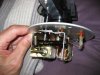
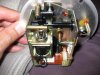
The lift mechanism is actuated by a solenoid that raises the rod and then the arm at the end of the record or when the cueing button is pushed. As shown in the photos, the cueing arm is held underneath by an arm held by the screw with the red loctite on it and by a set screw above. The lift mechanism is the rod with the spring. You'll need to remove the red screw and rotate the arm out of the way to remove the cylinder being careful that the retaining arm does not dislodge from its mounting point at the other end. You'll also need to loosen the set screw above and remove the semicircular lift to get the cylinder out.

Once you dismantle the mechanism remove the inner rod and clean it and the inside of the cylinder thoroughly. Then recoat the rod with the new fluid and reassemble. It should work fine now for years.

See this thread for additional info http://www.audiokarma.org/forums/showthread.php?t=236056

Good luck
 

Attachments

  • IMG_0039.jpg
    IMG_0039.jpg
    76.6 KB · Views: 183
  • IMG_0040.jpg
    IMG_0040.jpg
    84 KB · Views: 162
Last edited:
BTW when you remove the arm from the plinth, only remove the 3 allen head screws and not the slotted screw. That screw holds the underlying mechanism to the arm structure. If you follow the thread that I linked to in the previous response you'll see additional photos, including one from the top, that I posted when I was first going through this.
 
I have the PF-1000. You need to remove the steel shaft, clean and re oil it with proper friction oil. that shaft has several "rings" milled in it where it rides the plastic tube. That's where your oil will provide friction. Just adding oil from the top will not do anything as it wont find its way to the shaft unless its to thin to be of use anyway. I use Lucas Oil Stablizer with Colloidal silica added to taste. Silica thickens the oil and provides friction. You can mix the amount of friction to dial in the exact speed you desire. Takes experimenting but once you find your mix you have a jar of it for life.
 
Last edited:
Back
Top Bottom