monkboughtlunch
Super Member
Need forum expertise on this issue:
1. Aftermarket car receiver is by Pioneer. Pioneer manual states "When speaker output is used by 4 channels, use speakers over 50 W (maximum input power) and between 4 Ω to 8 Ω (impedance value). Do not use 1 Ω to 3 Ω speakers for this unit."
2. I've installed 4 ohm aftermarket speakers in the front door, rear door and dash locations.
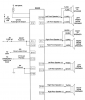
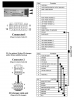
3. I suspect the auto manufacturer wired the front door and dash speakers in parallel. If so, does this half the impedance the amp "sees," effectively dropping the 4 ohm impedance to a 2 ohm value for the front channels?
4. If so, since 2 ohm is not optimal for the Pioneer receiver, is there a way this can be fixed? For example, is it possible to increase the impedance "seen" by the car receiver by adding a series resistor to each of the dash speakers so that the receiver "sees" 4 ohms instead of 2 ohms for the front channels? Or other solution?
5. If so, what type of resistor and values would I need?
Thank you!
Last edited: