

You are using an out of date browser. It may not display this or other websites correctly.
You should upgrade or use an alternative browser.
You should upgrade or use an alternative browser.

lotus23bsr
New Member
I’m glad you sorted it all out.
Other than that bit of frustration, are you enjoying the build so far?
Thanks!
Yes I am enjoying it, things are going well, I have one amp module done.
Gonna start on the other tomorrow morning.
Gerry

MKG
Elvish-mark’d abortive, rooting hog
Bathroom isn’t finished but almost. Just need to install the last two pieces of trim and touch up some paint.
Amp isn’t finished but almost, I’ve started installing everything into the chassis.
Neither will be finished until later in the week when I’m not on call, or potentially until the weekend after next which is the next time where I have days where I don’t work and am also not on call.
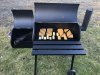
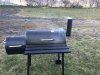
I put some cheese on to smoke and made some more progress with the build today.
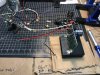
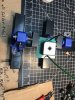
I did my usual Micah move and used brute force when finesse was required (...the same reason I currently have a broken finger, although that was obtained during a stereo installation in my car back in November- managed to break it in a spot that takes 6 months to heal) and stripped one of the speaker jacks. That’s why if you zoom in on the pics you’ll notice that the right channel ground is mounted before the bolts rather than between. I’ll hafta order another but in the meantime it’s solid and stable. Less so if I were to unscrew and rescrew the binding posts, but I use banana plugs.
Amp isn’t finished but almost, I’ve started installing everything into the chassis.
Neither will be finished until later in the week when I’m not on call, or potentially until the weekend after next which is the next time where I have days where I don’t work and am also not on call.
I put some cheese on to smoke and made some more progress with the build today.
I did my usual Micah move and used brute force when finesse was required (...the same reason I currently have a broken finger, although that was obtained during a stereo installation in my car back in November- managed to break it in a spot that takes 6 months to heal) and stripped one of the speaker jacks. That’s why if you zoom in on the pics you’ll notice that the right channel ground is mounted before the bolts rather than between. I’ll hafta order another but in the meantime it’s solid and stable. Less so if I were to unscrew and rescrew the binding posts, but I use banana plugs.
Attachments
-
 27ED58EE-AE9A-4D4D-BBB2-DD25580CEBAA.jpeg149.1 KB · Views: 83
 -
 F8672EA9-1145-4185-A669-1404B4FBCFC5.jpeg71.3 KB · Views: 82
 -
 31416D17-C5BA-4748-87E9-BE48E3B777EE.jpeg169.1 KB · Views: 82
 -
 0400A3F8-86A7-409E-BB32-D06483831176.jpeg144 KB · Views: 83
 -
 02721749-FD46-46E4-93D8-6341158266E6.jpeg70.5 KB · Views: 82
 -
 2D5AB49F-8396-4163-8378-57FC5545B5DC.jpeg64.5 KB · Views: 88

I put some cheese on to smoke and made some more progress with the build today.
Been following the build with great interest.
But what really caught my immediate attention was the smoked cheese! Looks good!

invaderzim
Super Member
... populating boards and soldering things or repairing things is my destresser/therapy. ...
It is amazing how de-stressing it can be. I keep building amps that I have no need for.
Can't wait to hear your impressions. I've wanted to build one for awhile myself.
There is a pretty glowing review for the finished product here:
https://www.stereophile.com/content/akitika-gt-102-power-amplifier
Last edited:
MKG
Elvish-mark’d abortive, rooting hog
My entire shop still smells of hickory smoke and it’s making me hungry.
Finished the build tonight.
The red transformer wire came a bit damaged from the factory, fixed that with a bit of heat shrink tubing.
Speaking of heat shrink tubing, the bit they including was too small to easily fit over anything I needed it to fit over so I used some of my own in a slightly larger size to avoid any frustration.
All in all it was a very enjoyable, easy build. There was none of the hair pulling wtf frustration involved in my Chinese kit builds.
I would definitely recommend it to beginners and experienced builders alike- for the combination of ease and quality (and economy!)
Ignore any cat hair in the pictures, that’s a free bonus of anything that I do in life. It’s a perk of living with 10 rescue cats.
It’s making beautiful music and looking quite good while doing it.
I’ll post a proper review of its sound in a few weeks after I’ve put it through its paces with multiple sources and genres from folk to hip hop to jazz to bluegrass to industrial to techno and a number of stuffs in between, and once I’ve gotten over the “it’s awesome ‘cause I built it!” bias.
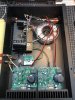
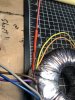
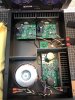
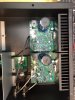


Finished the build tonight.
The red transformer wire came a bit damaged from the factory, fixed that with a bit of heat shrink tubing.
Speaking of heat shrink tubing, the bit they including was too small to easily fit over anything I needed it to fit over so I used some of my own in a slightly larger size to avoid any frustration.
All in all it was a very enjoyable, easy build. There was none of the hair pulling wtf frustration involved in my Chinese kit builds.
I would definitely recommend it to beginners and experienced builders alike- for the combination of ease and quality (and economy!)
Ignore any cat hair in the pictures, that’s a free bonus of anything that I do in life. It’s a perk of living with 10 rescue cats.
It’s making beautiful music and looking quite good while doing it.
I’ll post a proper review of its sound in a few weeks after I’ve put it through its paces with multiple sources and genres from folk to hip hop to jazz to bluegrass to industrial to techno and a number of stuffs in between, and once I’ve gotten over the “it’s awesome ‘cause I built it!” bias.

Scott Harris
New Member
Thanks for your posting. I have the Akitika PR-101 preamp with phono stage on the way. Should start on it this weekend. I ordered it to replace my acurus LS-11 which is beginning to fail in the right channel.
lotus23bsr
New Member
Good job on the amp!
I love the smell of hickory smoke, I have smoked ribs and pork shoulder but I have never smoked cheese before. Looks good!
I started the final wiring yesterday and messed up making one of the shielded cables by accidentally sniping the drain wire too short.
I have some of this shielded cable somewhere in my shop left over from when I CNC'ed my lathe, I just gotta find it LOL.
Gonna get a fresh start this morning and hopefully finish it today.
Gerry
I love the smell of hickory smoke, I have smoked ribs and pork shoulder but I have never smoked cheese before. Looks good!
I started the final wiring yesterday and messed up making one of the shielded cables by accidentally sniping the drain wire too short.
I have some of this shielded cable somewhere in my shop left over from when I CNC'ed my lathe, I just gotta find it LOL.
Gonna get a fresh start this morning and hopefully finish it today.
Gerry
invaderzim
Super Member
Thanks for your posting. I have the Akitika PR-101 preamp with phono stage on the way. Should start on it this weekend. I ordered it to replace my acurus LS-11 which is beginning to fail in the right channel.
I don't have a lot of preamps so that could be really tempting as a build. Looking forward to your impressions of it.
lotus23bsr
New Member
Too bad the cheese didn't turn out.
I finished my amp last Friday. Sounds great, everything worked as it should. The only speakers I have right now are some JBL Control 1, Ø 4-1/2" two ways I think they are?
Going to order some speaker kits w/o knockdown enclosures towards the end of the month. Waiting for it warm up so I can use my table saw and stuff out in the garage to make the enclosures.
Gerry
I finished my amp last Friday. Sounds great, everything worked as it should. The only speakers I have right now are some JBL Control 1, Ø 4-1/2" two ways I think they are?
Going to order some speaker kits w/o knockdown enclosures towards the end of the month. Waiting for it warm up so I can use my table saw and stuff out in the garage to make the enclosures.
Gerry

MKG
Elvish-mark’d abortive, rooting hog
Here’s my official review:
I like it, it’s good.
That is all.
On a more subjective note, it’s currently doing shop duty and replacing an Onkyo M-501.
Comparing the two, the GT is far more... musical. I found the M-501 to be too cold, dry, sterile- while the GT-102 is far more warm and inviting. Not warm in a tube sense, but rather that its dynamics seem more dynamic.
It’s tones seem more tonier.
My god, I’m bad at this reviewing thing.
Mids sound clearer, highs are good, bass is tight. I don’t feel like I need more power, which is a feeling that a number of other amps have left me with.
Most importantly for me- no listening fatigue. That is something that I previously thought was speaker dependent, I wasn’t aware that an amp could affect it as well.
So there ya go. A super enjoyable, easy build of a very decent and capable amp that I highly recommend to anyone who likes to solder.
I like it, it’s good.
That is all.
On a more subjective note, it’s currently doing shop duty and replacing an Onkyo M-501.
Comparing the two, the GT is far more... musical. I found the M-501 to be too cold, dry, sterile- while the GT-102 is far more warm and inviting. Not warm in a tube sense, but rather that its dynamics seem more dynamic.
It’s tones seem more tonier.
My god, I’m bad at this reviewing thing.
Mids sound clearer, highs are good, bass is tight. I don’t feel like I need more power, which is a feeling that a number of other amps have left me with.
Most importantly for me- no listening fatigue. That is something that I previously thought was speaker dependent, I wasn’t aware that an amp could affect it as well.
So there ya go. A super enjoyable, easy build of a very decent and capable amp that I highly recommend to anyone who likes to solder.
What shop tools do you recommend? Solder gun is obvious, but what else is essential? Looks like you had some kind of circuit board holder? Mounted magnifying glass? Anything else? Thanks for the great tutorial and review.Here’s my official review:
I like it, it’s good.
That is all.
On a more subjective note, it’s currently doing shop duty and replacing an Onkyo M-501.
Comparing the two, the GT is far more... musical. I found the M-501 to be too cold, dry, sterile- while the GT-102 is far more warm and inviting. Not warm in a tube sense, but rather that its dynamics seem more dynamic.
It’s tones seem more tonier.
My god, I’m bad at this reviewing thing.
Mids sound clearer, highs are good, bass is tight. I don’t feel like I need more power, which is a feeling that a number of other amps have left me with.
Most importantly for me- no listening fatigue. That is something that I previously thought was speaker dependent, I wasn’t aware that an amp could affect it as well.
So there ya go. A super enjoyable, easy build of a very decent and capable amp that I highly recommend to anyone who likes to solder.
MKG
Elvish-mark’d abortive, rooting hog
What shop tools do you recommend? Solder gun is obvious, but what else is essential? Looks like you had some kind of circuit board holder? Mounted magnifying glass? Anything else? Thanks for the great tutorial and review.
Bare essentials:
A good temperature controlled soldering iron (personally, I wouldn’t go near a circuit board with a soldering gun- tips are too large and it’s too easy to damage a board).
Flux & Rosin (flux for the board, rosin for wires).
Solder (I’m a big fan of 60/40).
Rubbing Alcohol to clean flux off boards after soldering (at least 91%)
A solder sucker or other way to desolder (braid, etc.)
Flush cutter (to clip component leads)
Various small hand tools- screw drivers, pliers, sharp utility knife or xacto.
Digital multimeter.
Things that are nice to have:
A proper soldering station with a variety of tips for the iron and with a desoldering gun.
A circuit board holder. If you search for “circuit board holder” on Amazon you’ll find a number of options.
Helping hands- those things with alligator clips on movable arms with an attached magnifying glass. Do a search for “helping hands” on Amazon and you’ll find a number of options. Make sure you cover that magnifying glass when it’s not in use if there’s any chance that sunlight could hit it, unintentional fires are bad.
Wire Stripper
Various sizes of sharing tubing.
If you’re soldering skills aren’t up to snuff, practice on something unwanted/unneeded (dead electronics, thrift store stuff, etc.)
Happy building!
Bare essentials:
A good temperature controlled soldering iron (personally, I wouldn’t go near a circuit board with a soldering gun- tips are too large and it’s too easy to damage a board).
Flux & Rosin (flux for the board, rosin for wires).
Solder (I’m a big fan of 60/40).
Rubbing Alcohol to clean flux off boards after soldering (at least 91%)
A solder sucker or other way to desolder (braid, etc.)
Flush cutter (to clip component leads)
Various small hand tools- screw drivers, pliers, sharp utility knife or xacto.
Digital multimeter.
Things that are nice to have:
A proper soldering station with a variety of tips for the iron and with a desoldering gun.
A circuit board holder. If you search for “circuit board holder” on Amazon you’ll find a number of options.
Helping hands- those things with alligator clips on movable arms with an attached magnifying glass. Do a search for “helping hands” on Amazon and you’ll find a number of options. Make sure you cover that magnifying glass when it’s not in use if there’s any chance that sunlight could hit it, unintentional fires are bad.
Wire Stripper
Various sizes of sharing tubing.
If you’re soldering skills aren’t up to snuff, practice on something unwanted/unneeded (dead electronics, thrift store stuff, etc.)
Happy building!
Thanks!

MKG
Elvish-mark’d abortive, rooting hog
fantastic build. was the ground loop breaker part of the kit or did you add it yourself? I like how absolutely beefy it is, its probably the biggest rectifier chip that you can get for consumer market
it’s been a few years, but I don’t recall doing any modifications to the build so I’m guessing that the ground loop breaker was part of the kit.