• The move to the new server is done. There are some software and database maintenance updates in process. This has us passing the hat around to help out. We appreciate any donations. Seriously, even a dollar helps. The payment page may be found here - https://www.audiokarma.org/support.html

AM Audio’s RIAA JFET Phono Preamplifier Kit

Hi all,

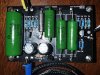
I've build the kit from AM some time ago but in my case it gives rather low output compared to my Cambridge phono stage and I find it sounds as if there is a blanket over the sound, not crisp. I've tried to change the design a little and play with the input capacitance but I can't get it to my taste. Played it with different MM cartridges. Maybe it has some to do with the included parts for the riaa-correction. I'm not convinced. I find my Cambridge module in my C500 sound much better. Any thoughts anyone? By the way: The case and power supply are just for now, if I can get it work better I'll make it a nice one.
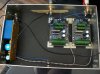
 

Attachments

  • 209_1219.JPG
    209_1219.JPG
    112.4 KB · Views: 52
I've been weighing whether I want to build this. Picked up an old Heathkit tube amp at a yard sale that I think will make a snazzy looking addition to my rack, but I have no desire to restore that guy, and don't want to keep it. It's worthless otherwise, but looks awesome. Am I nuts? Certainly. Will it be the coolest hand built phono pre on the block? Definitely. This will boost the old "I'm afraid to solder stuff that costs actual money" thing I have going. replacement parts won't break the bank here.

@MisterDK I might be hitting you with some questions regarding input switching and whatnot. Working out a couple of options there. I wanna run both tables to it, and I have an external box on hand, but it'd be great if I could switch it at the unit.
 
Hi Ron, I’m using mine with a MC cartridge, and the black box is a step up transformer (SUT). The phono preamp is intended for MM/MI cartridges, which typically put out around 3-5mV. I use the SUT to get the lower output of my MC cartridge, in my case .4mV, up to the required input voltage for the phono preamp. So, with this phono preamp, you can use it with most MC cartridges, but you also need either an SUT, or a “headamp”, when using it with low-output MC cartridges. I haven’t tried this AM Audio phono pre with a MM or MI cartridge yet, but since it works this well with my SUT and a MC cartridge, I’m sure it’ll sound great with a MM or MI too.

Yes - the kit comes with both PCB’s and all the parts to populate the boards. I supplied all the rest myself. You get to solder it together, wire it and put it in your own chassis box. I went with battery power on mine, ‘cause while less convenient, battery power is pure DC and very quiet.

I asked the seller, Andrew, that same question about two boards since only one is shown in the listing. Ask the seller whatever questions about the kit that you may have; he’s pretty responsive and friendly.

Remember though; this is a kit with bare boards, loose resistors, capacitors and transistors. That said, if you have some experience assembling and fabricating, this is an easy kit to build - and it sounds very good.

BTW - I have no affiliation nor relation to the seller. I just wanted to build a nice sounding JFET phono preamp, and that’s what this kit is.
I just bought this kit myself but I am still unsure for the power supply, is there anything i should know to not get surprises?
 
I just bought this kit myself but I am still unsure for the power supply, is there anything i should know to not get surprises?

I powered mine from 2, 12v SLA batteries in series (24v). I had those from another project so just repurposed ‘em. You get pure DC with batteries and that’ll be the cleanest, quietest power supply you’ll find.
If you use similar batteries, you can charge ‘em every few weeks.. The AM Audio phono preamp takes very little current.
 
thanks, i do not have that type of psu, I was thinking about a ultra low noise linear psu or maybe iancanadas's lifepoMKIIII
https://github.com/iancanada/DocumentDownload/tree/master/LifePO4PowerSupply
would you have a suggestion of non-battery psu that you know is really quiet?

I have no such suggestion as I like to use battery power with mine. You could try a plug-in “wall wart” but I’ve not sure how quiet it would be..
If you don’t want to get SLA batteries (Sealed, Lead/Acid), sometimes called “gel cell” batteries, then using something as common as flashlight batteries wired in series would work.. I believe the voltage you want is 24v but this preamp may work well on as low as 18vdc.
 
I have no such suggestion as I like to use battery power with mine. You could try a plug-in “wall wart” but I’ve not sure how quiet it would be..
If you don’t want to get SLA batteries (Sealed, Lead/Acid), sometimes called “gel cell” batteries, then using something as common as flashlight batteries wired in series would work.. I believe the voltage you want is 24v but this preamp may work well on as low as 18vdc.
ian's LifePO4PowerSupply is a battery powered PSU: look it up, it's actually quite nice.

I have really big problems with my am audio dual mono jfet preamp as it is right now I need HELP!!
I have the board soldered a few days now and i tested it this weekend, it's totally unusable as it is right now, I am getting this really loud hummmmm and buzzzzzz and also it crackles and pop a lot..
I have followed the simple directions assembly directions, although 70% of the parts weren't identified! I managed to get all the info I needed from the web.
There was an issue when i received the package, not all the parts were the same as what was pictured and written on the ad, some of them not even the same model. The russian PIO's. were mostly different same voltage (or higher) and same uF though.
First, i tried putting two 9Volts batteries in series, tested to see if it was in fact giving me 18v, it was... but when i plugged the neg and positive wires from both preamps to the neg and pos of the (18v battery) and the L + R from the turntable to the L + R of the preamps and the output of the preamps into the phono in
Just thought I’d give this thread a bump. This phono pre is sounding very nice. Got about 50 hours on mine now.
Very smooth sounding, great detail and nice, quiet background. Happy I built one of these kits.

@dogwan - how’s yours sounding now. Make any changes on it?
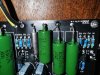
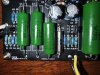
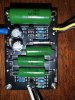
Could I ask for a clear picture of your wiring or schematic. Mine does crazy crackling and pop sounds and really bad sound like terribly muffled I must have done something wrong.
I tried 2 9v battery, and 2 Walworth in serie. Same thing. Any ideas?
 

Attachments

  • IMG_20210705_010743.jpg
    IMG_20210705_010743.jpg
    149.9 KB · Views: 35
  • IMG_20210705_010749.jpg
    IMG_20210705_010749.jpg
    170 KB · Views: 32
  • IMG_20210705_010050.jpg
    IMG_20210705_010050.jpg
    144.2 KB · Views: 33
  • IMG_20210705_010130.jpg
    IMG_20210705_010130.jpg
    162 KB · Views: 34
ian's LifePO4PowerSupply is a battery powered PSU: look it up, it's actually quite nice.

I have really big problems with my am audio dual mono jfet preamp as it is right now I need HELP!!
I have the board soldered a few days now and i tested it this weekend, it's totally unusable as it is right now, I am getting this really loud hummmmm and buzzzzzz and also it crackles and pop a lot..
I have followed the simple directions assembly directions, although 70% of the parts weren't identified! I managed to get all the info I needed from the web.
There was an issue when i received the package, not all the parts were the same as what was pictured and written on the ad, some of them not even the same model. The russian PIO's. were mostly different same voltage (or higher) and same uF though.
First, i tried putting two 9Volts batteries in series, tested to see if it was in fact giving me 18v, it was... but when i plugged the neg and positive wires from both preamps to the neg and pos of the (18v battery) and the L + R from the turntable to the L + R of the preamps and the output of the preamps into the phono in

Could I ask for a clear picture of your wiring or schematic. Mine does crazy crackling and pop sounds and really bad sound like terribly muffled I must have done something wrong.
I tried 2 9v battery, and 2 Walworth in serie. Same thing. Any ideas?
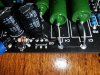
Couple things, can you verify that the solder bridge between gate and source on one of the JFETs below is just an illusion?

730Bqge.png


Also, the picture doesn't show the transistor fronts, but can you verify the JFETs are in Q1 and Q2, with the bipolar in Q3?

Also, the power requirements are listed as 24-28VDC on website, why use 18V?
 
Couple things, can you verify that the solder bridge between gate and source on one of the JFETs below is just an illusion?

730Bqge.png


Also, the picture doesn't show the transistor fronts, but can you verify the JFETs are in Q1 and Q2, with the bipolar in Q3?

Also, the power requirements are listed as 24-28VDC on website, why use 18V?
I tried with 2 9v batteries following my readings here, someone which I don't remember the username, in another thread about the kit, suggested that it has been done successfully, so I tried it but what I am doing right now is with two 12v wall worth in series:24v.
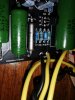
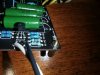
No bridges anywhere... Here's some more pictures
. IMG_20210706_084711.jpg IMG_20210706_084711.jpg IMG_20210706_084705.jpg IMG_20210706_084658.jpg IMG_20210706_084650.jpg IMG_20210706_084637.jpg IMG_20210706_084632.jpg IMG_20210706_084602.jpg IMG_20210706_084450.jpg
 
Hey folks, I just finished building one of these AM Audio JFET, dual mono phono preamp kits and really like the kit and its sound. I discovered this after looking into another JFET kit (those offered by Boozehound) and doing some research on the circuit, which is a variation of the “Le Pacific” phono preamp.

The AM Audio kit comes with two PCB’s; one for each channel, and all the electrical parts to populate the boards. Most capacitors are surplus Russian paper in oil type and have a good reputation for their sound quality. The boards and parts are of good quality and instructions easy to follow. And - best of all for cheapskates like me, the kit was well under $100 US, shipped to me from Canada. I’m into mine about $115 total, all built up. If you do happen to order one, tell Andrew that Duane sent you.. ^_^

I have around 5 hours listening on my finished one and I’m liking the smooth and somewhat warm sound it gives. Mine is being used with an SUT and medium output MC cartridge, and I’m using two 12v SLA batteries to power it. Background is very quiet and detail quite good.

A few pictures of mine going together:

Boards soldered up.

View attachment 1884627

Partially wired and boards mounted on double sided PCB for shielding.
Another of the same double sided PCB was used on the other side as well but not pictured here.

View attachment 1884626 View attachment 1884628

In the box and wired up. The box was actually an urn and filled with bagged (pet?) ashes. One of my neighbors brought it to our transfer site where we all take our trash.. I sprinkled the ashes around a big pine tree and re-purposed the nice box, staining it to match my SOTA turntable.

View attachment 1884630

Stud is my ground, copper alligator clips go to my 2 12v SLA batteries, wired in series for 24v.

View attachment 1884631

Finished and playing nicely with my SUT.

View attachment 1884632
Hey folks, I just finished building one of these AM Audio JFET, dual mono phono preamp kits and really like the kit and its sound. I discovered this after looking into another JFET kit (those offered by Boozehound) and doing some research on the circuit, which is a variation of the “Le Pacific” phono preamp.

The AM Audio kit comes with two PCB’s; one for each channel, and all the electrical parts to populate the boards. Most capacitors are surplus Russian paper in oil type and have a good reputation for their sound quality. The boards and parts are of good quality and instructions easy to follow. And - best of all for cheapskates like me, the kit was well under $100 US, shipped to me from Canada. I’m into mine about $115 total, all built up. If you do happen to order one, tell Andrew that Duane sent you.. ^_^

I have around 5 hours listening on my finished one and I’m liking the smooth and somewhat warm sound it gives. Mine is being used with an SUT and medium output MC cartridge, and I’m using two 12v SLA batteries to power it. Background is very quiet and detail quite good.

A few pictures of mine going together:

Boards soldered up.

View attachment 1884627

Partially wired and boards mounted on double sided PCB for shielding.
Another of the same double sided PCB was used on the other side as well but not pictured here.

View attachment 1884626 View attachment 1884628

In the box and wired up. The box was actually an urn and filled with bagged (pet?) ashes. One of my neighbors brought it to our transfer site where we all take our trash.. I sprinkled the ashes around a big pine tree and re-purposed the nice box, staining it to match my SOTA turntable.

View attachment 1884630

Stud is my ground, copper alligator clips go to my 2 12v SLA batteries, wired in series for 24v.

View attachment 1884631

Finished and playing nicely with my SUT.

View attachment 1884632


Could you please provide me with some crucial information, what is the current requirements for these boards as i did not find any mention of this anywhere on his website or ebay, i got some information from you letting me know it was 24v! thanks for that but What is the current requirement? I have been struggling with this, can't seem to find the information nowhere.

I want to pair this with a Linear Audio Silent Switcher V3 board from Jan Didden (already on the way)

Thanks
 
I powered mine from 2, 12v SLA batteries in series (24v). I had those from another project so just repurposed ‘em. You get pure DC with batteries and that’ll be the cleanest, quietest power supply you’ll find.
If you use similar batteries, you can charge ‘em every few weeks.. The AM Audio phono preamp takes very little current.
Couple things, can you verify that the solder bridge between gate and source on one of the JFETs below is just an illusion?

730Bqge.png


Also, the picture doesn't show the transistor fronts, but can you verify the JFETs are in Q1 and Q2, with the bipolar in Q3?

Also, the power requirements are listed as 24-28VDC on website, why use 18V?

where exactly did you see that information on the website, i have been looking for this and it's not there!!!
 
where exactly did you see that information on the website, i have been looking for this and it's not there!!!
I'm surprised it's not in the documentation with the kit, but it's shown under the ebay section for the PCB ...

PCB for RIAA JFET Phono Preamplifier Dual Mono - Two Boards only, Complete Documentation included
* Mini-Max two gain stage design, minimum parts for the maximum sound quality
* Based on well-known Le Pacific passive RIAA equalization topology
* Board is designed for russian's Paper-In-Oil capacitors in signal path
* Dual mono layout to minimize Stereo Crosstalk
* PCB carefully design for the best audio performance
* Active power filter using capacitance multiplier
* Included Schematic Diagram
* Board Layout with parts allocation
* Bill Of Materials.
* The power requirement for this amplifier is 24-28VDC and up to100mA of current for both channels.
 
I'm surprised it's not in the documentation with the kit, but it's shown under the ebay section for the PCB ...

PCB for RIAA JFET Phono Preamplifier Dual Mono - Two Boards only, Complete Documentation included
* Mini-Max two gain stage design, minimum parts for the maximum sound quality
* Based on well-known Le Pacific passive RIAA equalization topology
* Board is designed for russian's Paper-In-Oil capacitors in signal path
* Dual mono layout to minimize Stereo Crosstalk
* PCB carefully design for the best audio performance
* Active power filter using capacitance multiplier
* Included Schematic Diagram
* Board Layout with parts allocation
* Bill Of Materials.
* The power requirement for this amplifier is 24-28VDC and up to100mA of current for both channels.
Where are you getting this from? On amaudio.ca it's not anyways I just went again!Screenshot_20210722_052833_com.android.chrome.jpg
 
Where are you getting this from? On amaudio.ca it's not anyways I just went again!

Well, they don't let you post commercial links here, but like I said above, it is the ebay page for the am_audio PCBs, just search for "PCB for RIAA JFET Phono Preamplifier Dual Mono - Two Boards only"
 
Please be aware that the Russian PIO caps take longer than regular caps to break in. Give this preamp some time and it will start sounding awesome.
Since power draw is very low, some advise to keep it turned on if used regularly.


I have the BoozeHound Deluxe that I made several years ago and that was the case for me.
 
Just a little follow up on my build, it's now completed I used the modified version for 24v of Jan Didden's Linear Audio Silent Switcher V3 board (which i would highly recommend)
everything sounds great, both amps have a little bit of a difference in output gain (+/-1.5 Db) which bugs me a little but maybe it'll settle down in time.
My real issue is that it really has a super low output... I need to put my power amp to max to have a decent (loud) listening session.
any suggestions on what i could modify or add to help the output gain... I'm open to all suggestions!
 
Just a little follow up on my build, it's now completed I used the modified version for 24v of Jan Didden's Linear Audio Silent Switcher V3 board (which i would highly recommend)
everything sounds great, both amps have a little bit of a difference in output gain (+/-1.5 Db) which bugs me a little but maybe it'll settle down in time.
My real issue is that it really has a super low output... I need to put my power amp to max to have a decent (loud) listening session.
any suggestions on what i could modify or add to help the output gain... I'm open to all suggestions!
Hi ! You can change the values of the resistors in the drain circuits of each transistor . We need to increase these denominations a little . Then each stage of the preamp will give a greater gain . But at the same time, you need to control the voltage on the transistor drains . This voltage should be close to 1/2 of the preamp supply voltage-to obtain the maximum dynamic range .... P.S : But as the gain increases, the harmonic distortion of this circuit also increases . For such simple circuits, they can reach 0.2-0.5 % (depending on the gain and signal level ) . That's why the manufacturers of such sets never publish graphs of the distortion spectrum .
 
Last edited:
Back
Top Bottom