
• The move to the new server is done. There are some software and database maintenance updates in process. This has us passing the hat around to help out. We appreciate any donations. Seriously, even a dollar helps. The payment page may be found here - https://www.audiokarma.org/support.html

Amp/Preamp Input/Output Specs

Vlad Soare

Politically incorrect since 1976
Subscriber
Hello,

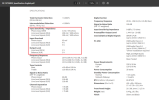
The input/output specifications of my preamp (Rotel RC-1572 MkII) look like this:
1745402293846.png

This means that if the input signal is 200mV RMS on RCA or 300mV RMS on XLR, then the output signal will be 1V RMS on RCA or 2V RMS on XLR when the volume knob is turned all the way to max.
Is this correct?
Also, it can accept higher input voltages, i.e. up to 4V RMS on RCA or 5V RMS on XLR, before being overloaded. Right?

But what happens in this case? Will the output voltage still be limited to a maximum of 1V on RCA and 2V on XLR? Or will it increase proportionally?
For instance, if the input signal is 2V on RCA, will the output signal be 10V on RCA and 20V on XLR when the volume is set to 100%? Or will it be attenuated accordingly, so that it will never exceed the rated value of 1V RCA/2V XLR no matter what?

Thank you.
 
Last edited:
Register to hide this ad
The reason I'm asking is that I'm looking at the specs of my power amp (Rotel RB-1582 MkII), which look like this:

1745404447608.png

My understanding is that it will generate its full rated power when the input signal is 1.9V RMS on RCA or 3V RMS on XLR. Also, it is guaranteed not to go into clipping as long as the input signal isn't higher than that. Is this correct?

So, the preamp looks like a perfect match. As long as its output never exceeds 1V RCA/2V XLR, it's certain that the amp will never clip, not even when the volume knob is turned all the way to the right, not even when the music is recorded at 0 dbFS, and there's still plenty of room to spare. Right?

But I'm not sure whether the preamp will indeed never exceed 1V RCA/2V XLR. Can it exceed it (and thus drive the power amp into clipping) if its own input signal is higher than its input sensitivity?
 
Last edited:
As long as its output never exceeds 1V RCA/2V XLR, it's certain that the amp will never clip, not even when the volume knob is turned all the way to the right, not even when the music is recorded at 0 dbFS, and there's still plenty of room to spare. Right?

But I'm not sure whether the preamp will indeed never exceed 1V RCA/2V XLR. Can it exceed it (and thus drive the power amp into clipping) if its own input signal is higher than its input sensitivity?
I think you've misunderstood the specs. 1.9V at the power amp's inputs will drive it to full power output. A higher signal will drive it into clipping.

The preamp's specs state its output as 1V. That's the output at which the rest of the specs are measured, ie distortion, S/N ratio etc. It does not mean the output will never go above 1V. 200mV at the input will give 1V at the output (when the volume control is at max.), so the gain is a factor of 5, or 14dB. Whatever signal appears at the input will be amplified by14dB when the volume control is at maximum, but of course the volume control can be turned down, so any amplification between minus infinity and 14dB is possible.
The input overload spec is a bit ambiguous. It states that 4V at the input is the maximum before distortion, but it's not clear if that is with the volume control at maximum or if it's regardless of the position of the volume control. Anyway, 4V at the input will give 20V at the output.

The preamp is clearly capable of exceeding 1V and driving the power amp into clipping. However, that's perfectly normal. Otherwise you would have no headroom at all.
 
Thank you. I think I understand now.

My MM phono cartridge has a rated output voltage of 4mV. I'm assuming this is as high it can possibly get, when the groove modulation on the LP is at its maximum possible level.
This is 33.3% higher than the 3mV input sensitivity of the phono stage. So, in the worst possible scenario, say when listening to the cannon fires on the Telarc recording of the 1812 Overture with the volume control at max, the output of the preamp would be 1.33V, which would be well below the 1.9V input sensitivity of the power amp. Therefore, on the phono side I could never, under any circumstances, drive the power amp into clipping, even if I wanted to.
Is this correct?

But the CD player is a different story. My CD player is a Marantz CD6007, whose output is rated at a whopping 2.4V RMS, which is 12 times more than the input sensitivity of the preamp. This means that, depending on the loudness of the recorded track, the output of the preamp can be anywhere between 0 and 12V (with the volume control at max, that is).
So, in order to avoid any clipping, I would need to keep the volume at a level that's low enough to ensure that a 0 dBFS signal on the CD yields no more than 1.9V at the output of the preamp.
But what is that level? How do I find it?
12V is six times higher than the desired 1.9V, which seems to indicate that the volume level should be set at no more than 16% or so. But in reality a comfortable listening level is achieved with a volume level between 40% and 60%, depending on the CD. Actually, I'm not sure if these are percentages. The volume control of the Rotel goes from 0 to 100, but I don't know if a value of 55 on the display means exactly 55% of the maximum gain, or it's just a number on an arbitrary scale.
But if the displayed values are indeed percentages, and the average music sounds good at 55%, then it's almost guaranteed that the peeks will drive the amp into clipping, isn't it?
 
My MM phono cartridge has a rated output voltage of 4mV. I'm assuming this is as high it can possibly get, when the groove modulation on the LP is at its maximum possible level.
The cartridge's output is specified at a particular velocity of stylus motion, usually 3.54cm/sec or 5cm/sec. The cartridge will produce a higher output if the groove modulation, and therefore the stylus motion, is higher than that. The specified output is just a nominal figure. It's a guide.
My CD player is a Marantz CD6007, whose output is rated at a whopping 2.4V RMS, which is 12 times more than the input sensitivity of the preamp. This means that, depending on the loudness of the recorded track, the output of the preamp can be anywhere between 0 and 12V (with the volume control at max, that is).
So, in order to avoid any clipping, I would need to keep the volume at a level that's low enough to ensure that a 0 dBFS signal on the CD yields no more than 1.9V at the output of the preamp.
But what is that level? How do I find it?
You're right, when using CD the output of the preamp is capable of overdriving the power amp. There really is no way to set a volume level on the preamp to guarantee that the power amp is never overdriven. It would be possible, using some test equipment, to determine what the volume level needs to be to give a 1.9V output when the input is 2.45V, but I doubt that would be much use in practice.
There's no need to overthink this. Just let your ears decide. Specs, numbers and calculations work great when you're dealing with sine wave test signals but music is something else.
 
I see.
What if I connect the CD player through a coaxial cable and use the internal DAC of the preamp?
In that case I believe the input sensitivity of the preamp would be irrelevant, since SPDIF is a precise standard which should be implemented in the same manner in both devices. I mean, the CD player would output a 0.5V peak to peak digital signal, while the preamp expects exactly that. So, in this case it would be impossible for the CD player to overdrive the amp. A 0 dBFS signal on the CD should yield 1V at the preamp output with the volume at max. Am I right?

here's no need to overthink this. Just let your ears decide.
I did, but sometimes my ears seem to tell me that something may not be quite right, though it's very subtle and I can't quite put my finger on it.
That's why I'm trying to get a better understanding of how these devices interact with each other, and what happens if one of them doesn't meet the expectations of the other.
 
Last edited:
What if I connect the CD player through a coaxial cable and use the internal DAC of the preamp?
In that case I believe the input sensitivity of the preamp would be irrelevant, since SPDIF is a precise standard which should be implemented in the same manner in both devices. I mean, the CD player would output a 0.5V peak to peak digital signal, while the preamp expects exactly that. So, in this case it would be impossible for the CD player to overdrive the amp. A 0 dBFS signal on the CD should yield 1V at the preamp output with the volume at max. Am I right?
I don't know what the internal architecture of the preamp is exactly, but my guess is that the internal DAC will output an analogue signal which is then fed to the analogue line stage amplifier just like the analogue signal from the CD would be - ie there's practically no difference between the two.
There's no way to guarantee that the power amp will never be overdriven. An accurate VU meter which monitored the preamp's output level would give you a visual indication of clipping, but you don't have that option.
Like I said before, you could perform some measurements to determine the volume control level which would guarantee that overload is impossible, but I'm not convinced you would find that to be of much practical benefit even if you were prepared to do it.
 
my guess is that the internal DAC will output an analogue signal which is then fed to the analogue line stage amplifier just like the analogue signal from the CD would be - ie there's practically no difference between the two.
That seems plausible. But I'm thinking that maybe that DAC, being set up by the same company and integrated in the same device, might output an analog signal that's more in line with the input stage's expectations, rather than twelve times hotter.
 
Last edited:
I did some reading in the meantime. It seems that all CD players have an output of 2V, give or take (usually give). And this isn't something new. They've always been like this. Also, I looked at the specs of some standalone DACs and noticed that all of them output 2V unbalanced or 4V balanced, or thereabouts. So, even though preamps use to have an input sensitivity in the low hundreds of millivolts, their designers are most probably aware that the input signal will always be ten times higher. Under these circumstances, I think it's very likely that the internal DAC of my Rotel will also feed 2V or so to the analog input stage.
I wonder why CD player and DAC manufacturers have settled to such a hot output standard.

Anyway, back to the amp/preamp specs, what does the specified input impedance mean? I mean, sure, I know what an impedance means, but what exactly does that particular value tell me in this context? If, say, one preamp had an input sensitivity and impedance of 200mV and 100k Ohm, and another had 200mV and 10k Ohm, what exactly would be different from a practical point of view? How would I use this information?
 
Last edited:
If, say, one preamp had an input sensitivity and impedance of 200mV and 100k Ohm, and another had 200mV and 10k Ohm, what exactly would be different from a practical point of view? How would I use this information?
For the vast majority of modern gear (ie all CD players, streamers etc.) there's no practical difference because the source impedance would be lower than 10k by a huge margin. It's typically about 200 ohms or less.
There would be some advantage (possibly) of 100k over 10k input impedance when using older gear that has a higher output impedance. Valve gear tends to have a higher output impedance than modern gear.
 
One more question, because I've just noticed something else in the specs:

Screenshot 2025-10-03 at 18.33.49.png
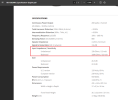
How come the channel separation is worse in balanced mode? Shouldn't it be the other way around?
Sure, I know that 75 dB is more than enough for practical purposes, so I'm not worried about it, but it's just the principle that eludes me. A balanced circuit, using separate grounds for the left and right channels, should have less crosstalk than a single-ended connection, not more, shouldn't it?
Does this mean the preamp is not fully balanced, and that it converts a balanced input into a single-ended circuit internally?
 
Last edited:
Normally there is 15 to 20 db more gain in the preamp stages to allow weak recordings or sources with weak out puts to be played at the levels desired. Usually the the rated output level is reached with the volume control set aT 12:00 o'clock on the dial. It also depends on the audio taper contour of the volume control. Sound is not a arithmetic progression, linear. but geometric logarithmic progression so the volume control has to be carefully designed. Some ontrols come on way to strong below 12:00 and then taper of slowly above 12:00. Which is a real annoyance to us. Others are smooth and very desirable in their progression. Thats something you can only experience by auditioning the piece before you buy it. As long as the output rating of the pre-amp is with in a db or two of the input rating of the power amp with the appropriate out put and input impedances you should be good to go.

Yes very few pre-amps are totally balanced internally. It could also mean its the characteristics of the ourput IC chips or input chips. Where they are not using separate chips for each channel and both channels are in different sections of the same chip. Anything to save a buck.

You will all notice that they use A filtering to get the high signal to noise ration, Which is common now days. So if you hear a faint hum from your speakers don't be surprised!

Ideally with the volume control set at 12:00 the level comming out of your speaker should be just a fraction louder than you would normally listen, too. Thats why its best to have amps with volume controls so you can poperly balance your system to the type of speakers you are using. Today speakers averge around 90 db 1 meter with 2.83 volts, which is 1 watt for 8 ohm speakers and 2 watts for 4 ohm speakers.

Back when everything was referenced to 1 watt at 4 feet no matter the impedance. That way you really could compare 4 and 8 ohm speakers. Average speakers from then, 60's, were more in the 94 to 96 db range. With the exception of the small acoustic suspension speakers which were in the 85 to 88 db region. So with 8 to 12 db differences in efficiencies you see why we needed volume controls on the amps to balance the sound to our pre amps and control back ground noises. Some speakers today are still in the 85 db range with big Klipsch and some JBL being around 100 db to 105 db range in sensitivity. So its very important to match your electronics to your speakers if the amps don't have volume controls. All my amps don't have volume controls anymore. But they match up with current processors and older stereo pre amps very well as they are all made by the same manufacturer.
 
Last edited:
Does this mean that the preamp is not fully balanced, and that it converts a balanced input into a single-ended circuit internally?
Very little gear in the big picture is fully balanced input to output.

The vast majority of gear with balanced connections is singled ended guts, with added circuits at the input and output to create the balanced connections. That could account for it.
 
I see.
That would explain why the channel separation isn't better with the balanced input.
But why is it worse? Shouldn't it be at least the same as the single-ended input? Is this perhaps a side effect of those added circuits?
10 dB looks like a pretty significant difference to me. I could gloss over 0.5 dB, or 1 dB. But 10? :confused:
 
Last edited:
Back
Top Bottom