

You are using an out of date browser. It may not display this or other websites correctly.
You should upgrade or use an alternative browser.
You should upgrade or use an alternative browser.
Amplifier Sensitivity, Decibels, and You!
- Thread starter 240 Volts
- Start date

mjw21a
Super Member
Eh, I prefer to run high efficiency speakers.
Systems
Main living room: 101db 9ohm speakers paired to a 6WPC Class A SET tube amp
Second living room: 97db 4 ohm speakers paired to a 49WPC Class AB push pull tube amp
Computer: 95db 8 ohm speakers paired to a 10WPC Class A single ended SS amp
Bedroom: 91db 8 ohm speakers paired with a 40WPC bluetooth class D amp
Gym: 87db 8ohm B&W DM16 speakers paired with a 40WPC class A NAIM NAP140 inspired amp.
I'd like to get rid of the low average efficiency speakers in the gym. They do sound nice and musical though nowhere near as revealing and nuanced as the more efficient speakers. Only the 49WPC push pull integrated tube amp and the system in the gym is ever turned to 12 o'clock or above.
I've a pair of 98db Toshiba SS-41 (aka Onkyo E-83A) speakers being restored presently which I hope to replace the speakers in my second system with if they sound better. Heck if they sound better than my open back speakers (unlikely) they'll end up in the main system. Perhaps I'll be able to use the 49WPC tube integrated at lower levels with the Toshiba's though then again maybe not. I believe they measured efficiency differently with these older speakers though it aught to work out ok. Being very similar in design to Klipsch Forte or Cornwall speakers tough I'm interested in them.
I find low powered single ended designs paired with high efficiency speakers seem to have superior dynamics to higher powered amplification with lower efficiency speakers. Especially at low volume for late night listening sessions.
Systems
Main living room: 101db 9ohm speakers paired to a 6WPC Class A SET tube amp
Second living room: 97db 4 ohm speakers paired to a 49WPC Class AB push pull tube amp
Computer: 95db 8 ohm speakers paired to a 10WPC Class A single ended SS amp
Bedroom: 91db 8 ohm speakers paired with a 40WPC bluetooth class D amp
Gym: 87db 8ohm B&W DM16 speakers paired with a 40WPC class A NAIM NAP140 inspired amp.
I'd like to get rid of the low average efficiency speakers in the gym. They do sound nice and musical though nowhere near as revealing and nuanced as the more efficient speakers. Only the 49WPC push pull integrated tube amp and the system in the gym is ever turned to 12 o'clock or above.
I've a pair of 98db Toshiba SS-41 (aka Onkyo E-83A) speakers being restored presently which I hope to replace the speakers in my second system with if they sound better. Heck if they sound better than my open back speakers (unlikely) they'll end up in the main system. Perhaps I'll be able to use the 49WPC tube integrated at lower levels with the Toshiba's though then again maybe not. I believe they measured efficiency differently with these older speakers though it aught to work out ok. Being very similar in design to Klipsch Forte or Cornwall speakers tough I'm interested in them.
I find low powered single ended designs paired with high efficiency speakers seem to have superior dynamics to higher powered amplification with lower efficiency speakers. Especially at low volume for late night listening sessions.

frankosport4
New Member
Interesting Reading In This Thread.
Extra Text
When first posting this, had not realized that Radio Shack was still doing business in online form. The Radio Shack web-site lists the following cables ...
Cat no. 42-02377 .. 1/8 inch (3.5 mm) phone jack to 1/4 inch (6.35 mm) phone plug
Cat no. 42-02444 or 42-02461 .. 1/8 inch (3.5 mm) phone plug to RCA phono plug (same as 42-2461 described in original text)
All three cables offered have attenuation of -60 dB.
Original Text
I recall many 1970's High Fidelity magazine test reports on power amplifiers where (depending on the particular amp) an input signal of anywhere from 1.5 volts to 2.5 volts (1500 mv to 2500 mv) was needed to achieve the amp's full rated power output. If the power amp did not have its own level adjustment controls (examples include Dynaco's Stereo 80 and 120), then the adjusting controls would have to be found on whatever the source device was.
With preamps, integrated amps and stereo receivers, individual level adjustment of various source inputs was either limited or not available at all. And there was no guarantee that every source device you connected would have its own output level adjusters.
Seeing mentions of inline attenuation devices reminds me that for many years, Radio Shack sold single-channel (I.E., mono-only) patch cables that were designed to drop high-level signals down to low-level. Such cables would allow portable cassette recorders with only a 1/8-inch (3.5 mm) phone plug mic input to record output from a radio's 1/8 inch (3.5 mm) earphone jack, or from a tape out jack (RCA phono type). Two of these type cables were sold: (1) Catalog # 42-2152, from 1979 onwards, a 1/8-inch (3.5 mm) phone plug at both ends; (2) Catalog # 42-2461, from 1983 onwards, an RCA phono plug at one end, and a 1/8-inch (3.5 mm) phone plug at the other end. If you were going to use the 42-2461 cable with stereo RCA phono outputs, then you'd need an appropriate y-adapter inserted at the source end. If the 42-2152 cable was to be used to record from a stereo earphone jack, be it 1/8-inch (3.5 mm) or 1/4-inch (6.35 mm), then you'd need appropriate stereo-to-mono inline adapters at the source end.
The Radio Shack attenuator cables did not have any type of level adjustment control inserted into them. I never owned either one, so I have no idea as to how much attenuation (in dB or mv) they provided, or what type resistor they used.
Extra Text
When first posting this, had not realized that Radio Shack was still doing business in online form. The Radio Shack web-site lists the following cables ...
Cat no. 42-02377 .. 1/8 inch (3.5 mm) phone jack to 1/4 inch (6.35 mm) phone plug
Cat no. 42-02444 or 42-02461 .. 1/8 inch (3.5 mm) phone plug to RCA phono plug (same as 42-2461 described in original text)
All three cables offered have attenuation of -60 dB.
Original Text
I recall many 1970's High Fidelity magazine test reports on power amplifiers where (depending on the particular amp) an input signal of anywhere from 1.5 volts to 2.5 volts (1500 mv to 2500 mv) was needed to achieve the amp's full rated power output. If the power amp did not have its own level adjustment controls (examples include Dynaco's Stereo 80 and 120), then the adjusting controls would have to be found on whatever the source device was.
With preamps, integrated amps and stereo receivers, individual level adjustment of various source inputs was either limited or not available at all. And there was no guarantee that every source device you connected would have its own output level adjusters.
Seeing mentions of inline attenuation devices reminds me that for many years, Radio Shack sold single-channel (I.E., mono-only) patch cables that were designed to drop high-level signals down to low-level. Such cables would allow portable cassette recorders with only a 1/8-inch (3.5 mm) phone plug mic input to record output from a radio's 1/8 inch (3.5 mm) earphone jack, or from a tape out jack (RCA phono type). Two of these type cables were sold: (1) Catalog # 42-2152, from 1979 onwards, a 1/8-inch (3.5 mm) phone plug at both ends; (2) Catalog # 42-2461, from 1983 onwards, an RCA phono plug at one end, and a 1/8-inch (3.5 mm) phone plug at the other end. If you were going to use the 42-2461 cable with stereo RCA phono outputs, then you'd need an appropriate y-adapter inserted at the source end. If the 42-2152 cable was to be used to record from a stereo earphone jack, be it 1/8-inch (3.5 mm) or 1/4-inch (6.35 mm), then you'd need appropriate stereo-to-mono inline adapters at the source end.
The Radio Shack attenuator cables did not have any type of level adjustment control inserted into them. I never owned either one, so I have no idea as to how much attenuation (in dB or mv) they provided, or what type resistor they used.
Last edited:
frankosport4
New Member
I wonder if anyone ever used one of those cheap mic mixers sold by the likes of Radio Shack or Lafayette as a sort of attenuation device ?? I never used one for such a purpose, but I did find that they sometimes worked and sounded better -WITHOUT A BATTERY- , just turn on the "on" switch and go.
-
-

-
-
Last edited:
Am confused when interpreting the input sensitivity info for my amp (Harman Kardon 7300) and the output of my pre-amp (Marantz av7005) and what I learned in this thread.
The amp states input sensitivity as 200mv/47ohms and the pre-amp states output as 1.2v. Also the preamp states a "Digital D/A output" as 2v at zero db. Am not sure what that is referring to; perhaps just means if using a digital input, it is output at 2v when volume is zero db. And that analog inputs are 1.2v at zero db?
What confuses me is the 200mv input sensitivity and 1.2v output (or 2v? since I use hdmi, and in turn must go through a D/A conversion)
maybe the amp manual is not providing all the input sensitivities and that they are different; for example am using the 7.1 channel input on the amp. Maybe those are different from CD / Tape type inputs.
I set the volume of the amp to -5db, and the volume level when adjusted via the preamp seems inline to when using just the amp. That said I think the HK volume has a slightly different scale compared to the marantz. All that said, when I put the amp volume to zero db, it has volume levels as expected (as adjusted via the pre-amp)
but given the input 200mv / output 1.2v (or 2v?) that should be far outside what the amp can amplify.
any ideas what am misunderstanding?
The amp states input sensitivity as 200mv/47ohms and the pre-amp states output as 1.2v. Also the preamp states a "Digital D/A output" as 2v at zero db. Am not sure what that is referring to; perhaps just means if using a digital input, it is output at 2v when volume is zero db. And that analog inputs are 1.2v at zero db?
What confuses me is the 200mv input sensitivity and 1.2v output (or 2v? since I use hdmi, and in turn must go through a D/A conversion)
maybe the amp manual is not providing all the input sensitivities and that they are different; for example am using the 7.1 channel input on the amp. Maybe those are different from CD / Tape type inputs.
I set the volume of the amp to -5db, and the volume level when adjusted via the preamp seems inline to when using just the amp. That said I think the HK volume has a slightly different scale compared to the marantz. All that said, when I put the amp volume to zero db, it has volume levels as expected (as adjusted via the pre-amp)
but given the input 200mv / output 1.2v (or 2v?) that should be far outside what the amp can amplify.
any ideas what am misunderstanding?
Last edited:

nj pheonix
Lunatic Member
The 200mv is for phono input
The 1.2v is line level (cd, tuner, dac.....)
The 1.2v is line level (cd, tuner, dac.....)
nj pheonix
Lunatic Member
2v is sort of hot but if you don't turn level up it shouldn't be an issue. You could conceivably overload ( loud , distorted). More likely, that would just be louder than other sources when selected. There are line attenuators you could install in interconnects if its a problem but I tend to doubt that'd be the case.
nj pheonix
Lunatic Member
Different amps ( preamps , receivers ...) have Different gain structures. That is, if the volume scale is say, 1 to 10 , 5 on one unit isn't necessarily the same point of gain as the other at 5. Even if 1 and 10 are even in the end. Maybe if you think of it as a more sensitive gas pedal in a car on two equally powerful vehicles. One maybe very gradual while other is less linear.
I'm not loving my description, but I think you're getting the gist.
I'm not loving my description, but I think you're getting the gist.
Awesome! and thank you for the replies; yes I have noticed that different amps seem to have different scales for the volume; paying mind to power ratings. That said when am referring to "volume seems inline compared to using just the amp" is "top end volume levels". In that zero db volume, regardless of marantz preamp or the HK7300 native preamp is roughly similar. I dropped the HK7300 volume down to -5db when using it as "just an amp". At zero it actually sounds like it is bumping up the signal / too loud (perhaps distortion starting, I may try measure for it at some point).Different amps ( preamps , receivers ...) have Different gain structures. That is, if the volume scale is say, 1 to 10 , 5 on one unit isn't necessarily the same point of gain as the other at 5. Even if 1 and 10 are even in the end. Maybe if you think of it as a more sensitive gas pedal in a car on two equally powerful vehicles. One maybe very gradual while other is less linear.
I'm not loving my description, but I think you're getting the gist.
I guess the manual for the HK7300 doesn't state the input sensitivity of the inputs.
So line level refers to outputs / inputs of fixed volume (like a CD player RCA output / input)? If so, is there a different term for the volume controlled RCA outputs of a preamp?
I understand the inputs am using on the HK7300 are expecting a fixed volume input, like a CD player's RCA outputs would be. And that typically the HK7300 would be used to attenuate that signal, but in my case am instead attenuating the signal before the HK7300 does it's attenuation (I have the volume set at -5db). It does seem a bit too loud at zero db, which presumably means the hk7300 is just "passing through" the signal, which is inline with you saying 2v is a bit hot.
just intuiting, but imagine the -5db brings the voltage down to a level more inline with the HK7300 native levels (like when using the the HK7300 to do all processing D/A conversion, preamp and amplifying.
nj pheonix
Lunatic Member
I think I'm missing something.
How are you attenuating before?
How are you attenuating before?
nj pheonix
Lunatic Member
Generally that input voltage # , refers to level needed to drive to full output, which in real world conditions never happens.
I think I'm missing something.
How are you attenuating before?
Am not sure what is being referred to with "before".
when I first got the used 7300 I tried it on it's own. i.e. it did all processing of a digital input signal.
That was to test out the AVR and ensure it works ect.
Then, I hooked up a preamp to the 7300's 8ch direct inputs. I attenuate using the preamp; the 7300 is slightly attenuated with volume at -0.5db.

guille go
New Member
I have a sansui au4900 and a technics sl-pg440, this one comes with an attenuator (level) that lowers the output of the deck by -12db
the amp has 130mv input sensitivity, and the compact 2v output, it gives me about 23.7db, if the technics lowers me 12db, does it mean that the value is 11.7db? and what does it mean? Does it mean that the sound is better? Does it mean that the amplifier works more relaxed?
thanx for the info 240 volts!!!
the amp has 130mv input sensitivity, and the compact 2v output, it gives me about 23.7db, if the technics lowers me 12db, does it mean that the value is 11.7db? and what does it mean? Does it mean that the sound is better? Does it mean that the amplifier works more relaxed?
thanx for the info 240 volts!!!

wkloppen
Member
Hello Guys
Question: Whats better for the amp / sound as I use the volume of the DAC (smsl sanskrit 10 edition MK2) normally to control the volume with my H/K 645VXi and 665VXi. Vrms of the DAC is 2.2 Volt. Input sensitivity of the CD input is 135 mV.
I normally set the amp volume not any higher then let say half the rotation of the knob. Is it better to put the amp volume fully open and control the input or the otherway around?...
Note: Not even sure what I say makes sense to be honest
willem
Question: Whats better for the amp / sound as I use the volume of the DAC (smsl sanskrit 10 edition MK2) normally to control the volume with my H/K 645VXi and 665VXi. Vrms of the DAC is 2.2 Volt. Input sensitivity of the CD input is 135 mV.
I normally set the amp volume not any higher then let say half the rotation of the knob. Is it better to put the amp volume fully open and control the input or the otherway around?...
Note: Not even sure what I say makes sense to be honest
willem

Mosfet_Burnt
New Member
Hello. This is my first post here in AK.
Thanks for this info.
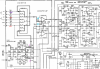
I have a Pioneer A-X530 that I just repaired. The amp works fine now. It's input sentivity is 150mV 50kOhm. The sources I use are normally my laptop or phone and i want to buy a decent usb DAC with 2,1 Vrms output. As expected, the usable range is up to 11 o'clock. But the real issue is that when i am listening at very low volume, one channel is slightly louder because of the pot. So, here comes the questions:
1, if I don't push the amplifier's limits, it's there any real risk of damage? Will the quality be better if I can, somehow, reduce the input voltage to 150mVrms?
2, I wonder if I could replace some of the resistors to create a tension divider inside the device to adapt the input to a sensitivity of, let's say, 1,5 Vrms. Can I do this? Note: I woudn't like to change something that implies reducing the sensitivity of the phono input.
Is it possible to replace the 680 ohm resistors (like R117 for CD) with a tension dividier with 6800 and 680 ohm, for instance? or maybe that will change the input impedance and mess everything?
Is it better to do the tension divider replacing R117 and R131 with 2 different resistors that together ad 220680 ohm but with a different ratio between them, and then modify R115 to compensate the reduction? If so, should I consider R131 only, or both R131 and R133 as a 110k resistor?
Or maybe, just replace R117 with a bigger value?
And what about the Tape Rec outs? I guess that, if I do the adaptions, i don't need to modify it.
... or is it better to leave like it is, and be careful with the volume pot?
Ty in advance for your answers.
Thanks for this info.
I have a Pioneer A-X530 that I just repaired. The amp works fine now. It's input sentivity is 150mV 50kOhm. The sources I use are normally my laptop or phone and i want to buy a decent usb DAC with 2,1 Vrms output. As expected, the usable range is up to 11 o'clock. But the real issue is that when i am listening at very low volume, one channel is slightly louder because of the pot. So, here comes the questions:
1, if I don't push the amplifier's limits, it's there any real risk of damage? Will the quality be better if I can, somehow, reduce the input voltage to 150mVrms?
2, I wonder if I could replace some of the resistors to create a tension divider inside the device to adapt the input to a sensitivity of, let's say, 1,5 Vrms. Can I do this? Note: I woudn't like to change something that implies reducing the sensitivity of the phono input.
Is it possible to replace the 680 ohm resistors (like R117 for CD) with a tension dividier with 6800 and 680 ohm, for instance? or maybe that will change the input impedance and mess everything?
Is it better to do the tension divider replacing R117 and R131 with 2 different resistors that together ad 220680 ohm but with a different ratio between them, and then modify R115 to compensate the reduction? If so, should I consider R131 only, or both R131 and R133 as a 110k resistor?
Or maybe, just replace R117 with a bigger value?
And what about the Tape Rec outs? I guess that, if I do the adaptions, i don't need to modify it.
... or is it better to leave like it is, and be careful with the volume pot?
Ty in advance for your answers.

RTally
Speaker addict
All three output voltage options will work. But, assuming your DAC does not have a volume control, your system volume control will operate closer to 0 with the higher output voltage.my DAC has different output voltage options, namely 2v 1v, 0.8v and 0.5v, so with most vintage kit being 150mv, would I best off using the 0.5v option?
For example, I have one system where my normal listening level has the volume control at about 8 O'clock. I have a 2 V DAC connected. If I had a DAC with 0.5 V output, I would likely have my system volume control at about 11 o'clock for the same speaker volume. By having to move the volume control more, I have better control of my speaker volume. With the 2 V input, very little movement of the volume control makes for a large differences in speaker volume. With a 0.5V input, you have better control of volume.
I suggest using the 0.5 V setting on your DAC. If it sounds good to you and you are happy with how the volume control turns, then use that setting.

cooky
New Member
While the DAC does have a volume control, I leave it set to the "Line direct" setting, as it modifies the volume digitally, and this can negative impacts on the sound.All three output voltage options will work. But, assuming your DAC does not have a volume control, your system volume control will operate closer to 0 with the higher output voltage.
For example, I have one system where my normal listening level has the volume control at about 8 O'clock. I have a 2 V DAC connected. If I had a DAC with 0.5 V output, I would likely have my system volume control at about 11 o'clock for the same speaker volume. By having to move the volume control more, I have better control of my speaker volume. With the 2 V input, very little movement of the volume control makes for a large differences in speaker volume. With a 0.5V input, you have better control of volume.
I suggest using the 0.5 V setting on your DAC. If it sounds good to you and you are happy with how the volume control turns, then use that setting.
In "line direct" the volume is always 100% and cannot be changed. I have tried the 0.5v setting over the last few days and it's closer to a turntable now in terms of where I set the volume, which is great for volume parity across different sources
Thanks to this thread for explaining it