

You are using an out of date browser. It may not display this or other websites correctly.
You should upgrade or use an alternative browser.
You should upgrade or use an alternative browser.
Anyone know any Pickering History?

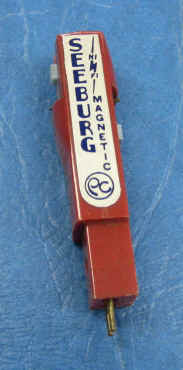

KentTeffeteller
Gimpus Stereophilus!
They sound very nice, and work great on medium mass tonearms like most of us here own and use.

johnjhazel
PhxJohn
Hard to beli:ve that the Pickering XV-15 has been around since 1968:
http://www.alliedcatalogs.com/html/1968-270/h058.html
The new nude elliptical EVG PM4000DE should be a nice upgrade for the Pickering V-15 and Stanton 500.
http://www.alliedcatalogs.com/html/1968-270/h058.html
The new nude elliptical EVG PM4000DE should be a nice upgrade for the Pickering V-15 and Stanton 500.
KentTeffeteller
Gimpus Stereophilus!
Hard to beli:ve that the Pickering XV-15 has been around since 1968:
http://www.alliedcatalogs.com/html/1968-270/h058.html
The new nude elliptical EVG PM4000DE should be a nice upgrade for the Pickering V-15 and Stanton 500.
Time will tell on that. For me, must be as rugged as original, track at the same forces original does, and track what the original does. Must last as long as original, or be seriously cheaper. Must also be consistent like originals were when made in Plainview, NY. Plan on getting some to try.
johnjhazel
PhxJohn
Time will tell on that. For me, must be as rugged as original, track at the same forces original does, and track what the original does. Must last as long as original, or be seriously cheaper. Must also be consistent like originals were when made in Plainview, NY. Plan on getting some to try.
They are not available with this delivery. Maybe next time.
FWIW, those V15 Red Hots appear to still be available on a few of the European sites. May be a nice alternative to those NOS Stanton 500ALs on eBay right now, though the value proposition might not be there, depending/used is still the most immediately economical route. Trawling the archive.org copy of pickeringuk, I managed to find a good description of it (everywhere else just has the name). It appears? to be bog-standard but for the color, font, and the (glow in the dark?) 1507DJ stylus, and I've seen one that seems to come with a Dustamatic, too (asked them which stylus it is specifically, waiting on their reply).
Attachments
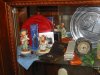 I worked at Pickering/Stanton in Plainview, NY (Long Island) from 1971-1973. John Kuehn was my boss (Chief Engineer). Much of my work was related to the CD4 4-channel cartridges (XV-15/1200E). CD4 was based on high and base bands. The high band went to 40KHz. Getting a mechanical stylus to vibrate that fast with a flat response was quite difficult. The CD4 project was Walter Stanton's baby and he hovered over me every day waiting for results. In those days all cartridge design was based on progress testing. Build something, test it, make a change and test again. Walter always told me "Only change one thing at a time." I heard that 10+ times a day.
I still have one of the XV-15/1200E CD4 cartridges and 2 of the test records that we used. After frequency response testing successful cartridges were audibly tested with these records with 4 of the electrostatic speakers in each corner of the listening room. We must have played the same 1 or 2 cuts 100's of times. The cartridge in the original box is in the center of the attached photo sitting in our curio cabinet.
The Pickering and Stanton cartridges were built on the same production lines and were very similar in design. The higher quality cartridges were built in Plainview and the lower end in Freeport, NY (about 14 miles away). We also marketed a dynamic headphone and turntable. We did engineering samples of electrostatic speakers and headphones. I still have one of the electrostatic headphones. It operated around 3000V and I am afraid to try it after all those years - the insulation may have broken down.

adnick
Addicted Member
View attachment 2166191 I worked at Pickering/Stanton in Plainview, NY (Long Island) from 1971-1973. John Kuehn was my boss (Chief Engineer). Much of my work was related to the CD4 4-channel cartridges (XV-15/1200E). CD4 was based on high and base bands. The high band went to 40KHz. Getting a mechanical stylus to vibrate that fast with a flat response was quite difficult. The CD4 project was Walter Stanton's baby and he hovered over me every day waiting for results. In those days all cartridge design was based on progress testing. Build something, test it, make a change and test again. Walter always told me "Only change one thing at a time." I heard that 10+ times a day.
I still have one of the XV-15/1200E CD4 cartridges and 2 of the test records that we used. After frequency response testing successful cartridges were audibly tested with these records with 4 of the electrostatic speakers in each corner of the listening room. We must have played the same 1 or 2 cuts 100's of times. The cartridge in the original box is in the center of the attached photo sitting in our curio cabinet.
The Pickering and Stanton cartridges were built on the same production lines and were very similar in design. The higher quality cartridges were built in Plainview and the lower end in Freeport, NY (about 14 miles away). We also marketed a dynamic headphone and turntable. We did engineering samples of electrostatic speakers and headphones. I still have one of the electrostatic headphones. It operated around 3000V and I am afraid to try it after all those years - the insulation may have broken down.
Very nice to have you on the site and really appreciate the historical input.
I’m certainly a big fan of Pickering & Stanton products.....
VR
Andy
Very nice to have you on the site and really appreciate the historical input.
I’m certainly a big fan of Pickering & Stanton products.....
VR
Andy
Second that........... Please stay around for those of us that are Pickering/Stanton tragic's. I love my 881s and wish new OEM stylus were still available. With an original stylus these cartridges are bettered by nothing I have heard....
BTW does anyone know what the difference between the D81 and D80 stylus are?

Coolhandjjl
Embiggened Pompatus
I’ve seen stylii labeled as D81 and D81S as well.BTW does anyone know what the difference between the D81 and D80 stylus are?
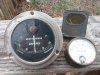
If you look carefully you will see that the numbering goes from 0 - 10. It isn't a clock - it's an aircraft altimeter from a 1943 Beechcraft Staggerwing. I owned it for many years and was in the process of restoring it. A total restoration takes 8000+ hours which was too much for me to do myself so I sold the project last October.Btw, What is the clock?

Pio1980
AK Member
Aha!If you look carefully you will see that the numbering goes from 0 - 10. It isn't a clock - it's an aircraft altimeter from a 1943 Beechcraft Staggerwing. I owned it for many years and was in the process of restoring it. A total restoration takes 8000+ hours which was too much for me to do myself so I sold the project last October.
I have an ammeter from a 1913 Cadillac in my book case along with other odd dial instruments. The ammeter was the first such used in a self-starting gasoline car, the other two are filament voltage monitor meters for mid-1920s RCA catacomb superheterodyne radio receivers.

knockbill
Lunatic Member
Interesting thread,,, I recently(last weekend) researched Pickering/Stanton, as I just came across a Pickering P/AC-1 cartridge I had for years... I never played it as I never found a stylus... Seems its a forerunner of the Stanton 500 series, and any of those nails would work... There appears to be a lot of replacements available, so I'm still a bit confused as to which one would be a good choice to finally try this cartridge...
Best to replace it. the damper is probably shot. When I was there all the dampers (donut-shaped material that supported the stylus in the housing) were all rubber. We had just started experimenting with synthetic materials, which at the time, varied from lot-to-lot.Interesting thread,,, I recently(last weekend) researched Pickering/Stanton, as I just came across a Pickering P/AC-1 cartridge I had for years... I never played it as I never found a stylus... Seems its a forerunner of the Stanton 500 series, and any of those nails would work... There appears to be a lot of replacements available, so I'm still a bit confused as to which one would be a good choice to finally try this cartridge...
The production lines had assemblers (all women at that time) seated on either side of a 8-10" wide conveyer belt that moved the components down the line. There were "dams" over the belt to stop the work-in-process at each assembler's station. She would take a part off the belt, make her addition and put it back on the belt in front of the dam and it would continue to the next operator. The last operator tested each cartridge's frequency response and channel separation with a silver standard stylus. When running styii each one was tested for frequency response and channel separation with a silver standard cartridge.
Cartridges and stylii were assembled on the same lines but separately. When the higher end devices were made, the cartridges were made first and as the stylii came down the line they were matched with a cartridge. Not every stylus performed well with every cartridge. That was the downside of purchasing a replacement stylus - it might not be a perfect match for the cartridge.

Andre Garcia
“WITHOUT MUSIC, LIFE WOULD BE A MISTAKE”
Tomguard.
Thank you for all valuable information.
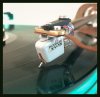
One thing I found is the stylus perform better without the chunky plastic holder.
As you said not every stylus match the cart and probably that push me to fine tune it. The stylus is a LP gear 625.
Andre
Thank you for all valuable information.
One thing I found is the stylus perform better without the chunky plastic holder.
As you said not every stylus match the cart and probably that push me to fine tune it. The stylus is a LP gear 625.
Andre
knockbill
Lunatic Member
What fun is that? Most of my cartridges are vintage,,, Shure and Empire mostly... they seem to respond well to new stylus... I think I can borrow a stylus from a buddy and try out...Best to replace it.
Andre,
I like what you have done trimming the stylus housing. I use a peripheral ring and the 881s with a Pickering XSV4000 stylus rubs on the ring well into the first track this would prevent that. I am a little hesitant to trim an NOS D4000.
How do you prevent the stylus from twisting in the body,, glue?
I like what you have done trimming the stylus housing. I use a peripheral ring and the 881s with a Pickering XSV4000 stylus rubs on the ring well into the first track this would prevent that. I am a little hesitant to trim an NOS D4000.
How do you prevent the stylus from twisting in the body,, glue?
Andre Garcia
“WITHOUT MUSIC, LIFE WOULD BE A MISTAKE”
How do you prevent the stylus from twisting in the body,, glue?
Hi!
I have an original D1200 and I will not do any surgery because, sound excellent as is, second are hard to find, last are expensive.
But the results on the 625 were noticeable.
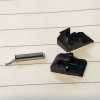
The barrel get into the cart snugly the brown tab I made for two reasons. One keep the original deep, otherwise the barrel will go deep in 0.026, second you can adjust the azimuth moving the tab up and down. The tab and barrel are tight adjusted.
You can but a 625 and try. I used a jewelry saw.
Andre.