

You are using an out of date browser. It may not display this or other websites correctly.
You should upgrade or use an alternative browser.
You should upgrade or use an alternative browser.
Are capacitors ever glued?
- Thread starter Keneye
- Start date
Register to hide this ad
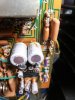

Glue - in this case - however, a picture is needed in each case to assess whether it really is glue or leaking capacitor(s).So glue or leaking?
But note that some formulations of the glue used in this way turns corrosive, and eats clean through component leads.

Last edited:


Keneye
Well-Known Member
Whew! Thanks.Yes, and that looks like glue in your picture.
Tom

NAD80
Super Member
Looks like glue. Welcome to AK. Owners and Service manuals are up on HiFiEngine.com https://www.hifiengine.com/manual_library/kenwood/kr-6600.shtml

Blue Shadow
Waiting for Vintage Gear from this century
Whew! Thanks.
Somewhere north of 99.997% of the cries of leaking capacitors on ak are actually glue. This community is so scared shitless of old caps and folks want to get intimate with their new baby that we have become obsessed with a serious case of recap disease and blame glue for being a leak damn near 100% of the time. I've seen a few pics of corroded bottoms on big caps and maybe two pics of smaller caps that show signs of leaks. The rest of the time, that 99.997% has always been glue.
But the glue doesn't mean all is good since it isn't a cap leak. One needs to look at all the leads that have glue on them and verify the glue hasn't caused corrosion, common in some brands. This is a lot more common than a leaking cap.

Binkman
Lunatic Member
I agree.This community is so scared shitless of old caps and folks want to get intimate with their new baby that we have become obsessed with a serious case of recap disease and blame glue for being a leak damn near 100% of the time.
However.... Large caps not glued are prone to system px failure because of vibration or shipping handling shock... but mfg. does gluing to also to flip a board to solder off. Why we see harnessed large caps, too.
bowtie427ss
Lunatic Member
In a few instances the glue used is not chemically stable over the long haul, and can actually become conductive over time. Adcom anybody?
In a few instances the glue used is not chemically stable over the long haul, and can actually become conductive over time. Adcom anybody?
More than "a few instances"!
 And not just Adcom. SonyBond glue that corrodes metal conducting electrons (component leads, jumper leads/wires), will cause the corrosion to "creep", then conduct, was used by almost all Japanese manufacturers back in the day, and many others used it as well. In more "modern" times, you are correct where the glue itself becomes conductive even with no signs of corrosion. I see that in a lot of (around 10 yr old) Chinese made (or assembled) stuff. A lot of the BASH (Indigo) subwoofer amps suffer from it causing weird anomalies that, after removing the glue, they work fine again. Some of that glue is rock hard making it very difficult to remove, and flies off in chunks.
Some assembly workers went "crazy" and blobbed it everywhere, and some were more careful and "neat". An example of that is this Yamaha A-500 amp I have on the bench. The 2 main filter caps are glued on, but the glue is minimal and only on the edges of the caps doing no harm. Where in pictures of others with the same amp (A-500 and A-520) show the glue blobbed on the surrounding components that have been corroded by the glue causing all sorts of problems.
Of course back then, they had no idea the glue would do that. But now (it seems) it is part of their "built-in self-destruct" scheme of limited lifetime "throw away" products.
Yes, that is glue and if it is not on any component leads, it is not a problem. But check the other side of them that can't be seen in your photo. Your "dead" meters problem should be looked into though in case glue (or something) somewhere else has caused damage.
No voltage to meters but they do move when current is introduced to them. Thought they might be frozen from sitting.
Could be Cg27, which is a 1uf 50v electrolytic cap on the tuner board that may have become "leaky" (electrically), and is "common" to both meters.. But it's hard to tell if that is it for sure. Could be ICg1 too, or anything in the meter circuit. Perhaps someone has experience on this model and has come across this problem.