• The move to the new server is done. There are some software and database maintenance updates in process. This has us passing the hat around to help out. We appreciate any donations. Seriously, even a dollar helps. The payment page may be found here - https://www.audiokarma.org/support.html

AU-9900 Tone control static

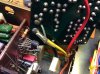
Update: I opened the unit up again to look at the midrange board. Found a source wire disconnected:
9D416E2D-27C9-4DCB-B76B-F47C3B2E0BD1.jpeg

However, re-connecting that wire caused other issues: loud hiss on the right channel. :mad:

In the meantime picked up an f-2575 board pulled from an 11000A to try as a replacement. That worked! :) Static from that board is gone, but I seem to now be getting some from the f-2576 board. :crazy: It does seem like every time I move these boards, the movement is causing issues - probably because of bad connections on one or more of the components I replaced. Now waiting on an f-2576 board from the same person.
 
I saw this kind of thing all the time when I worked on Vax's and AlphaServers. When you start messing around with a system of components, change tends to bring out new problems, or other problems. In the case of the AU-9900, because the different boards interact so much, it is not surprising that when you go in, you have a chance of introducing new issues.

Keep at it, and eventually, you will have a solid system. Mine was a little flaky at first, but eventually stabilized, and now it is rock solid. This is a known issue with the AU-9900/11000.

Good luck!
 
Yeah, I have not worked on a ton of equipment (just my own), but I've not seen or heard of such touchy tone control boards before. Honestly, I don't really use the tone controls, so I could just ignore or unplug those boards, but knowing something is not right would always be in the back of my mind. I suspect the replacement f-2576 board will solve the problem.
 
Been playing for several days now, hour on end, and no static issues at all! :banana:

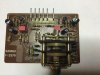
Looked at the original boards. Things got rough with the solder pads for one 2SA798/2xKSA992 replacement on the midrange board. Top view doesn’t look too bad.
5A23DC17-83DD-499B-A901-F272B09A67B4.jpeg

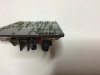
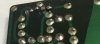
But underneath most solder pads were lifted off the board allowing the IC to move freely. Maybe this was causing the “antenna” effect?
F4612D0B-0B18-4903-91C0-51BE54C5BA16.jpeg
C5406AD9-1281-410F-89CD-38EE538EB195.jpeg

Similar issue with the Treble/Bass board. I had a lot of trouble with the solder pads of one IC. In one case, I had to run a wire from the IC leg to the next pad in the circuit.
894EED6B-97D6-4ADC-BC30-5489D163045A.jpeg
AD9B1845-1617-4F39-8684-34C495C00D9D.jpeg
1814C32D-7303-4505-B77F-C1767987EEE6.jpeg

So, for now, I’ve got the boards I bought that came out of an 11000A in place in unrestored condition. At some point I might replace the e-caps. Only 4 on each board, but not planning to touch any ICs.

Just wanted to follow up to document my difficulties in case anyone else runs into these problems. Were I to do it all over again, I would have left the ICs. I was not having an issue with the tone boards. Would have either left the tone boards original (they are the hardest board to get out/back in, in the amp), or just replaced the e-caps and left the ICs alone. The solder pads for the ICs are very small and close together, so its very important to be very careful here. It’s also a challenge desoldering 5 pins so that you can get the ICs out. I think others have mentioned this, but the solder pads on the boards in the 9900 are a bit delicate and lift off the board pretty easily.

Thanks again for everyone’s help! :beerchug:
 
Been playing for several days now, hour on end, and no static issues at all! :banana:

Looked at the original boards. Things got rough with the solder pads for one 2SA798/2xKSA992 replacement on the midrange board. Top view doesn’t look too bad.

But underneath most solder pads were lifted off the board allowing the IC to move freely. Maybe this was causing the “antenna” effect?

Similar issue with the Treble/Bass board. I had a lot of trouble with the solder pads of one IC. In one case, I had to run a wire from the IC leg to the next pad in the circuit.

So, for now, I’ve got the boards I bought that came out of an 11000A in place in unrestored condition. At some point I might replace the e-caps. Only 4 on each board, but not planning to touch any ICs.

Just wanted to follow up to document my difficulties in case anyone else runs into these problems. Were I to do it all over again, I would have left the ICs. I was not having an issue with the tone boards. Would have either left the tone boards original (they are the hardest board to get out/back in, in the amp), or just replaced the e-caps and left the ICs alone. The solder pads for the ICs are very small and close together, so its very important to be very careful here. It’s also a challenge desoldering 5 pins so that you can get the ICs out. I think others have mentioned this, but the solder pads on the boards in the 9900 are a bit delicate and lift off the board pretty easily.

Thanks again for everyone’s help! :beerchug:

Congrats on getting her done! :beerchug:

There's the old adage, "if it ain't broke, don't fix it!" Sometimes I agree with that statement and at other times I don't. From a restoring point of view, you would want to refresh everything you can. But you risk introducing problems.

So the question is "are you ahead?"

Over the years, my viewpoint has morphed from getting everything to standards, not touching it unless it was broken, to proactively paying someone to restore it. I like this last option the best now. :rflmao:

I suppose they are all right, and all wrong.

The final thing I will say, is someone who works on different equipment all the time is best equipped to do it right the first time. They are at the top of their game. They have the "feel" which is crucial, and they have their intuition.

The DIY way is cheaper, and definitely more satisfying, but can also lead to a great deal of frustration.
 
Congrats on getting her done! :beerchug:

There's the old adage, "if it ain't broke, don't fix it!" Sometimes I agree with that statement and at other times I don't. From a restoring point of view, you would want to refresh everything you can. But you risk introducing problems.

So the question is "are you ahead?"

Over the years, my viewpoint has morphed from getting everything to standards, not touching it unless it was broken, to proactively paying someone to restore it. I like this last option the best now. :rflmao:

I suppose they are all right, and all wrong.

The final thing I will say, is someone who works on different equipment all the time is best equipped to do it right the first time. They are at the top of their game. They have the "feel" which is crucial, and they have their intuition.

The DIY way is cheaper, and definitely more satisfying, but can also lead to a great deal of frustration.
Thanks, and thanks for your encouragement and helpful insights on this project.

Whether to restore/recap is an interesting question. I usually re-cap the PS and driver board(s) as the ones that are most critical and take the most abuse. I restored my Eight because I like it so much and as I tested capacitors when I re-capped the PS and drivers, all were way out of spec. As I continued from board to board, the story was the same, so I felt it was worth the effort. With the 9900, I was not really having issues with it. Only problem was when I set the Tone/filter switch to Tone & Filter usually the right channel dropped out. I also felt the 9900 was worth restoring as one of Sansui's high end amps. Those tone control ICs were the only thing I had problems with, the rest was really straight forward. Now I've got a perfectly working amp. I might not have put that level of effort into this one, but I have the matching TU-9900. The more I look at the Professional/Definition series, the more I feel this was the best of Sansui. I feel the aesthetics are just knock-out.

I'm learning too much (which I enjoy) too stop DIY work. The other issue is I'd have to ship anything I want done as there is no professional restorer near me. Cost would also likely be prohibitive for me. If I only had one or two units and I just wanted it done, then it makes sense to let a pro do it. I'm way better than when I started and still having fun doing it. Just got sound out of a QRX-8001 I've been working on. That was really satisfying! Even more fun is doing your own tuner alignments!

Thanks again!
 
Thanks, and thanks for your encouragement and helpful insights on this project.

Whether to restore/recap is an interesting question. I usually re-cap the PS and driver board(s) as the ones that are most critical and take the most abuse. I restored my Eight because I like it so much and as I tested capacitors when I re-capped the PS and drivers, all were way out of spec. As I continued from board to board, the story was the same, so I felt it was worth the effort. With the 9900, I was not really having issues with it. Only problem was when I set the Tone/filter switch to Tone & Filter usually the right channel dropped out. I also felt the 9900 was worth restoring as one of Sansui's high end amps. Those tone control ICs were the only thing I had problems with, the rest was really straight forward. Now I've got a perfectly working amp. I might not have put that level of effort into this one, but I have the matching TU-9900. The more I look at the Professional/Definition series, the more I feel this was the best of Sansui. I feel the aesthetics are just knock-out.

I'm learning too much (which I enjoy) too stop DIY work. The other issue is I'd have to ship anything I want done as there is no professional restorer near me. Cost would also likely be prohibitive for me. If I only had one or two units and I just wanted it done, then it makes sense to let a pro do it. I'm way better than when I started and still having fun doing it. Just got sound out of a QRX-8001 I've been working on. That was really satisfying! Even more fun is doing your own tuner alignments!

Thanks again!

I totally get it. I repair cassette decks (not for the faint of heart) for fun. :dunno:

I can easily spend many hours on each. It takes a while to figure out how the mechanicals are supposed to work, and you do get better with practice.

I also completely agree with your assessment of the AU-9900. I absolutely love mine! I love how it looks, the touch of the controls, and how it operates. :music:
 
Back
Top Bottom