Organgrinder
Audiophool
Hey all!
Thought I'd share my little project for the time being, cause I know some of you love seeing the guts of these old workhorses.
Been working on this old Audionics of Oregon BT-2 preamp the last couple days. For the last few months, its been doing daily duty as my phono preamp for my Pioneer PL-71 that I recently restored. The sound is beautiful, except the BT-2 has some room for improvement.
There are two things I'd like to fix, or at least improve:
1. There is a slight noise in the right channel, which only exists on the phono input. It doesn't seem to be related to any controls; I've cleaned them all thoroughly with Deoxit and they are all good solid connections. The pots all work smoothly and make no noises when turned, especially after being cleaned. It is an intermittent sound, dull bursts of white noise that are just noticeable when the preamp is idle and no record is playing. As said, it only happens when the phono input is selected.
2. The phono input has hiss/noise when the volume is cranked past 50% which grows to be fairly loud beyond that. The other inputs are dead silent by comparison.
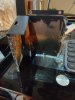
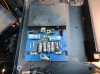
(First pic has the boards unsoldered already, I got ahead of myself before taking photos!)
The photos show the phono preamp board, removed from its shielded housing. I have a whole new set of Panasonic RC caps on the way to replace all the electrolytics, and I will see how that sounds before I do anything more to this board. I suspect the TL072 opamp is the cause of the hiss at high volume, and possibly the noise I am hearing in the right channel... Anyone have a good idea what to do about that? I'm toying around with ordering a different one (OPA2134 perhaps? ). I have little experience with swapping and playing with these guys, and would love some input on how to improve this stage!
The other board is what I presume the other inputs and the main output stage. It is potted, and a look underneath doesn't really reveal much, other than no more chips are involved. Those 16uf caps gotta get swapped out too....
The power supply is beefy, and again, new caps on the way. Comparing it to other BT-2's, mine looks more crude and homebrew... wonder if it is an older version? All voltages measure in spec, but it'll be peace-of-mind getting all that freshened-up.
I'd love any input on what can be done to help this out, especially those who have experience with this preamp or ones like it!
Thanks!


Thought I'd share my little project for the time being, cause I know some of you love seeing the guts of these old workhorses.
Been working on this old Audionics of Oregon BT-2 preamp the last couple days. For the last few months, its been doing daily duty as my phono preamp for my Pioneer PL-71 that I recently restored. The sound is beautiful, except the BT-2 has some room for improvement.
There are two things I'd like to fix, or at least improve:
1. There is a slight noise in the right channel, which only exists on the phono input. It doesn't seem to be related to any controls; I've cleaned them all thoroughly with Deoxit and they are all good solid connections. The pots all work smoothly and make no noises when turned, especially after being cleaned. It is an intermittent sound, dull bursts of white noise that are just noticeable when the preamp is idle and no record is playing. As said, it only happens when the phono input is selected.
2. The phono input has hiss/noise when the volume is cranked past 50% which grows to be fairly loud beyond that. The other inputs are dead silent by comparison.
(First pic has the boards unsoldered already, I got ahead of myself before taking photos!)
The photos show the phono preamp board, removed from its shielded housing. I have a whole new set of Panasonic RC caps on the way to replace all the electrolytics, and I will see how that sounds before I do anything more to this board. I suspect the TL072 opamp is the cause of the hiss at high volume, and possibly the noise I am hearing in the right channel... Anyone have a good idea what to do about that? I'm toying around with ordering a different one (OPA2134 perhaps? ). I have little experience with swapping and playing with these guys, and would love some input on how to improve this stage!
The other board is what I presume the other inputs and the main output stage. It is potted, and a look underneath doesn't really reveal much, other than no more chips are involved. Those 16uf caps gotta get swapped out too....
The power supply is beefy, and again, new caps on the way. Comparing it to other BT-2's, mine looks more crude and homebrew... wonder if it is an older version? All voltages measure in spec, but it'll be peace-of-mind getting all that freshened-up.
I'd love any input on what can be done to help this out, especially those who have experience with this preamp or ones like it!
Thanks!
Last edited: