Hi
I own an older version of the B&K EX-442 with the golden handles, no blue front panel lines and Toshiba outputs.
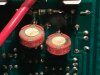
Recently I put it back into service after it having sat for 10 years. Fired right up with no issues. I carefully readjusted the DCOffset and Bias though it was difficult with the old pots. DC was around 60mV and Bias was around 78mA to start out of retirement.
I wrangled the DC offset to around 0 but it jumped around +5mV to -3mV and the Bias was set to around 175 mA then after a few days up to 200mV but then noticed that the values slowly crept up all the while the amp was sounding better than I had ever heard it....what's that old saying?? Amps sound best right before they die?Anyway I stopped using it as it approached 240mA. From what I've read on forums this particular amp should be set to 200mA, max.
An professional electronics friend offered to get new pots for me and then said we should re-cap it. Sounded reasonable. Note: he mainly works on tubed equipment and shys away from SS, Should have seen that red flag.
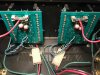
Anyway, long story short, he only ordered caps, rectifier bridges and the Bias pot pair and not the DC offset pair; why, I don't know? AND after me telling him to use extreme caution disconnecting the Mosfets from the heat sink, he broke the first one in the RIGHT channel. Not knowing that they have to be matched, (more importantly, probably counterfeit), I bought a replacement off eBay. He did the labor, replacing the Caps and and reset the Bias to 200mA. But while trying to re-set the DC Offset voltage, (he said was jumping all over the place), three other output transistors blew in the LEFT channel.
So now I'm stuck with 300+ bucks worth of parts and a dead amp.
Which brings me to my question:
Is there any hope now for this amp, seeing that obsolete transistor pairs must be matched, (according to B&K's schematic)? I have found some at a legitimate retailers but at $12.75 apiece, seems futile. Time to call it a day and sell the lot for parts???
Would appreciate any input. I am not an electronics person accept what I learned in college about DC circuits, and YouTube.... . Sure hate to see this amp go....it was such an amazing sounding component.
Thanks for your time and input.
I own an older version of the B&K EX-442 with the golden handles, no blue front panel lines and Toshiba outputs.
Recently I put it back into service after it having sat for 10 years. Fired right up with no issues. I carefully readjusted the DCOffset and Bias though it was difficult with the old pots. DC was around 60mV and Bias was around 78mA to start out of retirement.
I wrangled the DC offset to around 0 but it jumped around +5mV to -3mV and the Bias was set to around 175 mA then after a few days up to 200mV but then noticed that the values slowly crept up all the while the amp was sounding better than I had ever heard it....what's that old saying?? Amps sound best right before they die?Anyway I stopped using it as it approached 240mA. From what I've read on forums this particular amp should be set to 200mA, max.
An professional electronics friend offered to get new pots for me and then said we should re-cap it. Sounded reasonable. Note: he mainly works on tubed equipment and shys away from SS, Should have seen that red flag.
Anyway, long story short, he only ordered caps, rectifier bridges and the Bias pot pair and not the DC offset pair; why, I don't know? AND after me telling him to use extreme caution disconnecting the Mosfets from the heat sink, he broke the first one in the RIGHT channel. Not knowing that they have to be matched, (more importantly, probably counterfeit), I bought a replacement off eBay. He did the labor, replacing the Caps and and reset the Bias to 200mA. But while trying to re-set the DC Offset voltage, (he said was jumping all over the place), three other output transistors blew in the LEFT channel.
So now I'm stuck with 300+ bucks worth of parts and a dead amp.
Which brings me to my question:
Is there any hope now for this amp, seeing that obsolete transistor pairs must be matched, (according to B&K's schematic)? I have found some at a legitimate retailers but at $12.75 apiece, seems futile. Time to call it a day and sell the lot for parts???
Would appreciate any input. I am not an electronics person accept what I learned in college about DC circuits, and YouTube....
. Sure hate to see this amp go....it was such an amazing sounding component.Thanks for your time and input.