• The move to the new server is done. There are some software and database maintenance updates in process. This has us passing the hat around to help out. We appreciate any donations. Seriously, even a dollar helps. The payment page may be found here - https://www.audiokarma.org/support.html

Balance Knobs- who actually use it?

Not very often, but yes.

1. Low volume listening - many analogue volume controls have strong imbalance at low setting (usually until around 9 o'clock). This can be corrected with balance pot. Yes, theoretically volume pot could be replaced, but I tried that a few times and had to go through 3-5 NEW volume pots before finding one that balanced out early enough. That's simply counterproductive when you have a balance pot. And finding a replacement volume pot for some old amps is simply impossible. Luckily my main systems do not have that problem.

2. With some recordings, especially LPs and recordings sourced from old tapes.

3. In my car I have +1dB on one side.
 
If you play vinyl you will experience LP's that do not have equal channel balance. This is obvious. All one need do is listen. It only takes 1dB or so to throw off a soundstage.
Well I would liken that to someone who feels the need to fiddle with tone controls for every piece of music they put on. If I need to get that anal when listening to music I'd sell all my gear. Other options is buy better records and or masterings.
 
Oh please! Maybe 1 in 20 LP's need that sort of tweaking. As someone posted earlier, usually only old LP's are subject to this sort of channel imbalance. When you have 3500+ it's inevitable that some will not be balanced. My preamp doesn't have tone controls. When I had them I rarely used them.

I'm sorry if my attention to the soundstage bothers you. I have two speakers in the front of my room. They are set up to produce the best soundstage I can achieve.
 
Last edited:
I use it because the circumstances of the room require one speaker to be closer to me than the other. I adjust the balance to make the sound appear to come from the middle. This makes balance controls rather important to me.[/QUOTE]

I used it. I'm not always sitting in the sweet spot.

Exacty. I am not always in the 'listening chair'. Sometimes I go to another part of the room.
 
It is clear there can be many reasons for balance control to be needed other than just old gear failing or bad source material. Anything from room acoustics, shape, (one side open ended etc), to hearing difficulties in one ear. Any reason where an improvement can be attained by using it is valid.
 
I'm sorry if my attention to the soundstage bothers you. I have two speakers in the front of my room. They are set up to produce the best soundstage I can achieve.

Your misunderstanding me, I stated what I do, what others do is irrelevant. I go out of my way to have a flat neutral balanced and sounding system. I want to enjoy the music, and I can quite easily because "I" don't over obsess every piece of media and then adjust the system.

However having my system that way and not constantly changing it, and having identically setup tables I can hear the difference in the media it's self. If it's really all that bad I can get rid of it and find a better mastering, if it's all that important to me. Most of the time I'm all good and just take it for what it is, sometimes I get another same title and find out it was just that mastering.

Put it this way, I don't change my system to make the media sound better, I get better media to make my system sound better. I personally think some people chase their tails around when it comes to components, and how the system sounds. All the while they ignore their media collections quality which is very important to what the system will sound like in the first place.
 
With many old/rare LP's there aren't always better masters available. Correcting channel balance on maybe 1 in 20 LP's hardly qualifies one as being an anal retentive. As I already stated, very small level differences have an effect on the soundstage. A 1dB "tweak" usually corrects this. If the soundstage isn't as important to you as it is to me you most likely don't hear the difference anyway.
 
Yeah, I guess I could obsess over getting everything perfectly balanced by spending hours and hours setting everything up and spending a lot of money restoring all my old equipment. But I'd rather spend hours and hours listening to music and a lot of money on buying new music so I just use the freaking balance knob. One second! Done! Back to the scotch and the tunes.

I can't always have optimal speaker placement and since I use a lot of old ****, I can't always have fully restored equipment. So I don't have an issue with the balance knob. If you hate the balance knob, by all means rip that thing off the panel or glue it in place if you have to; it's your equipment and your listening experience. Who am I to tell you not to use it? And if I want to use my balance knob, I will. I'll use the heck out of it. In fact, I'm going to move my seat off center just to ENSURE I need to use it just to piss off anyone who looks down their nose at me for doing it.

:) Take a Xanax.
 
I have a dedicated acoustically treated room. Yes, my speakers have been meticulously placed in said room. In my main system I rarely change gear and never swap something just to try something else that's sitting on the sideline. My most recent "gear" change was to a pair of Maggie 1.7's. This was only because a transformer in my of my 20+ year old Acoustats self destructed.

When one has 3500+ LP's, many old and not easily available/replaceable in any format, it's inevitable some will have channel imbalances. If adjusting channel balance on perhaps 1 LP in 20 is anally retentive then I suppose some might consider me that (IMO I'm not). But then, my speakers are placed with 1/4" of each others relative positions. That may be anal. However, once done I don't move them.

As for those who are IMO anally retentive regarding this hobby, how about those who write specific Eq settings on all their LP/CD covers and use those settings? Or, how about those who adjust VTA/SRA for every LP played? I know someone who has an MG-1 tonearm with repeatable micrometer adjustments for VTA/SRA. He writes the "best" setting on the LP cover and adjusts it for every LP.
 
The only reason I use mine is the same as you, or to dial in the imaging for one side to the other one by one. But yes your right, it gets moved a few times an that's it for the rest of its life. But hey it's just one more nice silver shiny knob to look at right!? Lol

Just think if the tone controls lit up.....the bass knob has its own graphic display and the treble has its own graphic display.
 
I was also thinking about a further explanation. Way back when we used VU meters and head phones on remotes and speakers in recording booths. We listened to the direct sound of the speaker in most cases. Headphone listening could be compromised do to leakage and recordings monitored in booths doesn't represent what we hear at home. We did't have spectral displays to monitor. So recordings with Violins on each side and violas and cellos more in the middle were easier than with the violins all stacked on one side where recordings could not be well balanced .

Plus what is to be done with home systems that are asymmetrically placed in a room. What about rooms with unbalanced acoustics. Not only do have to change the level of each side but the tonality in addition. If I had my way the graphic tone controls would be split, too, left and right. Old Columbia, London, Decca, and even DG recordings could use just a touch more HF emphasis for the right channel sometimes. I rely miss my old SS preamp with split stepped tone controls. The issue was the steps were, to large, 3 db instead a preferred 1 db.

The first audio file I ever met made notes on special forms he had printed up 1000 at a time that he inserted with the lp in the record jacket. The notes were typed by his secretary at work on the printed form. Tone control settings, balance settings, were noted for each album, with spaces for special mentions for each cut on the disc. He had boxes for up dates, dates of purchase, number of plays, if the disk had been dubbed, etc etc, He was a Surgeon, and you couldn't read his hand writing.

He would pull out a disc, place it on a warmed up Empire TT, set the settings on his Model 7C, adjust a special control for his center channel sit down and turn on a switch supplying power to his turn table. If he was happy he would listen to the entire side. If not, he would grab a clip board making notes or stop the recording change settings and repeat the process making further notes. Then his secretary would type up a new page for the album. After he passed on I got to chose some of my favorites from his collection. Sadly I gave them away with my the first collection of LP's. He would have been in heaven with the capabilities of todays modern home theatre processors , with pass through circuits of remote controllable tube stereo pre-amps. That was 50 years ago, come to think of it.

When attending live concerts you have visual clues that control and explain imbalances in the listing experience you don't have at home. A lot of times what the director, producer and engineer hear in the mixing booth, doesn't represent a live performance you attend. They emphasize soloists, and sectional playing, throughout the performance really confusing the listener at home. You can't correct for that, but having a balance control, and tone controls gives you a fighting chance. One example is the over all balance of the Telarc Recordings made in Baltimore. Its not so much a balance problem left to right, but a performance recorded in a very hard dry venue. If you have ever listened to the Morman Tabernacle Choir accompanied by the Pipe organ you would immediately recognize engineers are playing games. The real sound of the organ is rather dull and muffled as experienced in the hall in the vast majority of listening locations. Its obvious they use a combination of specially chosen mics with a very flexible mixing board to get the final blend and voicing they want. Most of the time they are very successful. I always thought early recordings weren't as revealing as recordings made after SS and digital recording techniques had been mastered.

 
i use balance with my remote when I'm not seated in the sweet spot & it works fine with my system.IMG_1057.JPG
 
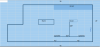
Is it my ears or my room?
I need to increase Left channel to hear vocals at mid-speaker.
I cannot re-orient 90 degrees due to a doorway. Do I need to put something reflective to the Right? (toward the stairs)
Here's my situation: Ceiling is a mish-mosh of heating ducts treated with foam, suspended tiles, and wood joists.

upload_2017-6-4_12-23-43.png
 
I have a piano in my living room that is in the same position as yours. Royal PITA and unfortunately it isn't going anywhere even though it doesn't get played! The opposite/right side is a couch/wall versus being open. I would check where the first reflection points are on the left and I bet you are getting some reflections off the piano that are messing with the perceived center image. I helped the problem in my room by stealing pillows from the couch and putting them on the piano. Perfect? No, but a big improvement. For the right side maybe a big soft chair at mirrored location of the piano (now with pillows on it). Lastly, I have to move a coffee table that is usually between my listening chair and the speakers to eliminate reflections of it that smear the sound. Doing these things, along with carefully setting speaker/listening chair positions, have allowed me to rarely touch the balance knob.
 
I have a piano in my living room that is in the same position as yours. Royal PITA and unfortunately it isn't going anywhere even though it doesn't get played! The opposite/right side is a couch/wall versus being open. I would check where the first reflection points are on the left and I bet you are getting some reflections off the piano that are messing with the perceived center image. I helped the problem in my room by stealing pillows from the couch and putting them on the piano. Perfect? No, but a big improvement. For the right side maybe a big soft chair at mirrored location of the piano (now with pillows on it). Lastly, I have to move a coffee table that is usually between my listening chair and the speakers to eliminate reflections of it that smear the sound. Doing these things, along with carefully setting speaker/listening chair positions, have allowed me to rarely touch the balance knob.

Thanks for the tips. I'll get a helper and a mirror to locate the pillow(s).
 
depends upon where i am on the couch. ha! listening intently, i'm in the middle and need no balance. reading on the side where the reading light is, i balance. lying down on the couch but listening, i balance.

play music!
 
I too, subscribed to leaving the balance in the middle, thinking it was a hardware issue if I had to "bias" one channel more than the other.
I am much older and more experienced. I actually fine tune with the balance. My ears are much more sensitive to levels now.
Also I've AB tested about 40 amp/speaker combos within the last several years, and It just NEVER seems to be equal on both sides if the knob's in the middle.
I actually listened to a live version of Elton John's "Benny and the Jets" last night (extended version) which I'd never heard before. I normally don't care for that song, but the live version was phenomenal. The way it was recorded on stage, it was heavily biased to the right channel.
So yes, I don't so any problems giving the balance knob a little skoosh to one or the other side.
 
Back
Top Bottom