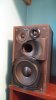
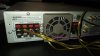
Ahhh, we all start somewhere!
For starters, the power of a receiver and the power rating of a speaker are a bit deceiving. "70W Max" on the back of the speakers is just a rough idea of how much power can you dump into them before you blow something up. Sometimes that number is rigorously tested, sometimes it's just a vague idea based on the size of the amp you'd likely hook it into, and sometimes it's just pure marketing baloney. Ditto for any "minimum power" or "recommended power" ratings you'll see. It's not an indication of how much power they will draw from the amplifier. Likewise, the speakers are not (or should not) getting 65 watts of power from your receiver all the time. That's just the maximum amount of power the amplifier section can put out before it either starts clipping or fries itself. Manufacturers will quote all kinds of crazy numbers and do all kinds of weird math so they can slap the biggest, baddest number on the box. There's total power (amplifier power*the number of channels), peak/music power (the max the amplifier can provide for a short period of time), and continuous/RMS power (how much power the amp can put out across the sound spectrum for a long period of time). For example, you can absolutely find a "600 watt" 5.1 receiver that has 100 watts of peak power per channel, and maybe 60 watts of continuous RMS power. They can also cheat even more by quoting the power at a lower impedance like 6 or 4 ohms, since a lower impedance speaker will put a heavier load on the amplifier and require more power to play at a given volume. They can also quote the power at a ridiculous distortion level (look sideways at anything quoted at 1% distortion or higher), since distortion increases as the amp hits it's limit. So chances are, your 65 watt amp could well be closer to 20-40 watts of "real world" RMS power. That's still not terrible, honestly, since you'll rarely ever go above a few watts when you have that sucker CRANKED.
Anyway, back to your situation. To get the most bass out of your setup, I'd just attach your sub to the "woofer" outputs, and your speakers to your speaker outputs. For the most bass response from your speakers, try keeping them close to corners or walls, to take advantage of room gain, and/or use the tone controls to tune the setup to your liking. Do be aware that overcranking the bass can overtax the amp and cause it to blow out, so if it starts sounding cruddy and distorted, back off the volume a little. You can, of course, always buy bigger speakers and/or a bigger amp and really start cookin