• The move to the new server is done. There are some software and database maintenance updates in process. This has us passing the hat around to help out. We appreciate any donations. Seriously, even a dollar helps. The payment page may be found here - https://www.audiokarma.org/support.html

Best Slew Rate Receiver?

LBPete

Rolling Along
Subscriber
In the late 1970s the major Japanese audio companies had already matched each other watt wise. The focus seemed to shift to other specifications. You started seeing specs like Slew Rate, Rise Time and Dampening factor.

I recently came across a Sansui Brochure for the G-22000/33000. It claimed these receivers had the best Slew Rate and Rise Time factors “ever achieved.” They also have an extraordinary frequency response.

Here are the numbers:

G-22000/33000
WPC………………..........……….. 220/300
THD………………………............. less than 0.009%
Slew Rate…………………......... 175 V/μsec
Rise Time………………….......... 0.7 μsec /V
Dampening Factor…………..... 60 into 8 ohms (5 Hz to 20 kHz)
Frequency Response……….....to 300,000 Hz

Are there any challengers?
 
Register to hide this ad
My first reaction was the KR-9050. But it is only:
110V
.95
50
dc to 280K


I was surprised to see the KR-8050:
200V
.9
85
No Freq spec


The KR-7050 is the same with a damping factor of 100.

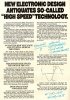
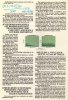
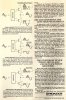
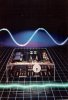
I also remember seeing one of Pioneer's "kick sand in the other guy's face" ads, that showed the math and said anything beyond a certain point for "fast" amps is inaudible. I never decided if I believed it or not.

AFAIK the Concept 16.5 is the damping factor champ at > 450
 
Ah, the days of 'specs du jour'......yep, slew rate/rise time specs got a lot of attention in the late 70s to early 80s. Damping factor was a biggie along about the same time. After those were beat upon the next one was Transient Intermodulation Distortion. That one got beat upon for a number of years until the next thing came along......

Its funny to read all that blather today but back then it was taken seriously. The thing is that each of these specs has merit on its own but the key is to take them as a whole to _try_ to understand what the amp can do.

The biggest problem with the amps today featured in those ads and specs will need to have some serious rework done to them in order to meet them again.

Cheers,

David
 
Wow 175V/ microsecond I think most of the spec sheets I see are around 80V/microsecond.
Pretty fast amps I take it.


Pete, how do you make that symbol for micro?
 
For receivers only? Those are such fast rates I don't think they're beatable. I know the Sony's were pretty fast. This is based on what frequency, though.
 
I recall reading about these specs on the classic sansui site.

Here is an excerpt from my AU-919:

THD………………………............. less than 0.008%
Slew Rate…………………......... 200V/μsec
Rise Time………………….......... 0.5 μsec /V
Damping Factor…………..... 100 into 8 ohms (1 kHz)
Frequency Response…………..... DC to 500,000Hz

An interesting thing to note is that my Sansui BA-90 from 1968 has a damping factor switch on the front. You can choose between high (50) or low (10).

The manual only says "select the one that gives you the best sound reproduction"...

Odd.
 
Kenwood just states that it is measured at maximum output, no frequency specified that I found. I did find the Pioneer ad - June 1980 Stereo Review inside cover. I just had the hunch that it wasn't as important as Kenwood and Sansui made it out to be and more important than Pioneer tried to dismiss it as.:dunno:
 

Attachments

  • pioneer slew rate01-120.JPG
    pioneer slew rate01-120.JPG
    127.8 KB · Views: 35
  • pioneer slew rate02-120.JPG
    pioneer slew rate02-120.JPG
    134.5 KB · Views: 29
  • pioneer slew rate03-120.JPG
    pioneer slew rate03-120.JPG
    125.2 KB · Views: 27
  • pioneer slew rate04-120.JPG
    pioneer slew rate04-120.JPG
    84.7 KB · Views: 33
I remember hearing these terms,I was very young then in 1977 I was 10 but listened alot.Can someone explaine this to me. now that I'm 41. I'd like to be less confused mo educated,and well I'd like to have all my hair agein too! like thats going to happen.Not! but at least I can learn these old specs.
 
goraman,

You are one year younger to me :)

http://www.amplifier.cd/Tutorial/Slew_Rate/SlewRate.htm

Already with a simple comparison of the slew rate of two amplifiers, first statements can be met from this parameter. A car or a motorcycle with a maximum speed of 250 km/h is clearly faster than one with 120 km/h. Simplified said, the slew rate is the maximum speed of an amplifier. Alone the maximum speed does not say yet much about applications and qualities of a vehicle. With a vehicle with a maximum speed of 250 km/h no truck may be expected. Do not ask - with a Slew rate of 4000 V/µs a Hifi amplifier output stage to expect is utopian, the inaugurated electronics engineer thinks thereby immediately of video operation amplifier or similarly fast parts
 
Thank you I get it now. Today we went to the Sikh festival in Yuba city 2 million Indians in one place.We had alot of fun.I really like Bhangra theres nothing more fun than a bunch of happy dancing Sikhs.It was really kind of funny to see like 20 of them rideing Harleys in a pack with Turbins and the big beards. Not your tipical stereo type huh?
 
You are welcome. There is a huge population of Sikhs in North America and I have seen pictures of the festivals with the Harley riders, quite interesting, wonder what they will think of me as I have always been on ricers. ;)
 
I saw lots of those too.It's all about fun with these guys and was sad after 911 when people thought they where terrorists.The good ol boys up there dont know the Sikhs fought the muslums long before us.
 
Sikhism was created to protect Hindus from the forced conversion by Muslims and almost all Hindu households would make one of their sons a Sikh to fight against the Muslims. Sadly some of the Sikhs totally deviated from the true meaning of their way.
 
I like the older Yamaha gear more than the new stuff.


Well the TOTL receivers are still Yamaha in every sense, over-engineered and sometimes groundbreaking in their field. The last TOTL Yamaha amp, namely the MX-D1 can go toe to toe with their older offerings including the MX amps as well as M and B series.
 
I recall reading about these specs on the classic sansui site.

Here is an excerpt from my AU-919:

THD………………………............. less than 0.008%
Slew Rate…………………......... 200V/μsec
Rise Time………………….......... 0.5 μsec /V
Damping Factor…………..... 100 into 8 ohms (1 kHz)
Frequency Response…………..... DC to 500,000Hz

An interesting thing to note is that my Sansui BA-90 from 1968 has a damping factor switch on the front. You can choose between high (50) or low (10).

The manual only says "select the one that gives you the best sound reproduction"...

Odd.
I believe the AU-919 was introduced about a year after the G22/33. They seem to share some of the same amplifier design qualities.

There is nothing saying that faster signal processing equals better sound quality but it is a measure of the sophistication of the amplifier design. The 919 is a great sounding amp and it has extraordinary specs to boot.

- Pete
 
Wow 175V/ microsecond I think most of the spec sheets I see are around 80V/microsecond.
Pretty fast amps I take it.


Pete, how do you make that symbol for micro?
I took it from MS Word. Use Insert_Symbol. The μ is a Greek letter.

- Pete
 
Looking through the Pioneer ad posted earlier, it correctly states that speed isn't everything. Amps can sound good without blazing speed. They took another direction in amp design and it worked for them. But, if their amps were fast, they would probably brag about it too.

Does anyone know Martantz's take on these specs?

- Pete
 
Back
Top Bottom