• The move to the new server is done. There are some software and database maintenance updates in process. This has us passing the hat around to help out. We appreciate any donations. Seriously, even a dollar helps. The payment page may be found here - https://www.audiokarma.org/support.html

Bose 501 Series V Crossover Point?...Wanting to upgrade from "Twiddlers"

flyingfinn

New Member
Greetings all! I know these speakers are nothing special, but I thought that it would be neat to replace the twiddlers with the new GRS 3.5" planar transducers from PE. The way I see it, not only would they provide vastly better clarity, but due to the direct/reflecting design, would eliminate the horizontal dispersion issues of planar/ribbon speakers. They have an 800kz-20khz FR. My concern is that the Bose X/O has a lower point since the Series V have an enclosed downward-firing woofer. Of course, Bose is notoriously tight-lipped about any of their specs. Hopefully, someone her on AK con shed some light on it. Thanks!

https://www.parts-express.com/GRS-PT2522-4-3-1-2-Planar-Tweeter-4-Ohm-272-122
 
Register to hide this ad
I thought of doing the same with a pair of Bose 10.2, brighten them up a bit.

I think that Bose would command a great deal more of respect if they simply would have switched to dome tweets like everybody else. Imagine the 901's if the front-firing driver was a dome? While were at it, why not ditch the tulip stands in favor of something that has 2 mounting points at the end allowing for a downward-firing woofer...lol.

Anyway, there should be a wide variety of tweeters that would work with the 10.2's. Since the woofers are exposed, they're probably crossed over higher (possibly by quite a bit). Mounting might be tricky if you have the series 1. Other than that, I would look for a tweeter that can go at least as low as 1500hz minimum. If you have there series 2, I would definitely recommend domes over a planar/ribbon since one tweet is already angled away, and the other is a full 90 degrees off-axis.
 
You are going to open up a huge can of worms here. Essentially, the 501v is a boxed AM5. Midrange isn't a strong point in this design, and this planar tweeter isn't going to fix that. The other issue is dispersion. This is over and above the crossover issues.

When you understand that the splayed tweeter arrangement is to compensate for the poor dispersion characteristics of a big paper tweeter. Using the planars, you may also discover phase cancellations if you use two per tower, replacing the tweeters. Reworking the crossovers will likely be fairly involved. Even fixing the crossovers, you are left with a poor design, a poor quality enclosure, and a need to completely change everything by adding a midrange. By the time you are done, you would have been much better off buying better speakers without the design flaws of the 501V.

It would be an interesting challenge. Replace the tweeter, toss the other paper tweeter, patch the hole, cut out a hole for a 4" midrange, clamshell a couple of 5" woofers, reinforce the cabinets, and redesign the crossover to match.
 
You are going to open up a huge can of worms here. Essentially, the 501v is a boxed AM5. Midrange isn't a strong point in this design, and this planar tweeter isn't going to fix that. The other issue is dispersion. This is over and above the crossover issues.

When you understand that the splayed tweeter arrangement is to compensate for the poor dispersion characteristics of a big paper tweeter. Using the planars, you may also discover phase cancellations if you use two per tower, replacing the tweeters. Reworking the crossovers will likely be fairly involved. Even fixing the crossovers, you are left with a poor design, a poor quality enclosure, and a need to completely change everything by adding a midrange. By the time you are done, you would have been much better off buying better speakers without the design flaws of the 501V.

It would be an interesting challenge. Replace the tweeter, toss the other paper tweeter, patch the hole, cut out a hole for a 4" midrange, clamshell a couple of 5" woofers, reinforce the cabinets, and redesign the crossover to match.

I get it. Even if you're huge Bose fan, the 501 Series 5 leave much to be desired. The cabinets are thin. The bass is sloppy. I think they tried to overwork a mere 5.25 driver. I did manage to tighten it up considerably by installing a smaller diameter port. hat being said, I'm not trying to turn them into something great. In fact, I wanted to use them as a test bed for PE's new cheap planars. More importantly, I wanted to see how well they would benefit from a direct/reflecting configuration. Martin Logan curves their electrostats for more horizontal dispersion. Having 2 sets of drivers with one at an angle seems like a simpler solution. Since you can set the angle to whatever you want, it might even be more effective. Using the 501's to teat this theory wold be a lot easier than building something from scratch. Something similar has already been done with the old Magnepan Tympani's. It would be interesting to get some feedback from people who have listened to them.

By the way, I'm not looking to change the Bose x/o in any way. I just wanted to know where the x/o point is as to not blowout the new drivers. Also, I'm curious. Why would switching to planars possibly cause phase cancellation that wouldn't happen with regular tweeters? Is it because they are dipole?
 
Last edited:
When you understand that the splayed tweeter arrangement is to compensate for the poor dispersion characteristics of a big paper tweeter.
Actually, I was under the impression that they chose big tweeters for their direct/reflecting speakers specifically for their beaming characteristics. It's a lot easier to control the reflecting capabilities of a driver if its dispersion is narrower.
 
Actually, I was under the impression that they chose big tweeters for their direct/reflecting speakers specifically for their beaming characteristics. It's a lot easier to control the reflecting capabilities of a driver if its dispersion is narrower.

It was actually the other way around, but the angled tweeters made for a unique marketing spin.
 
I get it. Even if you're huge Bose fan, the 501 Series 5 leave much to be desired. The cabinets are thin. The bass is sloppy. I think they tried to overwork a mere 5.25 driver. I did manage to tighten it up considerably by installing a smaller diameter port. hat being said, I'm not trying to turn them into something great. In fact, I wanted to use them as a test bed for PE's new cheap planars. More importantly, I wanted to see how well they would benefit from a direct/reflecting configuration. Martin Logan curves their electrostats for more horizontal dispersion. Having 2 sets of drivers with one at an angle seems like a simpler solution. Since you can set the angle to whatever you want, it might even be more effective. Using the 501's to teat this theory wold be a lot easier than building something from scratch. Something similar has already been done with the old Magnepan Tympani's. It would be interesting to get some feedback from people who have listened to them.

By the way, I'm not looking to change the Bose x/o in any way. I just wanted to know where the x/o point is as to not blowout the new drivers. Also, I'm curious. Why would switching to planars possibly cause phase cancellation that wouldn't happen with regular tweeters? Is it because they are dipole?

Just dropping in the new tweeters is unlikely to work and you could have $150 in planar tweeters go up in smoke in seconds. The odds are not in your favor. Rarely will a drop in exchange like this work out.

The comb filtering is more likely due to the wider functional bandwidth and wider dispersion of the planars. I'm not going to tell you how to spend your money, but you need a bit more education on how speakers work before diving into this.
 
Just dropping in the new tweeters is unlikely to work and you could have $150 in planar tweeters go up in smoke in seconds. The odds are not in your favor. Rarely will a drop in exchange like this work out.

The comb filtering is more likely due to the wider functional bandwidth and wider dispersion of the planars. I'm not going to tell you how to spend your money, but you need a bit more education on how speakers work before diving into this.


Actually, I tried this years ago before I knew the first think about x/o's with some relatively cheap domes form PE: https://www.parts-express.com/Peerless-D26NC56-06-1-Fabric-Dome-Tweeter-6-Ohm-264-1454
Of course, they eventually failed since they can only go down to 2,500hz. However, they did last a quite a while. Since the planars go all the way down to 800hz, they should work. Comb filtering becomes more prevalent at higher frequencies, not lower, and only becomes a problem in extreme circumstances. If it were, no speaker that reflects part of its output would be any good. This would include not just Bose, but Walsh/Ohm, Magnepan, and Martin/Logan.
 
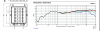
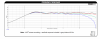
In case anyone was interested, I've determined that direct/reflecting is not required for planar drivers that are this small. It's only due to the much larger size of panel speakers such as Magnepan is what can cause beaming. Of course, they still sound awesome. Below is a simple FR comparison. The first of the GRS 3.5" planar mid/tweet. The second is of a random Dayton 1" soft dome tweeter. As you can see, the horizontal dispersion just as good no matter which you choose.

planar.png dome.png
 
Back
Top Bottom