
• The move to the new server is done. There are some software and database maintenance updates in process. This has us passing the hat around to help out. We appreciate any donations. Seriously, even a dollar helps. The payment page may be found here - https://www.audiokarma.org/support.html

Bozak N-101 xover for B-302a questions

gawgaboy

Member
I just purchased a nice set of 1963 B-302a Urbans (consecutive serial numbers) with B-200Y tweets, B-209A mids, B-199A woofer. I corrected the midrange driver polarity to put them in phase sync with tweets and woofer. They sound pretty good but the xovers need recapping. I've read most if not all the threads from Pat Tobin regarding the B-302a. Before I try the Tobin mods I want to recap the existing xovers first to get their natural sound before trying the Tobin mod. Then pick which I prefer.

Couple interesting things about these. They must be at the first of the reversed phased midrange due to a couple things I saw with them when correcting the phase. First the reverse polarity was done at the midranges' speaker connections and not at the Xover board connections show in the attached schematic and second, one speaker was originally wired in phase at the speaker but the assembler snipped the wires and reverse phased it but left the snipped wires in place. The second speaker was reversed phased to start with. Also I don't see the C6 2 mdf cap and the R2 25 ohm resistor for the tweets. Another interesting thing is the tweets label on the xover board is B-200X even though the tweets are Ys. These may have been at the first of the Y tweets.

I'm a little confused with the capactors listed and shown in the xover schematic. A few stupid questions. I don't see C1, C3, and C5 from the list shown on the schematic. Does, by chance, the numbers on the xover capactor box represent the C1, C3,and C5 caps? What does it mean with C5 being C4 with N25 in parallel? I'm assuming there was to the schematic and text not included in the photo that describes N25.

anyway any help will be appreciated.

Or just point me to an existing thread I might have missed will be appreciated too.
 

Attachments
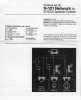
  • Bozak 302A crossover N 102 network (1).jpg
    Bozak 302A crossover N 102 network (1).jpg
    46.6 KB · Views: 167
  • bozak_xover_cap_box.jpg
    bozak_xover_cap_box.jpg
    55.2 KB · Views: 132
Last edited:
Register to hide this ad
Well I might have to say nevermind. I found a thread I haven't seen before that has all the Bozak crossover schematics and it answers most of my questions regarding the capacitor listings and the schematics, as well as the N25 network.
 
Welcome to AK, Gawgaboy!

Looking forward to more contributions from you. Settle in and enjoy the cool community here.

GeeDeeEmm
 
Hey man,

Congratulations! Remember, 90% of Pat Tobin's work was just re-jiggering Rudy Bozak's original configurations. All Pat Designed was the Zobel network for the tweeters, smooths out the spikey response of the B200Y's. I would never even remotely consider using the original crossover schematic, not even once.

Biggles
 
I come from a different perspective than Señor Biggles. I tried the Tobin mod in a set of Bozak Concert Grands and the results were terrible. Abysmal, in fact. Ripped out the Tobin mod, and wired the crossover the standard way, and the sound was back to being phenomenal. The Tobin mod also pads the tweeters by about 9dB, which these tweeters don't need. They don't have that much output to begin with. My 2 cents.
 
Last edited:
Whoa, hang on a moment Baco. Let's take a step back and have a look at Pat Tobin's work vs Rudy Bozak's. Simply saying that the Pat Tobin's work sounded abysmal isn't helping. What exactly were you hearing and where?

What is a Pat Tobin 104T "mod", and why? Let's start with the B199 woofers. We now know that the B199 starts to break up between 800Hz and 1000Hz. Rudy's original crossover point for the B199 was 800Hz, all except for the 4 woofer per cab Concert Grand and the 2 woofer per cab Symphony. They both came stock with the 400Hz crossover point. The 6db 1st Order Bozak crossover has a gentle slope and the drivers blend into each other. So, the B199 was rising up too high and causing sonic issues for the smaller Bozak systems. What Pat did was simply move the crossover point down to 400Hz for all 3-way Bozaks. Now, we have an exceptionally clean and precise performing B199 woofer, operating in its sweet spot. For Baco, there is no change for the B199 woofer's leg of the crossover.

Rudy Bozak's original crossover point for the B209 midrange was 2500Hz, it came right up to meet the B200Y tweeters. With the first order crossover, it went up above that. With modern equipment, we found that the Bozak Alnico B209B and its later aluminum cone versions have a steep impedance rise up above approximately 1400Hz. I've tested this myself, and the data is out there on the internet. But I cannot remember exactly where this point is. This simply means the mid gets louder the higher up it goes, the response is not linear. Pat Tobin took a look at this and decided to move the jumper on the inductor and cross the mid over at approximately 1250Hz vs 2500Hz. Both in theory and in practice, what this does is cause both the mid and tweeters to gently blend with each other giving us a far more balanced system. I've auditioned both crossover points and with the 2500Hz point, the mid is very bright, loud and hard sounding. It's too much, not balanced.

So far, Pat Tobin has worked within Rudy's original design. All he did was move the taps on the inductors and add a 50uF cap to the midrange vs the original 25uF to filter out the appropriate lower frequencies. Ultimately, this produces a more precise, distortion free B199 woofer. And, a smooth, balanced midrange. Nothing that would cause an abysmal result.

Next up, the B200Y tweeters. Both Rudy and Pat attenuated the tweeters at 9db. This was done because the later aluminum cone B200Y tweeter is 9db hotter than its 1950's paper cone B200X older brother. Once again, Pat stays within the original design of the Bozak 3-way crossover. With so many of us now working with Bozaks, it's widely known that this simply doesn't work well enough to keep. The response of the B200Y isn't linear. At low to moderate listening levels, the B200Ys are just too dark. You cannot hear them. One must jack the power up to 20 watts and more to get proper attenuation for the tweeters. AK member Retrovert worked out a novel way to add an l-pad to the tweeter's network so you can adjust the tweeters to your taste. Again with the modern testing equipment, we also know that the B200Y tweeter has a spike up somewhere between 7,000Hz and 9,000Hz. What Pat did was design a Zobel Network to tame the impedance rise of the B200Y tweeters. It's a very simple, small addition to the tweeter leg of the network. To quote Retrovert, "Who doesn't want a smooth tweeter response?"

That's it, that's all there really is to it. I know there's a lot of words up there, but the changes Pat did to Rudy's original design are all within Bozak parameters. It simply improves the response of the B199, makes the B209 mids creamy and well balanced, then smooths out the spikey response of the B200Y tweeters.

Some time ago AK member SiliconTI started a thread about how much he didn't like the Pat Tobin mods: http://audiokarma.org/forums/index....like-the-tobin-104t-mods-on-my-bozaks.732688/ Both Retrovert and I have been working tirelessly with him and other members to sleuth out their issues. To date, 100% of the issues anyone has had, was because they wired something incorrectly, used the incorrect taps on the inductors, or didn't have the later aluminum cone mids and tweeters.

None of what I have said is my own personal opinion. I've just restated what has been known for a decade or more and is wide published by many on the internet.

Biggles
 
Ordered the parts to recap the xovers in the standard configuration as well as the tobin mod. Gonna be fun.

That's GREAT news, this is how it should be done. Being able to audition between A/B configurations is the only way you and your Ear are going to be able to make a choice based upon what you experience in your home, on your system. Great news.

Biggles
 
That's GREAT news, this is how it should be done. Being able to audition between A/B configurations is the only way you and your Ear are going to be able to make a choice based upon what you experience in your home, on your system. Great news.

Biggles

I also bought an extra crossover so I could recap/mod one and just replace them on the fly so to speak.
 
@drbiggles - The crossover points for the woofer and mid are as you suggest. I merely put a single filtering cap on the tweeters and the resulting in-room response was much improved. YMMV.
 
All he did was move the taps on the inductors


In the Tobin mod on the midrange inductor connection board "A", is that moving the connection from N-101/N-104 to N-102?

For the B-199a does the connection on "B" remain at N-101?

Thanks for the Summary of the Tobin mod. That was very helpful.
 
Last edited:
@drbiggles - The crossover points for the woofer and mid are as you suggest. I merely put a single filtering cap on the tweeters and the resulting in-room response was much improved. YMMV.

Got it. Okay, listen closely. Communicating through a forum, or through an email, one can misinterpret the tone of the originator. I'm not in any way, making a snide comment or attempting to say anything derogatory. If Pat Tobin's tweeter leg of the network was wired correctly, there would be nearly no imperceptible change right off the bat. It merely smooths out the response so that over time, any possible listener fatigue or spikey vocals are eliminated. Something was wired incorrectly. And brother, I know. It took me 2.5 weeks, working very closely with Retrovert, to get my first Tobininzed Bozak crossover working as it should. I made ALL the mistakes, and each time I thought I had it right. It's such a simple schematic to re-create, but there are a multitude of wonderful ways things can go wrong. And generally, your eye will miss them.

Biggles
 
In the Tobin mod on the midrange inductor connection board "A", is that moving the connection from N-101/N-104 to N-102?

For the B-199a does the connection on "B" remain at N-101?

Thanks for the Summary of the Tobin mod. That was very helpful.

You're welcome, for sure. Both hookups on the inductors should be on the N-102 lugs. These are the 2 lugs that are closest to the large inductor. Oherwise, your crossover points are going to be wonky and the system will sound off, goofy.

When the updated crossover is done correctly, all the drivers will produce a very, very balanced performance. No driver will over-shadow the other, smoooooth. If not, something is wired incorrectly.

Biggles
 
I also bought an extra crossover so I could recap/mod one and just replace them on the fly so to speak.

Something else to consider, is to wire up your cabinets for external crossovers. This is what I've done with my Rhapsodys and a pair of 302a's. I've disconnected the Bozak tweeters and run external, modern tweeters instead. Having external crossovers allows me to make adjustments to the new tweeter network on the fly. No more having to open up the backs!

Biggles
 
I have 313's which are 302's in a smaller Box which means the bass dies at 50 HZ as opposed to 40 hz with the 302. I have the N10102 crossover and while replacing the caps added the extra mid range cap and lowered the frequency from 800 to 400. I leave mine with the polarity reversed just like my 4005 Symphony and 410 Grands both of which are Bi-amped. Reversing the polarity seems to move the sound more forward, and thats the last thing I want. As I do Bi amp and have added super tweeters I don't need the Tobin network.
 
Last edited:
Got it. Okay, listen closely. Communicating through a forum, or through an email, one can misinterpret the tone of the originator. I'm not in any way, making a snide comment or attempting to say anything derogatory. If Pat Tobin's tweeter leg of the network was wired correctly, there would be nearly no imperceptible change right off the bat. It merely smooths out the response so that over time, any possible listener fatigue or spikey vocals are eliminated. Something was wired incorrectly. And brother, I know. It took me 2.5 weeks, working very closely with Retrovert, to get my first Tobininzed Bozak crossover working as it should. I made ALL the mistakes, and each time I thought I had it right. It's such a simple schematic to re-create, but there are a multitude of wonderful ways things can go wrong. And generally, your eye will miss them.

Biggles


It's all good. Just happy to put that project in the past.
 
I agree with everything Biggles wrote, but wanted to emphasize a few points.

Some time ago AK member SiliconTI started a thread about how much he didn't like the Pat Tobin mods: http://audiokarma.org/forums/index....like-the-tobin-104t-mods-on-my-bozaks.732688/ Both Retrovert and I have been working tirelessly with him and other members to sleuth out their issues. To date, 100% of the issues anyone has had, was because they wired something incorrectly, used the incorrect taps on the inductors, or didn't have the later aluminum cone mids and tweeters.

I completely agree with this.

To begin, I urge the OP to read the thread above cited by Biggles, as it details (a) the flowerpot midrange bell, (b) the bypass capacitors, (c) why an L-Pad is superior to Tobin's fixed tweeter attenuator, and (d) explanations of the math behind the crossover points, which may help to understand what the Tobin mod actually does. I'll not repeat my explanations here, other than to briefly summarize.

Covering the midrange prevents cross-modulation between the woofer and the midrange, more on the midrange side than the woofer side, and cleans up the midrange. The clarity is amazing. As Klipsch noted, we live in the midrange as it is where our hearing is superb. This simple and inexpensive modification will hit your Bozak baseball out of the park and smash a car window half a mile away. Yes, it's that good.

Bypassing the crossover capacitors with small values (0.1 uF and 0.01 uF) improves the response of a capacitor and moves it closer to the ideal device. The issue at hand is the behavior of a capacitor as a long plate (spiral wound) which has RC timing for the charge/discharge cycle time and dipole alignment. The smaller capacitors have better performance at higher frequencies and better linearize the performance. As frequency increases the RC timing increasingly matters. This modification is inexpensive (the Parts Express Dayton house-brand film capacitors are low cost) and easily implemented.

The L-Pad allows the tweeter volume to be perfectly dialed in. Biggles is completely correct that this is a much-needed modification. I believe that Tobin was creating a solution which did not require drilling holes in a cabinet, but there's no way to know. What we do know with certainty is that one size fits none.

Finally, as Biggles excellently noted several times, the Bozak problems we (he and I) see tend to arise (in order of commonality) from (a) miswired or degraded crossovers (shorts, bad components, wrong taps, bad or wrong capacitors, use of fixed-attenuator instead of an L-Pad, etc.), (b) driver issues (paper-cone tweeters or midranges instead of aluminum-cone units), infinite baffle issues (cabinet mistakenly stuffed, curtain missing, badly installed, wrong or older material, or loose drivers or cabinet backs), or sub-optimal placement (too low on ground, mis-aligned, etc.).

Once resolved the sound is crisp, clean, accurate, and wonderful. Reading the thread, which admittedly is long, should help you understand how to make the Bozaks perform beyond their original specifications and delight you ever time you hear them.
 
Thanks Retrovert. I had already read that post but need go over it again as I always pick up more things on multiple readings. In my parts order was two 8 ohm 15 watt L-Pads. I forgot to order the .1 and .01 caps even though they were in my wishlist. Doh! :D I plan to do the flower pot mod. Fortunately my Urbans are in very good factory original condition.
 
Last edited:
Back
Top Bottom